








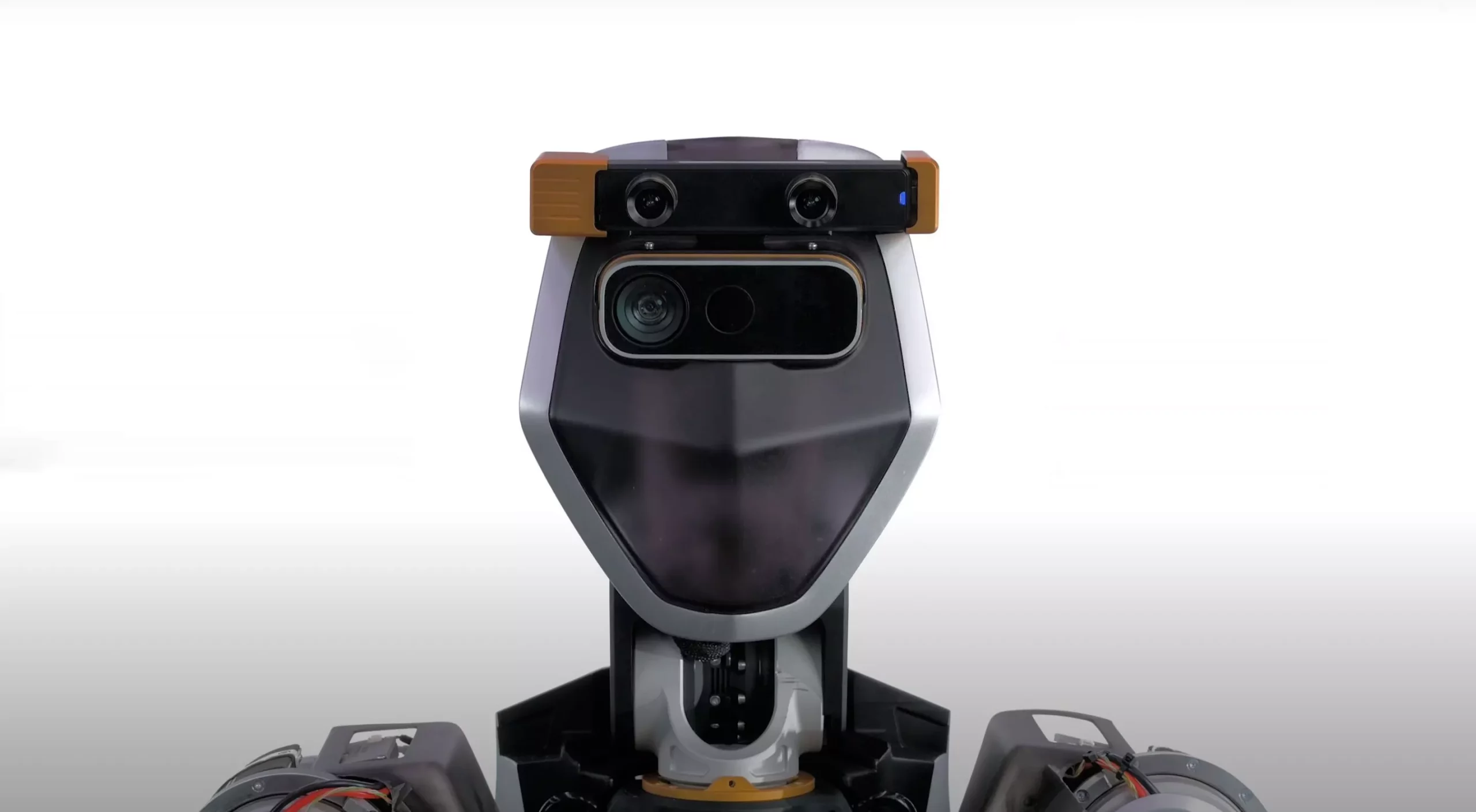

In the past year, the robotics landscape has transformed rapidly. Once a field dominated by industrial arms repeating the same motions in factories, robotics now spans intelligent humanoids that can interact with humans, general‑purpose machines learning in dynamic environments, and foundational AI systems that empower robots to think as well as move. Determining which robot model has improved the most in this timeframe requires examining breakthroughs in capability, adaptability, autonomy, and real‑world deployment.
After a comprehensive review of the major developments in robot models and their performance gains between early 2025 and early 2026, Google DeepMind’s Gemini Robotics family emerges as the standout leader in improvement. This isn’t simply due to a single new robot floating across the horizon like some Silicon Valley hype dream — but because of measurable leaps in intelligence, dexterity, adaptability, and generalization within physical robots that can work outside tightly scripted motions.
Below is a deep dive into why Gemini Robotics tops the improvement charts — along with the broader context of how robotics has evolved over the last 12 months.
1. The Breakthrough: From Digital AI to Physical Intelligence
Robotics used to be about hardware — arms, joints, sensors. In 2025 and 2026, the revolution has been software that empowers physical robots with reasoning, perception, and general world understanding. Traditional industrial robots still dominate logistics and manufacturing, but they remain programmed for specific tasks. The new frontier is robots that can adapt and learn on the fly.
An influential concept in this evolution is Physical AI — robots that couple strong physical systems with advanced AI that can perceive, reason, and execute tasks in the real world. This shift moves robots from deterministic machines into autonomous agents capable of handling unstructured environments.
Among emerging models, Gemini Robotics and related variants (including embodied and on‑device versions) have shown some of the most significant improvements in robot cognition and physical task performance.
2. Gemini Robotics: Redefining the Robot Brain
What It Is
Gemini Robotics is an advanced vision‑language‑action model (VLA) created by Google DeepMind in partnership with Apptronik and built atop a large multimodal AI foundation (Gemini 2.0). Rather than focusing exclusively on hardware, Gemini Robotics solves how robots understand and act in the real world.
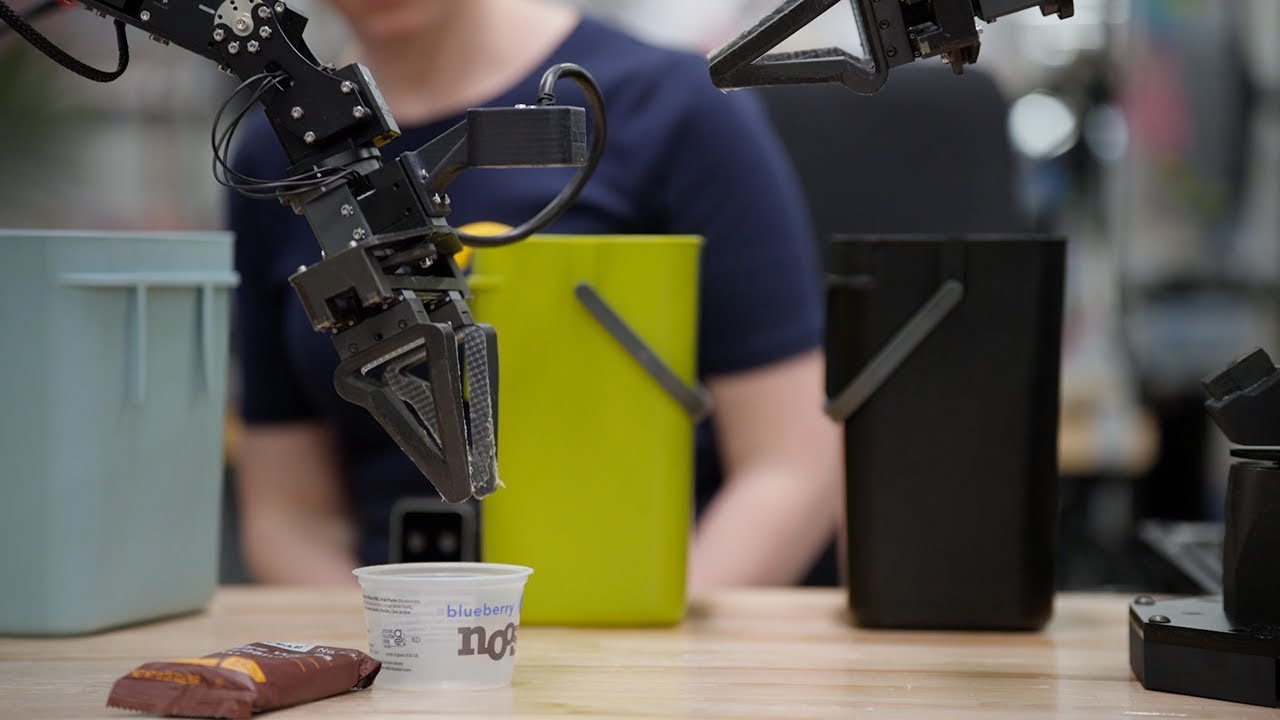
Traditionally, robotic control systems were rigid: sensors fed into predefined algorithms that executed motions. Gemini Robotics combines:
- Vision: Robots see and interpret their environment.
- Language: They understand high‑level instructions.
- Action: They translate perception and language into coordinated real‑world movements.
This integration enables robots to perform novel tasks without task‑specific training, a leap beyond classical robot programming.
3. Tangible Gains in Generalization and Dexterity
One of the strongest ways to measure improvement isn’t raw speed or strength — it’s generalization: robots performing new tasks with minimal retraining.
Gemini Robotics and its embodied reasoning extension, Gemini Robotics‑ER, excel in this area. These systems extend multimodal reasoning into physical manipulation, enabling robots to adapt when conditions change, predict motion, handle objects of varying shapes and textures, and follow complex, open‑ended instructions.
Recent research on Gemini Robotics 1.5 and Gemini Robotics‑ER 1.5 highlights the integration of reasoning and action planning that allows physical robots to anticipate multi‑step tasks and break them down intelligently. This marks a qualitative shift from robotic systems that follow scripts to those that interpret and react.
4. Comparison to Other Leading Robot Models
While many robot models have improved significantly, most gains are incremental versus exponential. Here’s how they stack up:
Tesla Optimus
Tesla’s humanoid robot has made strides in locomotion and limited task engagement, with the company initiating small internal deployments and weight reductions. But many challenges in versatile interaction and autonomous general task reasoning remain unresolved.
Figure 02 & Figure 03 (Figure AI)
Figure AI has made noteworthy hardware strides in humanoid dexterity, camera resolution, and AI computing power — and its Helix VLA shows promising gains in coordination and speed. However, these improvements are scoped to specific robot hardware and controlled scenarios.
Unitree & Quadrupeds
Quadruped robots like Unitree’s A2 and agile models like the R1 have advanced motion capabilities and cost accessibility, but they focus largely on mobility, not general task adaptability.
Xpeng’s IRON
The IRON humanoid showcases striking realism and engineering refinement — 82 degrees of freedom, custom AI chips, and lifelike movement — but its improvements are hardware refinement, not leaps in adaptive autonomy.
5. Why Gemini Robotics Is the Standout
Unlike almost every other robot improvement in the past year — which lean heavily on hardware upgrades or incremental model tuning — Gemini Robotics fundamentally transforms how robots think.
Key reasons it stands out:
A. Generalized Learning Instead of Task Specificity
Robots powered by Gemini Robotics can solve tasks the developers didn’t explicitly program them for. This is akin to moving from a specialized calculator to a general‑purpose computer that learns new problems autonomously.
B. Integration of Language and Perception
The original limitation of many robots was context blindness — they could see data or process instructions in isolation. Gemini Robotics merges language and perception, meaning robots can understand instructions in natural terms and then execute them.
C. On‑Device Execution
Releasing an on‑device version optimized for local computation, not just cloud inference, pushes these capabilities into real physical robots operating in real environments with low latency.
D. Broad Adoption by Robotic Platforms
Although initially released to selected testers like Boston Dynamics, Agile Robots, and Agility Robotics, the Gemini Robotics model is shaping future robots across platforms, from humanoids to more specialized mobile systems.
6. Broader Significance for Robotics
The progress of Gemini Robotics is not just about one model’s improvement — it hints at how the robot learning stack itself is evolving.
Robotics improvement is increasingly tied to:
- Data and shared learning ecosystems
- Open research benchmarks and large datasets
- Multimodal reasoning enabled by foundational AI models
- Cross‑platform generalization of skills
Open robotics datasets have ballooned, drastically lowering entry barriers and accelerating learning scalability. This data explosion increases feedback loops in training robots to understand the real world, not just simulated tasks.
In essence, today’s most advanced robot models aren’t just machines — they are learning agents with the ability to perceive, interpret, and act intelligently.
7. Final Verdict: Most Improved Robot Model
Google DeepMind’s Gemini Robotics family — including its embodied reasoning extensions and on‑device variants — represents the robot model that has improved most in the last 12 months. It has shifted the benchmark for robotics from hardware upgrades to AI‑driven autonomy, enabling robots to learn, generalize, and interact with the real world in ways previously impossible. This is a fundamental paradigm shift — not merely an incremental update.