









Introduction: The Mech‑Scene Wake‑Up Call
In an age increasingly shaped by advances in artificial intelligence and embodied robotics, the way the public thinks about robots is not static — it changes, shifts, sways, and occasionally swings wildly. Long gone are the days when robots lived only in science fiction novels or industrial factories. Today, machines that move, interact, learn, and sometimes mimic human behavior are showcased in public demonstrations, viral videos, and media hype cycles. But crucially, has public perception actually shifted after real robot demonstrations — as opposed to speculative hype? This article answers that question by integrating studies, surveys, and real interaction experiments, dissecting how audiences interpret robots, what drives acceptance or rejection, and why demonstrations — good or bad — matter deeply in how humans think about automation, autonomy, and trust.
Why Public Perception Matters
Public perception is not merely academic. The way people think about robots affects policy, market adoption, research directions, and investment flows. If a large segment of the public fears robots, policymakers may shy away from supportive regulations; investors may retreat from risky robotics startups; companies might limit deployments of autonomous systems; and entire industries could stagnate.
Research shows that media and public views of robots have already evolved over time — from viewing robots as industrial machines toward conceptualizing them as social, assistive, and multi‑purpose technologies.
The Power of Real Demonstrations
1. Demonstrations Reduce Ambiguity
Before seeing a robot in person or via realistic demos, many people rely on mental imagery derived from sci‑fi, news headlines, or abstract ideas about “AI.” These mental models are often inaccurate or extreme — imagining either benevolent helpers or existential threats. When the public encounters a real robot demonstration, especially interactive ones, they begin to replace vague imagination with grounded experience.
A controlled study on assistive robots in elder care, for instance, found that direct interaction led to significantly more positive perceptions, particularly in likeability and trustworthiness.
This suggests that experiential exposure can reshape attitudes — but only if the interaction feels purposeful and responsive. A static demo on a stage may generate curiosity, but interactive demos tend to generate empathy and trust.
2. Interactive HRI Demo Effects
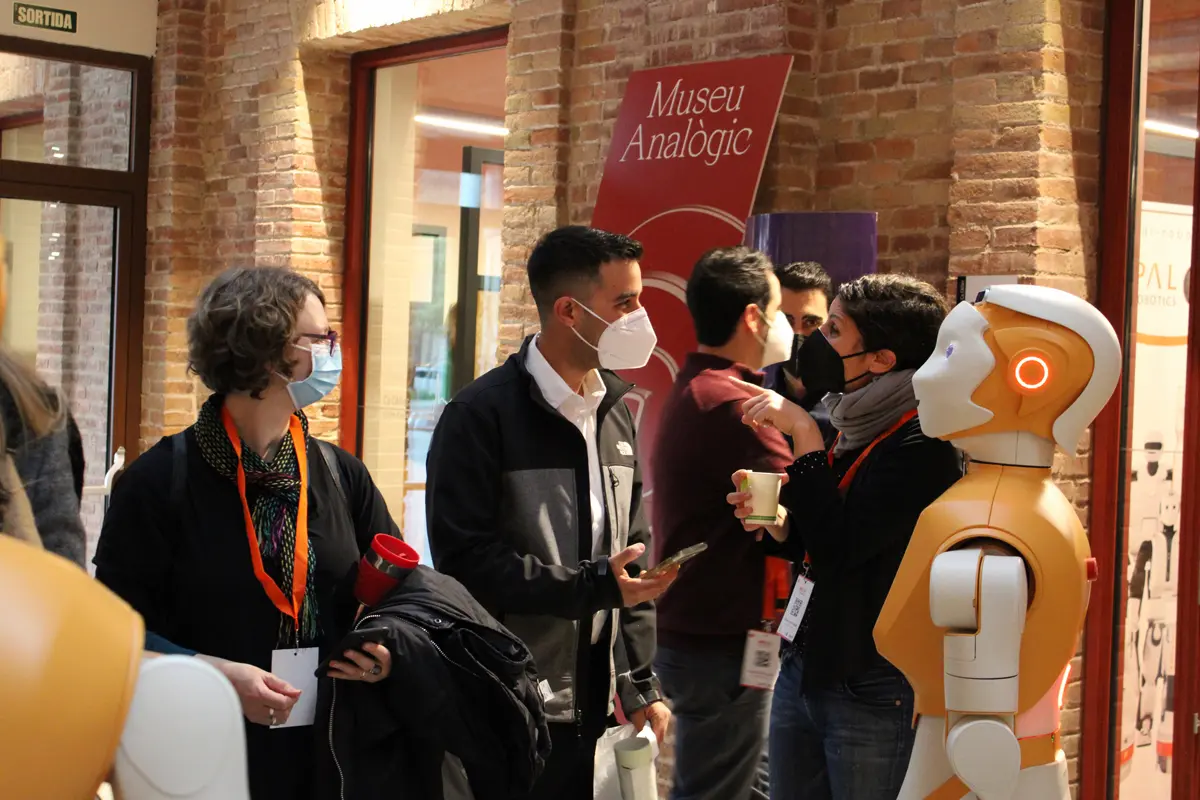
Human‑robot interaction (HRI) research has shown that public demos involving real, interactive engagements — where robots sense facial expressions, adapt to behavior, and engage with participants — provide valuable insight into how nuanced interpretations emerge.
Such demos make robots ‘relational’ rather than machine abstractions: people start seeing them as social actors rather than unpredictable automatons. Real interaction also reveals the complexity of communication — including nonverbal cues and affective signals — that many audiences underestimate before direct experience.
3. The “Real vs. Hype” Gap
Not all demos are created equal. A recent analysis of humanoid robot demonstrations shows that many viral videos exaggerate autonomy, often masking remote control or partial autonomy as full intelligence.
This can cut both ways:
- Positive exposure: increases optimism and hopeful narratives.
- Over‑hype backlash: leads to skepticism and distrust when expectations don’t match reality.
When the public discovers that a robot demo was not fully autonomous — a phenomenon sometimes called the Wizard of Oz effect — it can result in eroded trust and a belief that robotics is more fiction than engineering.
Perception Dynamics: Beyond Emotions to Rational Evaluation
1. Perceived Value and Usage Intent
Studies in sectors like hospitality and service reveal that public perception heavily influences intention to adopt robots. If people perceive advantages like convenience or safety, their intention to use robots increases significantly.
This means that meaningful demonstrations — ones that clearly communicate benefits — can function as catalysts that shift mindset from fear or confusion toward curiosity and acceptance.
2. Effect of Framing and Context
Perception is not entirely experience‑driven; contextual framing also matters. Surveys on agricultural robots show that providing information about environmental benefits leads to stronger positive perceptions than merely discussing productivity or labor impacts.
This insight matters for public demos: how a demo is framed — whether as humanitarian, environmental, or industrial efficiency — can lead to dramatically different interpretations.
The Limits of Perception Change
Despite evidence that demos can shape perception, there are important limits to this influence.

1. Generalization vs. Specificity
A study on how humans perceive robot faces found that people tend to apply uniform assumptions across robot types unless they experience diverse interactions.
In practice, this means that a single demo might only shift perception toward that specific robot, not toward robots more generally. Not all robots are perceived equally — industrial arms, humanoid companions, and autonomous delivery bots trigger distinct cognitive frames.
2. Familiarity vs. Novelty Effects
Early interactions often produce novelty effects, where participants are initially impressed simply by the newness of the experience. Over time, as that novelty wears off, attitudes may regress without sustained engagement or real functional value.
This suggests that single, isolated demos are less effective than ongoing exposure, education, and integration into everyday contexts.
The Role of Media Narratives
Media coverage and social narratives significantly influence how demos are interpreted. The same robot demo can be celebrated as a technological breakthrough in one outlet and ridiculed as “over‑hyped and under‑delivered” in another.
Media amplification can thus act as a multiplier of perception shifts — both positive and negative — and this means public perception is as much shaped by stories told about demos as by the demos themselves.
Real Impacts on Policy and Industry
Public perception matters because it eventually influences policy decisions, regulation, and industry strategy. Policymakers pay attention to public sentiment when crafting regulations for safety standards, privacy safeguards, and deployment conditions.
Companies, too, pay attention. When a demo successfully showcases a robot that people can relate to, it can accelerate investment, partnerships, and uptake. When demos disappoint or mislead, companies may face distrust and backlash that slows adoption.
Conclusion: An Evolving Landscape
So, has public perception of robots shifted after real demos? The answer is yes — but not universally, and not always in the direction robotics researchers would hope.
Real demos do shape perception:
- They build understanding and trust through direct experience.
- They can significantly impact intent to use technology when benefits are clear.
- Their influence is context‑dependent and framed by media narratives, demo quality, and the type of robot.
But the shift is not automatic. Perception change is strongest when interaction is meaningful, reflective, and part of broader educational efforts. Hype alone will not suffice. Indeed, exaggerated demonstrations can backfire, instilling skepticism and disappointment.
In sum, public perception is malleable, but it is shaped by real interaction, context, and communication narrative far more than by mere spectacle. As robotics continues to enter human environments — from factories to hospitals, homes to farms — the quality and substance of robot demonstrations will play a pivotal role in how society ultimately embraces or resists this transformative technology.