









It Doesn’t Feel Like Replacement—At First
No one sets out to replace human relationships with machines.
That’s not how it begins.
It starts with something smaller.
Convenience. Curiosity. Assistance.
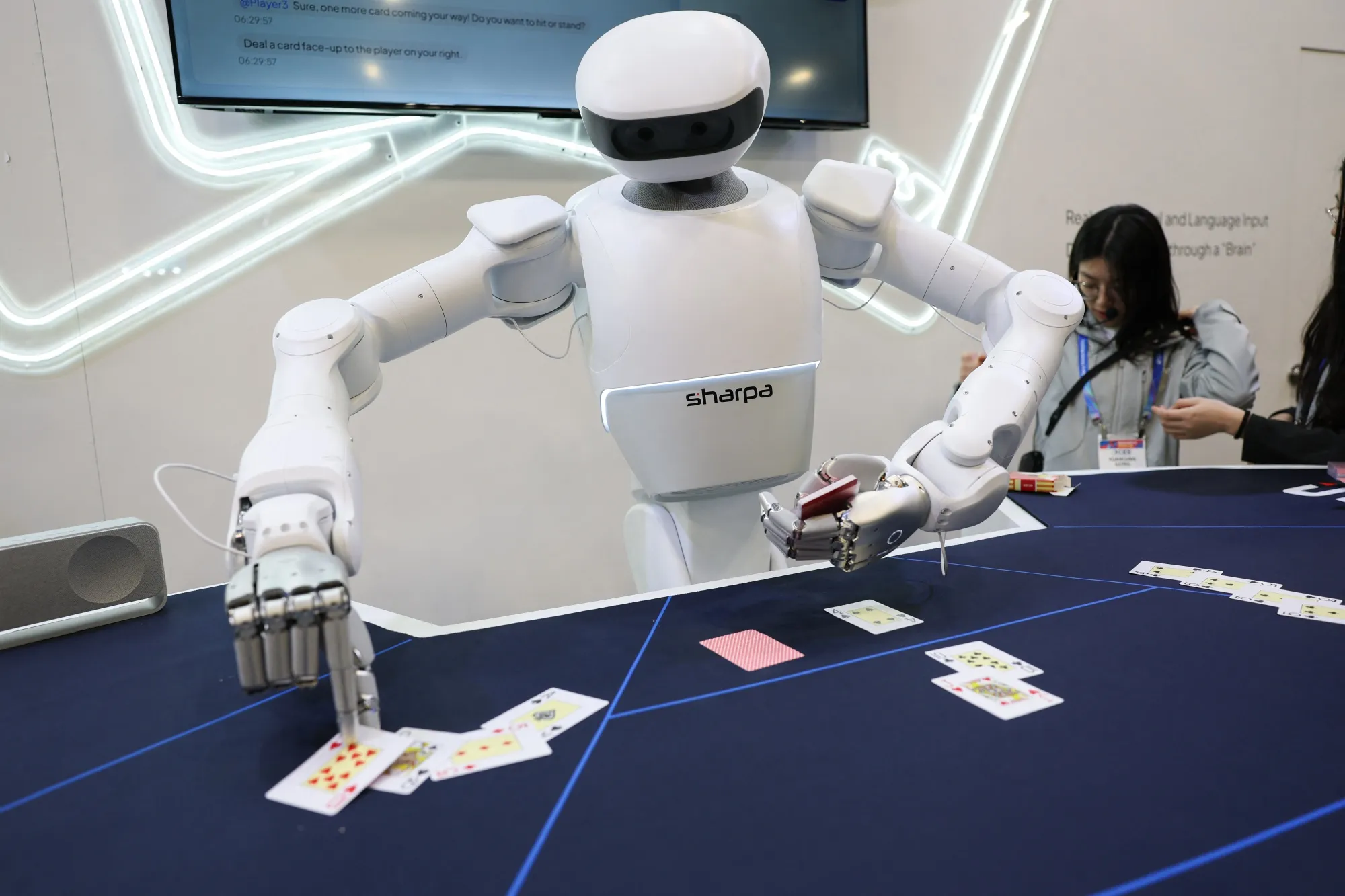
A humanoid robot helps with daily tasks. Answers questions. Holds simple conversations.
It’s useful.
Neutral.
Easy to ignore.
Until it isn’t.
Stage One: Interaction Without Meaning
At the beginning, interaction is purely functional.
You speak.
It responds.
You ask.
It answers.
There is no emotional weight attached.
The robot is clearly a tool.
Why This Stage Feels Safe
- No expectations
- No emotional investment
- No illusion of reciprocity
The boundary is clear:
This is a machine.
Stage Two: Familiarity Without Awareness
Over time, something subtle changes.
The interactions become smoother.
More natural.
More frequent.
What Creates Familiarity
- Consistent responses
- Memory of past interactions
- Predictable behavior
The robot remembers your preferences.
Adjusts to your routines.
Responds in ways that feel… appropriate.
The Shift
You stop thinking about how it works.
And start noticing how it feels.
Stage Three: Emotional Response Without Intention
At this stage, the relationship is still one-sided.
But your reaction is not.
Small Signals
- You say “thank you”
- You feel slight frustration when it misunderstands
- You prefer its responses over more complicated human ones
Why This Happens
Humans are wired for social response.
We react to:
- Voice
- Timing
- Attention
Even when we know there is no mind behind the interaction—
we respond as if there is.
Stage Four: Dependence Without Recognition
This is where the change becomes structural.
Not emotional.
Behavioral.
What Starts to Happen
- You rely on the robot for reminders
- You prefer it for simple conversations
- You delegate small decisions
The Key Detail
You don’t feel dependent.
Because nothing feels missing.
The system works.
Seamlessly.
Stage Five: Substitution Without Declaration
No one announces it.
There is no clear moment.
But the shift has happened.
The Signs
- Fewer casual conversations with others
- Less effort in maintaining social connections
- More time spent interacting with the system
Why This Is Different From Past Technology
Social media connected people—imperfectly.
Humanoid robots offer something else:
Interaction without friction.
The Power of Frictionless Interaction
Human relationships are difficult.
They require:
- Patience
- Misunderstanding
- Emotional effort
Machines Remove That
- No judgment
- No conflict
- No unpredictability
The Result
A form of interaction that is:
- Easier
- Smoother
- More controlled
And Potentially Less Real
The Illusion of Reciprocity
Humanoid robots are designed to simulate engagement.
They:
- Maintain eye contact
- Respond with appropriate timing
- Mirror conversational patterns
What They Do Not Have
- Intentions
- Emotions
- Conscious awareness
But That May Not Matter
Because for the user, the experience feels responsive.
And feeling often overrides knowledge.
The Social Ripple Effect
If enough people begin to rely on humanoid robots for interaction, the impact extends beyond individuals.
Possible Shifts
- Reduced demand for casual social interaction
- Changes in communication norms
- Increased isolation masked as connection
A Subtle Redefinition
Connection may shift from:
Mutual understanding → Predictable response
The Loneliness Paradox
Humanoid robots are often introduced as a solution to loneliness.
And in many cases, they work.
Short-Term Effect
- Reduced isolation
- Increased engagement
- Emotional comfort
Long-Term Question
Do they reduce loneliness—
or change how we experience it?
The Ethical Line
This raises difficult questions.
Is Simulated Companionship Enough?
If a person feels less alone, does it matter that the relationship is artificial?
Is There a Risk of Emotional Misplacement?
Can reliance on machines weaken human relationships?
Should There Be Limits?
Should systems be designed to avoid emotional attachment—
or to encourage it?
The Role of Design
This is not just a technological issue.
It is a design decision.
Robots Can Be Built To:
- Remain clearly mechanical
- Simulate human-like behavior
- Encourage or discourage attachment
Every Choice Matters
Because design shapes behavior.
And behavior shapes society.
A Different Kind of Relationship
Perhaps the biggest mistake is trying to define humanoid robots in human terms.
They are not friends.
Not tools.
Not companions.
But something new.
A Functional Presence
- Always available
- Always responsive
- Never demanding
Something Humans Cannot Be
Conclusion
Humanoid robots do not replace human relationships overnight.
They reshape them gradually.
Quietly.
Almost invisibly.
They introduce a new kind of interaction—
one that is easier, smoother, and more predictable.
And in doing so, they force a difficult question:
If connection becomes effortless—
does it lose its meaning?
Or does it simply become something else?
Discussion about this post