








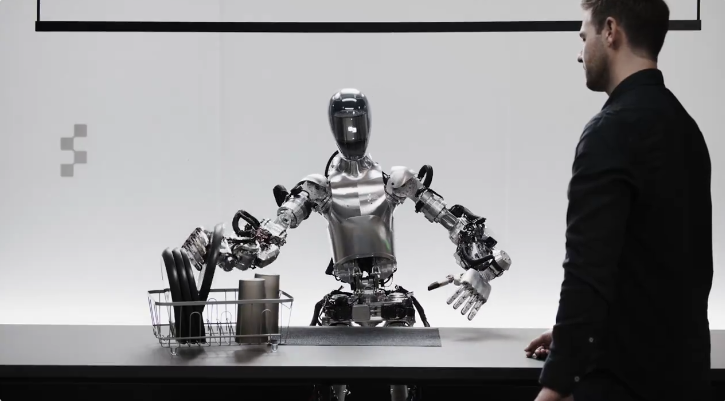

A Conversation That’s Already Happening
“I trained the system that replaced me.”
The sentence doesn’t come from a dystopian novel.
It comes from a warehouse worker who spent six months helping integrate a humanoid robot into his company’s logistics operations—only to see his own role eliminated shortly after deployment.
Across industries, this story is becoming less hypothetical.
And more real.
The Fear: Automation With a Human Shape
Automation is not new.
Factories have used machines for decades.
But humanoid robots introduce something different:
They don’t just automate tasks.
They mirror human labor.
Why That Matters
Traditional machines replace specific functions:
- A robotic arm welds
- A conveyor belt moves items
Humanoid robots replace something broader:
- General-purpose human capability
They can:
- Walk
- Lift
- sort
- interact
And most importantly—
they can adapt.
The Scale of Potential Disruption
Early deployments are already targeting roles that are:
- Repetitive
- Physically demanding
- Low-margin
Most Affected Sectors
- Warehousing and logistics
- Manufacturing
- Retail operations
- Basic service roles
What Makes This Different From Past Automation
Previous waves of automation replaced tasks.
This wave has the potential to replace roles.
The Counterargument: Jobs Will Evolve
Historically, technological disruption has followed a pattern:
- Old jobs disappear
- New jobs emerge
Supporters of humanoid robotics argue that the same will happen here.
New Roles Already Emerging
- Robot maintenance technicians
- AI system trainers
- Human-robot workflow designers
- Data supervisors
The Key Question
Will new jobs emerge fast enough—
and for the same people being displaced?
The Transition Problem
Even if new jobs are created, transitions are rarely smooth.
Mismatch of Skills
A warehouse worker cannot immediately become:
- A robotics engineer
- A systems operator
Mismatch of Geography
New tech jobs often cluster in different regions than the jobs they replace.
Mismatch of Timing
Job loss can be immediate.
Job creation takes time.
A Shift in the Nature of Work
Humanoid robots don’t just reduce jobs.
They change what “work” means.
From Physical to Cognitive
As robots take over physical tasks, human labor shifts toward:
- Decision-making
- Problem-solving
- Oversight
From Execution to Supervision
Instead of doing tasks, workers increasingly:
- Monitor systems
- Intervene when needed
- Manage exceptions
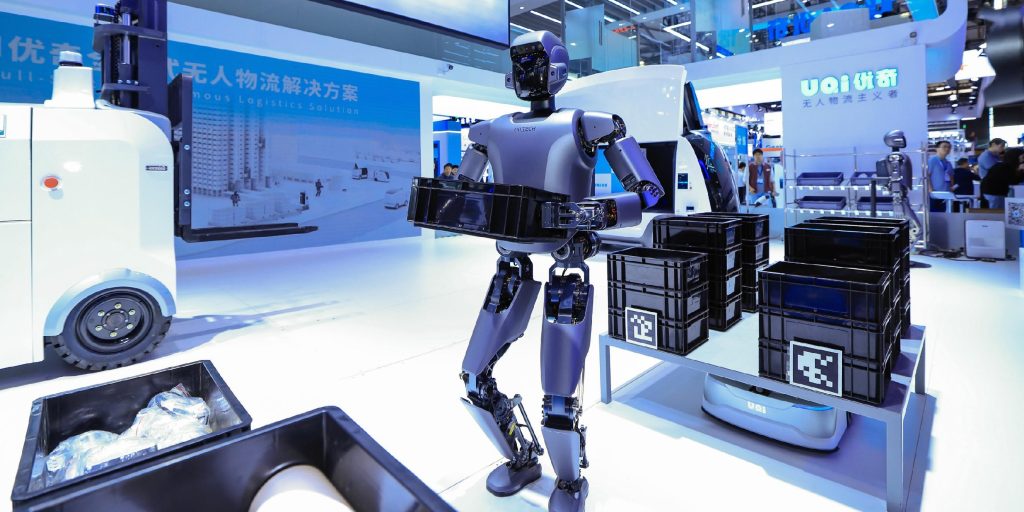
The Risk
Not everyone can—or wants to—make this transition.
The Economic Divide
One of the most significant risks is inequality.
Who Benefits
- Companies that deploy robots
- Highly skilled workers
- Technology developers
Who Is At Risk
- Low-skill labor
- Routine job workers
- Regions dependent on manual industries
The Result
A widening gap between:
- Those who control automation
- Those replaced by it
The Psychological Impact
Job loss is not just economic.
It is deeply personal.
Work as Identity
For many people, work provides:
- Purpose
- Structure
- Social connection
What Happens When It Disappears
Even if financial support exists, the loss of work can lead to:
- Reduced self-worth
- Social isolation
- Psychological stress
Policy Responses: Still Catching Up
Governments are beginning to respond—but slowly.
Potential Approaches
- Reskilling programs
- Universal basic income (UBI)
- Job transition support
- Regulation of automation deployment
The Challenge
Technology moves faster than policy.
A More Nuanced Reality
The narrative is often framed as:
“Robots vs Humans”
But reality is more complex.
What We Are Actually Seeing
- Partial automation
- Human-robot collaboration
- Gradual transition
In Many Workplaces
Humans are not replaced immediately.
They are:
- Augmented
- Reassigned
- Reduced over time
The Long-Term Question
The real issue is not whether humanoid robots will replace jobs.
They will—at least some of them.
The real question is:
What replaces those jobs in human life?
Conclusion
Humanoid robots are not just changing how work is done.
They are changing who does it—and why.
They promise efficiency, productivity, and economic growth.
But they also force a deeper conversation:
If machines can do most of what humans once did—
what role do humans choose to play?
And more importantly—
how do we ensure that future is shared, not divided?
Discussion about this post