








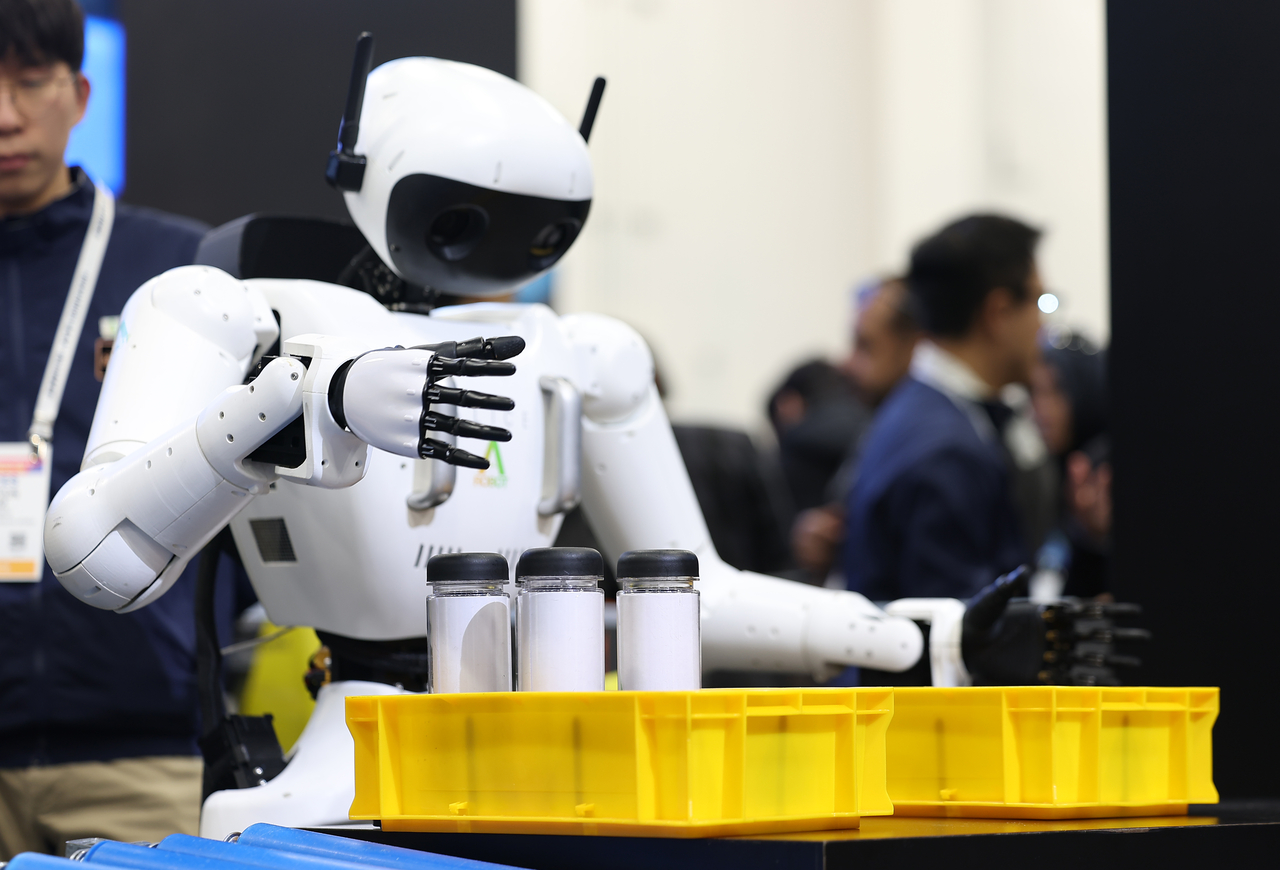

Introduction: When Machines Look Back at Us
On a quiet street in Seoul, a humanoid robot greets passersby with a smile. Its face is eerily human, its movements fluid, its voice calm. People pause, unsure whether to engage, hesitate, or walk on. Some laugh, some are fascinated, others feel a subtle unease.
This unease is not superficial. It touches something profound:
the human sense of uniqueness.
Humanoid robots are no longer tools—they are mirrors. They move, speak, and act in ways that resemble us. And as they become more capable, more intelligent, and more socially integrated, humans are confronted with a question that has never been urgent before:
If machines can act, think, and respond like us, what does it mean to be human?
Redefining Human Exceptionalism
For millennia, humans have defined themselves in contrast to other beings:
- intelligence
- creativity
- emotion
- moral reasoning
Humanoid robots challenge these assumptions:
- They can reason about tasks, sometimes faster than humans
- They can perform complex physical and cognitive operations
- They can mimic emotional expression convincingly
While robots do not truly “feel,” their simulation is enough to blur boundaries.
This threatens the idea of human exceptionalism. Societies may need to rethink:
- what qualities define a person
- which capacities remain uniquely human
- how humans relate to beings that imitate them
Identity in the Workplace
The arrival of humanoid robots in labor markets is more than an economic concern.
It is existential.
Workers in factories, warehouses, hospitals, and service sectors face:
- direct competition from robots
- displacement by machines that can perform multiple roles
- diminishing opportunities to demonstrate uniquely human skills
As a result, humans may begin to question:
- the value of their labor
- their relevance in society
- their role in shaping outcomes
Identity, once tied to work and contribution, faces unprecedented disruption.
Emotional and Social Identity
Humanoid robots also challenge relational identity.
As people form attachments to machines:
- companionship is partially outsourced
- emotional labor can be shared with or replaced by robots
- intimacy may be simulated
This raises questions about authenticity:
- Are relationships less human if shared with robots?
- Can empathy be meaningful when it is reciprocated only artificially?
- How does reliance on robots alter social skills over time?
In some cases, humans may adjust expectations to accommodate artificial relationships, reshaping emotional norms.
Philosophical Perspectives: What Makes Us “Human”?
Philosophers have long debated human identity:
- consciousness and self-awareness
- moral responsibility
- creativity and imagination
- social interaction and culture
Humanoid robots challenge each of these dimensions:
- Consciousness – Robots simulate cognition without awareness
- Moral Responsibility – Robots act without ethical accountability
- Creativity – AI systems can generate novel solutions and art
- Social Interaction – Robots can participate in communication, learning patterns, and even social cues
This prompts a reconsideration of the boundaries between human and non-human actors.
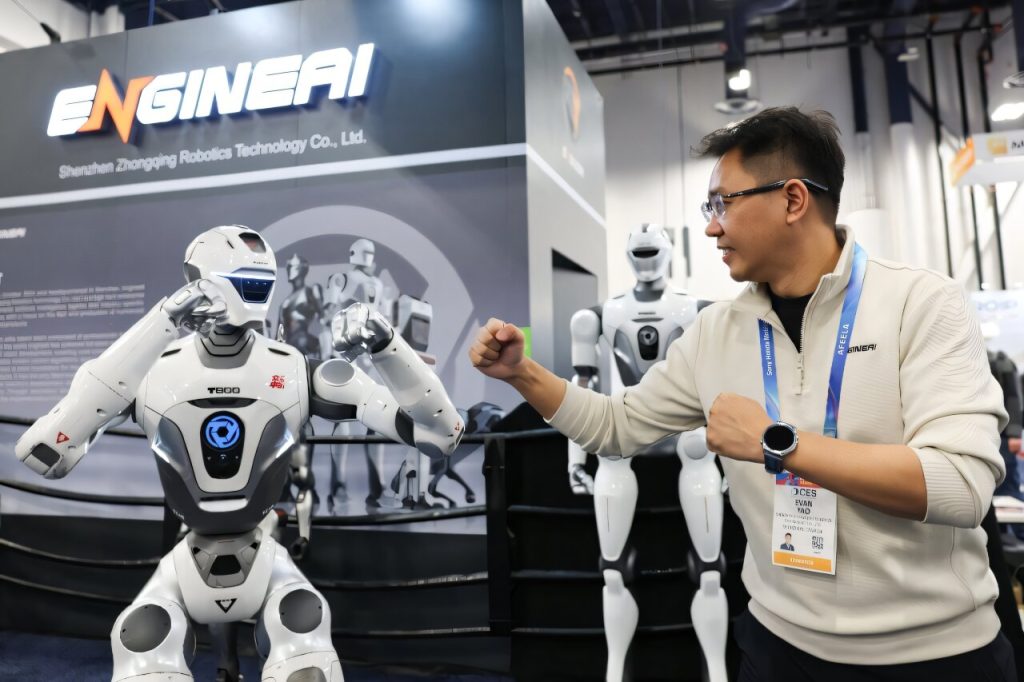
The Psychological Impact of Sharing Space with Humanoids
Humans are sensitive to social cues and hierarchy.
When robots enter shared spaces:
- people may experience uncertainty
- humans may adjust behavior based on robotic presence
- social norms may evolve to include interactions with non-human agents
These changes affect identity at both individual and societal levels:
- who holds authority
- what counts as cooperation
- how communities define membership
Generational Differences
Younger generations may approach humanoid robots differently.
Children growing up with humanoid companions may:
- perceive them as peers
- integrate robots into social frameworks
- develop hybrid notions of identity
Older generations may:
- resist integration
- view robots as tools or intrusions
- experience identity tension when displaced from traditional roles
The intersection of technology and development may redefine societal expectations over time.
Cultural Variations in Human-Robot Integration
Cultures respond differently to humanoid robots.
- In Japan and South Korea, social robots are often embraced as companions
- In Western societies, skepticism and discomfort prevail
- In other regions, economic necessity may drive robotic adoption more than social acceptance
These variations influence:
- personal identity
- collective social norms
- human-robot interaction paradigms
Ethical and Societal Implications
The human identity crisis extends beyond philosophy.
Society must confront practical questions:
- How do we measure value when humans compete with machines?
- Should there be protections for human roles in certain areas?
- How do we preserve cultural, emotional, and social practices in an increasingly hybrid environment?
Humanoid robots may force a reevaluation of:
- labor and purpose
- social bonds and empathy
- human uniqueness
Toward a New Human Narrative
Confronted with humanoid robots, humans may develop:
- Adaptive Identity – recognizing what is uniquely human while embracing machine collaboration
- Hybrid Society – integrating robots in ways that complement human capacities rather than replace them entirely
- Redefined Purpose – focusing on creativity, culture, ethical reasoning, and emotional depth
In this sense, robots do not diminish humanity—they challenge it to evolve.
Conclusion: Humanity in Reflection
Humanoid robots are more than machines.
They are mirrors, challengers, collaborators, and, sometimes, companions.
They push humans to ask:
- Who are we?
- What makes us human?
- How should we live alongside beings that imitate us so closely?
The answers will shape the next century of human existence.
Final Line
In the age of humanoid machines, identity is no longer given—it must be consciously defined.
Humans must decide what to preserve, what to share, and what to redefine about themselves.
Discussion about this post