








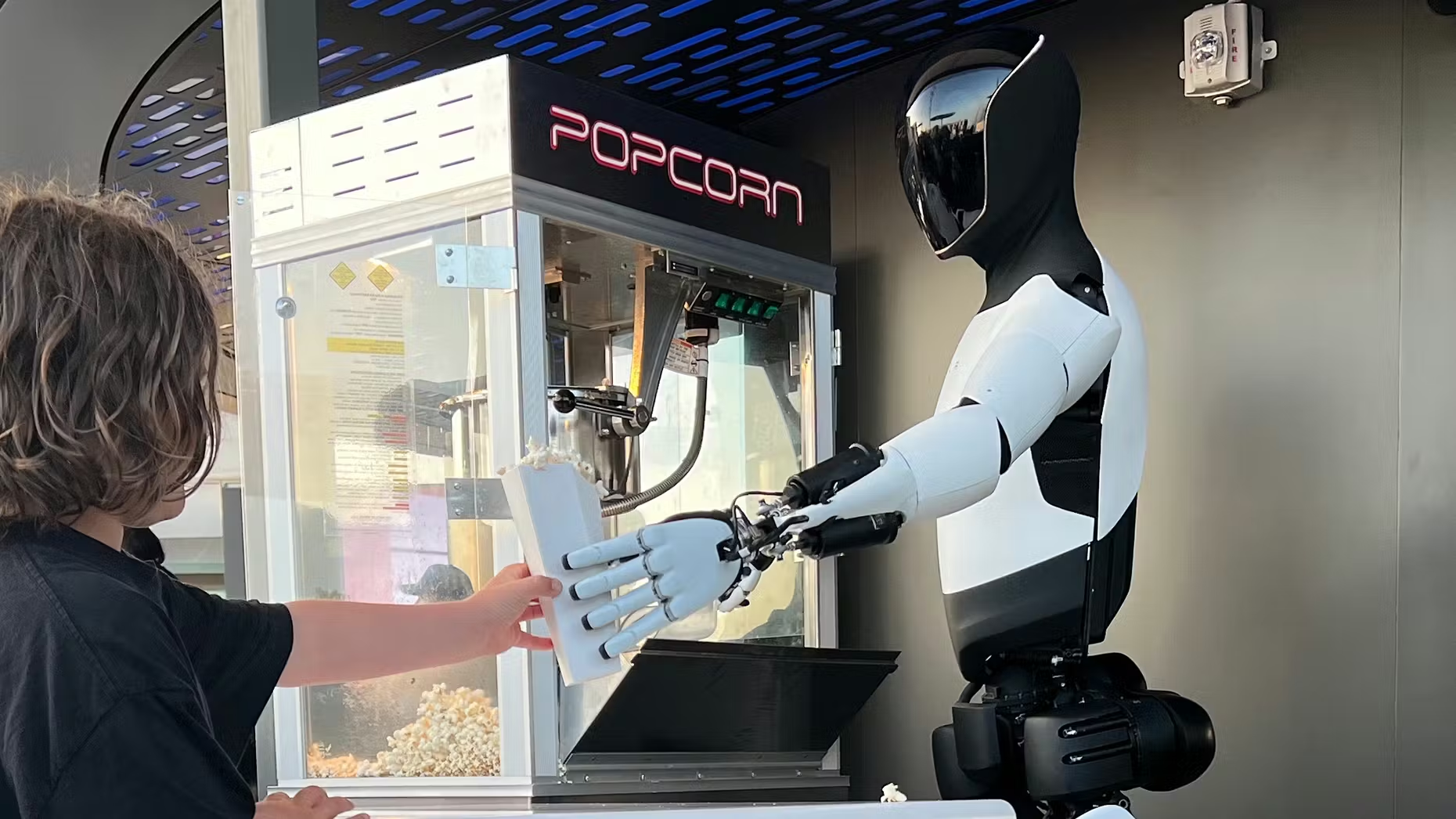

In the landscape of cutting‑edge robotics, few projects have captured as much imagination — and skepticism — as Tesla’s Optimus. Billed by Elon Musk and Tesla leadership as a future “general‑purpose humanoid robot,” Optimus promises to walk like a human, pick up and manipulate objects with dexterous hands, help with chores, and eventually transform entire industries. But here in early 2026, the crucial question remains: Can Optimus really walk and grab objects smoothly yet — in the real, messy world?
The short answer is: Yes — but only in very controlled conditions, and there’s a long road ahead before it looks effortless anywhere and everywhere. What you see today is genuinely impressive and technically significant, but it’s not yet the science‑fiction‑style, universally capable humanoid robot many imagined. To understand why, let’s unpack the state of the art in walking, perception, manipulation, training, and real‑world readiness.
➤ 1. The Basics: A Humanoid That Can Walk
From its initial debut as a concept in 2021, Optimus has evolved rapidly. Early versions could barely stand; now, the robot takes autonomous steps that look strikingly human‑like compared to early prototypes — albeit still with observable robotic stiffness and occasional instability.
What’s key here is that Tesla isn’t just spinning motors or executing pre‑programmed gait sequences. Modern Optimus versions use neural networks, sensory feedback, and vision‑based control to generate real‑time motion that corrects balance and adapts to surfaces — important steps toward fluid locomotion.
In practical terms, Optimus can:
- Walk forward and stop reliably in many indoor spaces.
- Adjust gait for small changes in terrain.
- Even run in short bursts in staged demonstrations.
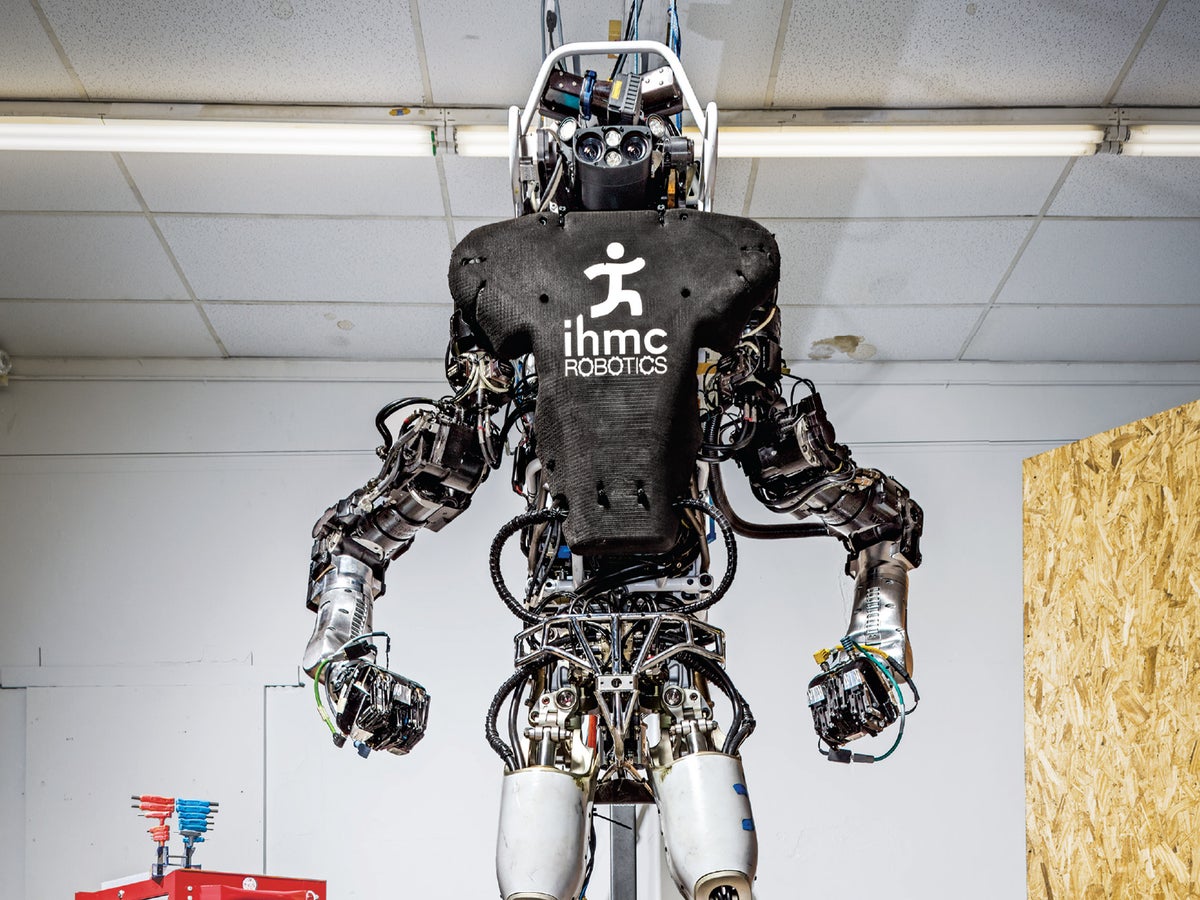
However, the smoothness we see today — yes, it’s smoother than older clips — is still a far cry from the effortless stride of a human or some highly refined research robots like Boston Dynamics’ Atlas. On very uneven ground or in cluttered environments, Optimus can still stumble or need periodic recovery adjustments.
So: walking? Yes. Smooth and robust in all conditions? Not yet.
➤ 2. Hands On: Grabbing Stuff Without Breaking Eggs
Arguably, the real magic of a humanoid robot is not walking but what it does once it gets somewhere.
Tesla has been showing off improved hand designs with increasing degrees of freedom — significantly more than some industrial robots — and sensory feedback that allows it to modulate grip strength. These are sophisticated features technically, not just servo motors.
Videos from Tesla and third‑party tech media show Optimus:
- Taking out trash bags.
- Opening cabinets.
- Folding laundry.
- Placing mechanical parts into fixtures on factory dollies.
There are also demonstrations of advanced manipulation such as sorting battery cells autonomously, using vision plus tactile and force sensors to detect and grasp the correct objects.
These tasks require coordination of:
- Vision processing (to “see” objects and locations).
- Motion planning (to route hands and feet).
- Force and tactile feedback (to adjust grip strength).
- Balance and locomotion integration.
That integration is non‑trivial — it’s the heart of mobile manipulation. And while Optimus can do it in controlled, predictable setups, it has limited success in highly cluttered, dynamic, or unstructured environments (like a messy home kitchen) without human guidance.
So: grabbing and manipulating simple objects? Yes. Fluid, unpredictable manipulation everywhere? Not yet.
➤ 3. Smoothness: What Does That Really Mean?
The term smooth is deceptively simple. In robotics, it’s about trajectory quality, sensor feedback loops, and dynamic control integration.

To walk smoothly, a robot must:
- Avoid jerky limb motions.
- Adjust for balance shifts instantaneously.
- Integrate perception and proprioception (self‑awareness of its limbs and joints).
- Anticipate terrain changes.
The strides Optimus takes today, compared to its 2021 debut, are unquestionably more fluid. But real smoothness — the kind where motion blends into graceful continuity — generally requires:
- Precision perception across multiple sensor modalities.
- Redundancy and fast reflexive control loops.
- More sophisticated learning algorithms.
There’s clear progress — Optimus now avoids simple bumps and maintains pace better than older generations. But in robotics labs around the world, a robot that can walk and also handle unpredictable obstacles while maintaining elegant motion is still very rare. The current benchmark is a mix of physics‑based control, AI planning, and sensory fusion — and Optimus is still in the early phase of that journey.
➤ 4. The AI Behind the Motion: Training and Vision
Tesla’s approach to training Optimus has shifted dramatically over time. Originally relying on motion capture and teleoperation data, the company is moving to a vision‑only training strategy — essentially recording humans performing tasks and teaching the robot through large video datasets.
This is ambitious. In theory, it means Optimus learns from demonstrations the way humans learn by watching people work. That’s a bold approach because it scales quickly — no custom code for each task — but it also introduces significant challenges:
- Robots must infer intentions and context from visual data alone.
- Vision data can’t capture haptic details without careful augmentation.
- Learning to generalize across contexts remains hard.
Today’s Optimus training pipeline still relies on supervised datasets and engineered objectives, so it isn’t an “AGI‑like learning brain” and won’t spontaneously decide to clean a messy counter without specialized training.
In simple terms: AI is making Optimus progressively smarter, but the robot isn’t autonomous in the everyday human sense yet.
➤ 5. Real‑World Challenges: From Demo to Domestic
Tesla faces hurdles beyond mechanical capabilities:
a. Sensor and Perception Limitations
While Optimus uses cameras, touch, and force sensors, unstructured environments (cluttered rooms, dim lighting, irregular objects) still present major difficulties. Academic research shows that even the best robot grasping models struggle in chaotic real‑world scenes.
b. Power and Endurance
Battery life remains constrained — rockets and EVs have large battery banks; humanoid robots need compact energy storage. Today’s robots often only run for limited durations before recharging.
c. Software Reliability
Reporters and researchers have noted occasional stumbles, resets, or anomalous behaviors in demos. Sometimes, a moment of overly human‑like motion (such as a quirky gesture) ends in a loss of balance.
d. Scale and Production
Tesla has struggled with scaling Optimus manufacturing and aligning robotics with its automotive supply chain priorities. Fewer robots have shipped than initially projected.
➤ 6. Where Optimus Excels
Despite the limitations, Optimus shines in:
👉 Controlled environment walking
👉 Basic manipulation of known object sets
👉 Simple chore simulation
👉 Demonstrations of strength and precision in staged tasks
These are non‑trivial achievements that have advanced the baseline for humanoid robotics outside pure research labs. But even these tasks often still rely on structured settings and clear visual cues.
➤ 7. Broader Context: Robotics Competition
Tesla isn’t the only player. Research institutions and companies like Boston Dynamics, Agility Robotics, and others are pushing human‑robot interaction and dynamic locomotion hard. Many of them have decades of focused robotics experience. Optimus adds a fresh commercial angle, but the baseline competition remains strong.
Some external observers even see current Optimus demos as more marketing than milestone — suggesting that Tesla still trails in raw robotic capability compared to niche specialists.
This doesn’t negate Tesla’s achievements, but it highlights the huge difficulty of general‑purpose humanoid robotics.
➤ 8. So: Can Optimus Walk and Grab Smoothly Yet?
Yes — on specific tasks, in controlled spaces.
Not yet — in chaotic, everyday real‑world environments with unpredictable objects and conditions.
The progress is real:
✔ walking looks more natural
✔ hands and tactile sensing are genuinely improving
✔ simple manipulation tasks already succeed
✔ AI‑based training is scaling capability
But the smooth, generalizable robot that can walk into your messy home, pick up laundry, sort random junk, and do it all with fluid grace — that is something we’re still years from seeing as a reliable consumer‑ready product.
➤ 9. The Future Outlook
Based on current trends:
Near term (1–3 years)
- Continued improvement in controlled task reliability
- Better perception in mildly unstructured environments
- More autonomous navigation indoors
Mid term (3–7 years)
- Broader task generalization via advanced AI
- Smarter manipulation across varied objects
- Collaborative human‑robot work in factories and care settings
Long term (7+ years)
- Truly versatile humanoids integrated into everyday life — still an open frontier
Tesla’s pace and innovation presence make Optimus one of the most watched robotics projects in the world. The vision is bold — now the engineering challenge is to make it real beyond the stage demos.