








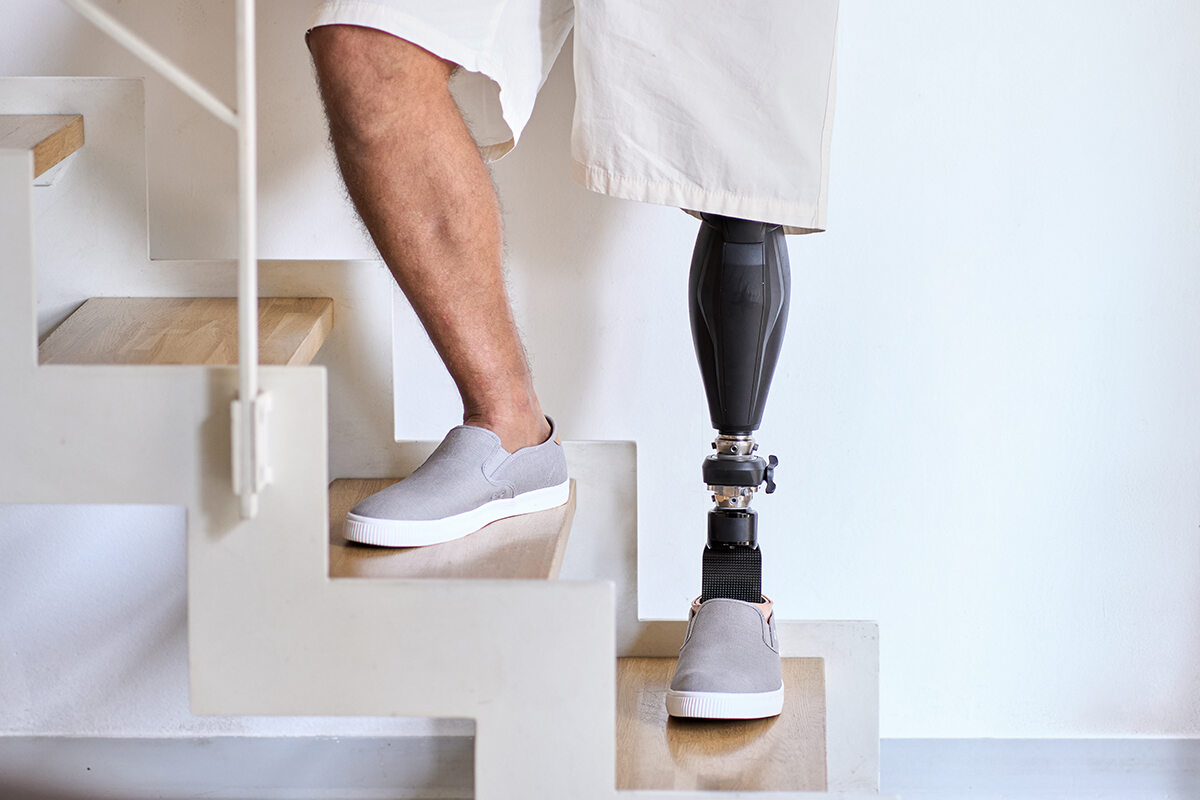

Walking is something most of us take for granted. Our knees seamlessly adapt to different speeds, terrains, and sudden changes in direction or balance. Yet for a bionic knee – an advanced prosthetic replacement designed to mimic human knee functionality – the everyday activity of walking presents a labyrinth of biomechanical, sensory, and control challenges that are far more complex than they appear at first glance.
In the modern era of robotics, biomechatronics, and personalized healthcare, bionic knees represent one of the most ambitious engineering endeavors in wearable human augmentation: a device meant to not just support weight, but dynamically and intelligently mimic a biological knee’s adaptability to real‑world environments. But despite remarkable progress, real‑world walking and balancing remain stubborn frontiers. This article dives deep into those challenges, explaining why bionic knees still struggle with tasks humans find effortless, what scientists and engineers are doing to overcome these hurdles, and how the next generation of bionic knees will improve mobility and quality of life for millions of people.
The Human Knee: A Brilliant but Elusive Blueprint
To understand why bionic knees struggle, we must first appreciate the biological knee’s genius. The human knee is not just a hinge. It is a biomechanically optimized structure that:
- Supports variable load through standing, walking, running, and jumping.
- Adjusts stiffness and damping in milliseconds via muscles and ligaments.
- Communicates with the central nervous system to adjust balance and gait continuously.
- Provides rich proprioceptive feedback — the body’s sense of limb position and motion.
This complexity arises from an integrated system of bones, soft tissues, nerves, and muscles. Reproducing that in a prosthetic device with sensors, actuators, and control algorithms is extraordinarily difficult.
Core Challenge #1 — Mimicking Biological Biomechanics
One of the most fundamental challenges for bionic knees is replicating the biomechanics of the human knee during dynamic activities.
Biological knees can smoothly change stiffness, absorb shock, and maintain balance across varying walking speeds and terrains. Traditional prosthetic knee systems, even advanced ones, often rely on pre‑programmed mechanical and hydraulic systems that cannot fully replicate this adaptability in real time. Worse, many commercial prosthetic knees were designed primarily for controlled environments such as rehabilitation clinics, not the unpredictability of everyday life where surfaces vary and forces change rapidly.
Biomechanical mismatches between prosthetic knees and biological knees often result in:
- Uneven gait — steps that lack smooth transitions.
- Higher energy expenditure — forced compensatory motions in hips and sound limbs.
- Balance issues — limited reactive responses on uneven terrain.
Researchers have found that even microprocessor‑controlled prosthetic knees (MPKs) improve stability and mobility over simpler mechanical designs, but they still fall short of matching natural knee dynamics, especially outside laboratory conditions.
Core Challenge #2 — Real‑World Balance and Stability
Walking indoors on flat, smooth floors is one thing — navigating rocky paths, slopes, and stairs is another. Human joints continuously adjust to slight shifts in balance and subtle changes in ground conditions. These adjustments are informed by proprioception — sensory feedback from muscles and joints.
Most prosthetic knees lack true sensory integration, meaning they cannot feel changes in ground conditions in a biologically meaningful way. Instead, they rely on built‑in inertial sensors and pre‑defined control strategies. These systems can detect general motion patterns, but they can’t fully anticipate or react to unexpected disturbances the way a biological leg does. This results in:
- Increased fall risk on uneven terrain.
- Delayed adaptation to sudden changes in ground compliance (e.g., grass vs. gravel vs. stairs).
- Poor shock absorption, making transitions less smooth.
As a result, prosthetic users must consciously monitor their gait and balance, taxing cognitive resources that the biological limb would normally handle subconsciously.
Core Challenge #3 — Sensory Feedback and User Intent
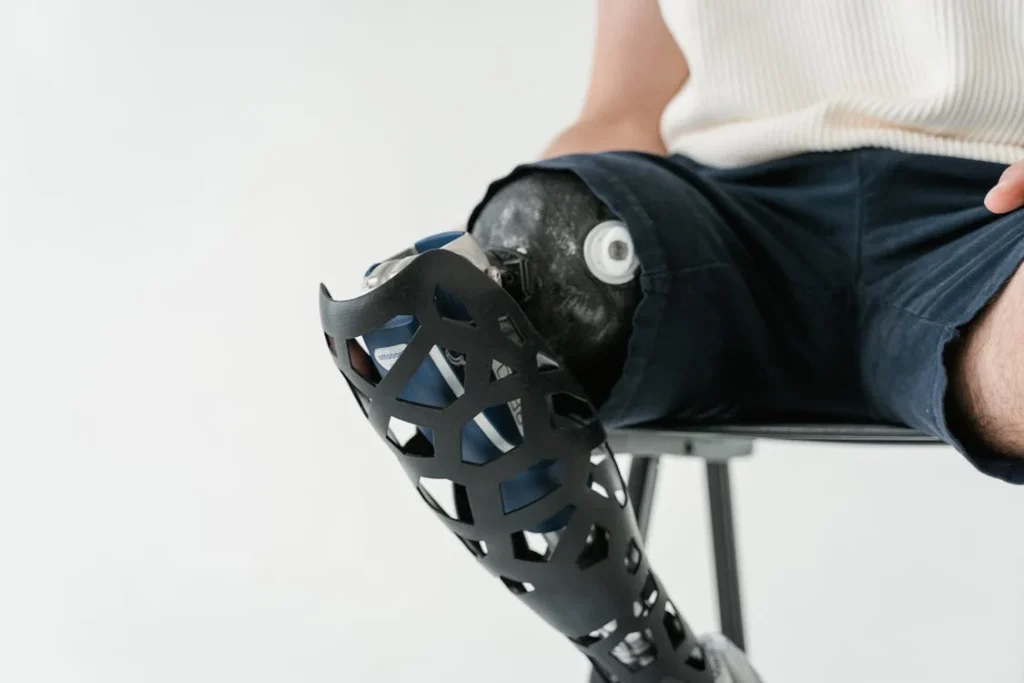
To achieve natural walking and balancing, a bionic knee must do more than mechanically actuate joint motion — it must intelligently infer the intent of the wearer.
Human gait is driven by a complex interplay between the muscles of the residual limb, sensory feedback, and the brain’s motor commands. Current prosthetic control strategies mostly depend on patterns detected by motion sensors and microprocessors, which can only approximate intent. That means:
- The knee may not react as quickly or accurately as a natural one because it cannot truly read the user’s motor intent.
- Users often need extended training and adaptation periods to synchronize their movement patterns with the prosthetic’s control systems.
- Maintaining balance on irregular surfaces or during quick changes in direction remains difficult.
Some advanced research prostheses are beginning to integrate muscle signals and neural feedback interfaces. For example, technologies that reconnect to residual muscle groups to provide biologically meaningful feedback, such as agonist–antagonist myoneural interfaces, can significantly enhance the sense of embodiment and control.
However, these systems are still experimental and often require invasive surgery, which limits their immediate scalability for widespread real‑world use.
Core Challenge #4 — Power, Weight, and Comfort Trade‑offs
Bionic knees often incorporate powerful motors and complex electronics to achieve dynamic, adaptive motion. But these features come with trade‑offs:
Weight
A heavier prosthetic requires more energy to move and increases fatigue during walking and balancing activities. Even lighter experimental designs strive to balance mechanics, motors, and battery systems without making the device bulky or tiring to use.
Power
Microprocessor control and active actuation (e.g., powered knee extensions and flexion adjustments) need electrical power. Battery limits can restrict operating time and responsiveness in real‑world walking scenarios that demand frequent power boosts for adapting to terrain, force changes, and balance corrections.
The challenge is designing compact batteries, efficient motors, and energy‑management systems that support prolonged walking and real‑world activities without making the prosthesis heavy or uncomfortable.
Core Challenge #5 — Uneven Terrain and Environmental Interaction
Real‑world environments are rarely flat. Pavements have cracks. Trails have rocks. Grass and gravel have unpredictable slopes. Unlike biological knees, which automatically adjust through reflex arcs and sensory input, prosthetic knees must rely on algorithms that interpret sensor inputs and make predictive decisions.
The challenges include:
- Terrain identification — differentiating between surfaces and selecting appropriate motion patterns.
- Adaptive control strategies — rapidly adjusting stiffness, damping, and joint speed in response to subtle environmental changes.
- Multi‑axis force response — real knees react to forces in multiple directions; prosthetic knees often struggle with lateral forces or unexpected weight shifts.

All of this means maintaining balance on surfaces like grass, sand, or submerged terrain remains problematic without complex sensory fusion systems and robust control algorithms that are still under development.
Core Challenge #6 — Asymmetry and Compensatory Gait Patterns
Even when a bionic knee performs technically as designed, users may still develop compensatory gait patterns. The body instinctively shifts weight, alters step length, or adapts posture to achieve stability. If a prosthetic knee cannot dynamically adapt to these micro‑compensations in real time, gait becomes asymmetrical.
Asymmetrical gait patterns not only increase fatigue but can lead to long‑term musculoskeletal issues such as back pain, hip strain, and joint wear on the sound limb — problems that users and clinicians report even with the most advanced prosthetic knees currently available.
Researchers who analyze gait patterns find that commercial prosthetic knees can improve symmetry but still exhibit deviations from preferred biological motion, especially when walking speeds change or on slopes.
Core Challenge #7 — Cognitive Load and Rehabilitation
For individuals using bionic knees, walking and balancing can impose significant cognitive strain. Unlike biological knees, which operate under subconscious neural control, prosthetic knees require:
- Conscious adaptation — users must learn how to shift weight, time steps, and adjust posture consciously.
- Rehabilitation training — extensive physiotherapy to align user muscles, balance strategies, and prosthetic configurations.
- Feedback loops — users often rely on visual and conscious feedback instead of the proprioceptive cues that natural limbs provide.
This increased cognitive load can make real‑world walking tiring, distracting, and even unsafe in complex environments such as busy streets or cluttered indoor spaces.
Advances Addressing These Challenges
Despite these deep‑seated challenges, scientific and engineering advances are rapidly narrowing the gap between biological and bionic function. Some promising directions include:
Neural Interfaces
Systems that connect prosthetic knees with neural signals from the residual limb or brain show tremendous promise. These allow intuitive control and richer feedback, enabling more natural gait and balance responses.
Machine Learning and Adaptive Control
Control algorithms powered by adaptive learning systems are being developed to continuously adjust gait strategies based on user behavior and environment feedback, improving stability and responsiveness.
Distributed Sensor Networks
Future prosthetic knees may integrate vision, inertial measurement units (IMUs), pressure sensors, and even environmental mapping to proactively adjust to terrain changes before the knee moves.
Lightweight Materials and Energy Optimization
Materials like high‑strength aluminum, advanced polymers, and custom‑fabricated titanium reduce weight. Energy regeneration techniques, where motion captures and stores energy from walking phases, can extend battery life.
Personalized Prosthesis Tuning
Custom calibration for each user’s gait patterns, residual limb anatomy, and daily activities helps match bionic knee performance more closely to real biological motion — reducing compensatory gait and balance issues.
The Future of Bionic Knees: Toward Seamless Integration
The ultimate goal of bionic knee design is not just enhanced mobility, but seamless integration with the human body and mind. Tomorrow’s systems will require:
- Improved neural control interfaces
- Real‑time adaptive motion models
- Predictive terrain awareness
- Biomimetic energy storage and redistribution
- User‑centric design prioritizing comfort, durability, and low cognitive load
As these elements converge, bionic knees will increasingly transform from prosthetic replacements into true biomechanical augmentations that empower users to walk, balance, and move with confidence across real‑world environments.
The journey from today’s microprocessor‑assisted knees to tomorrow’s neuro‑integrated bionic joints is not just an engineering challenge — it’s a human‑centric revolution in mobility.