








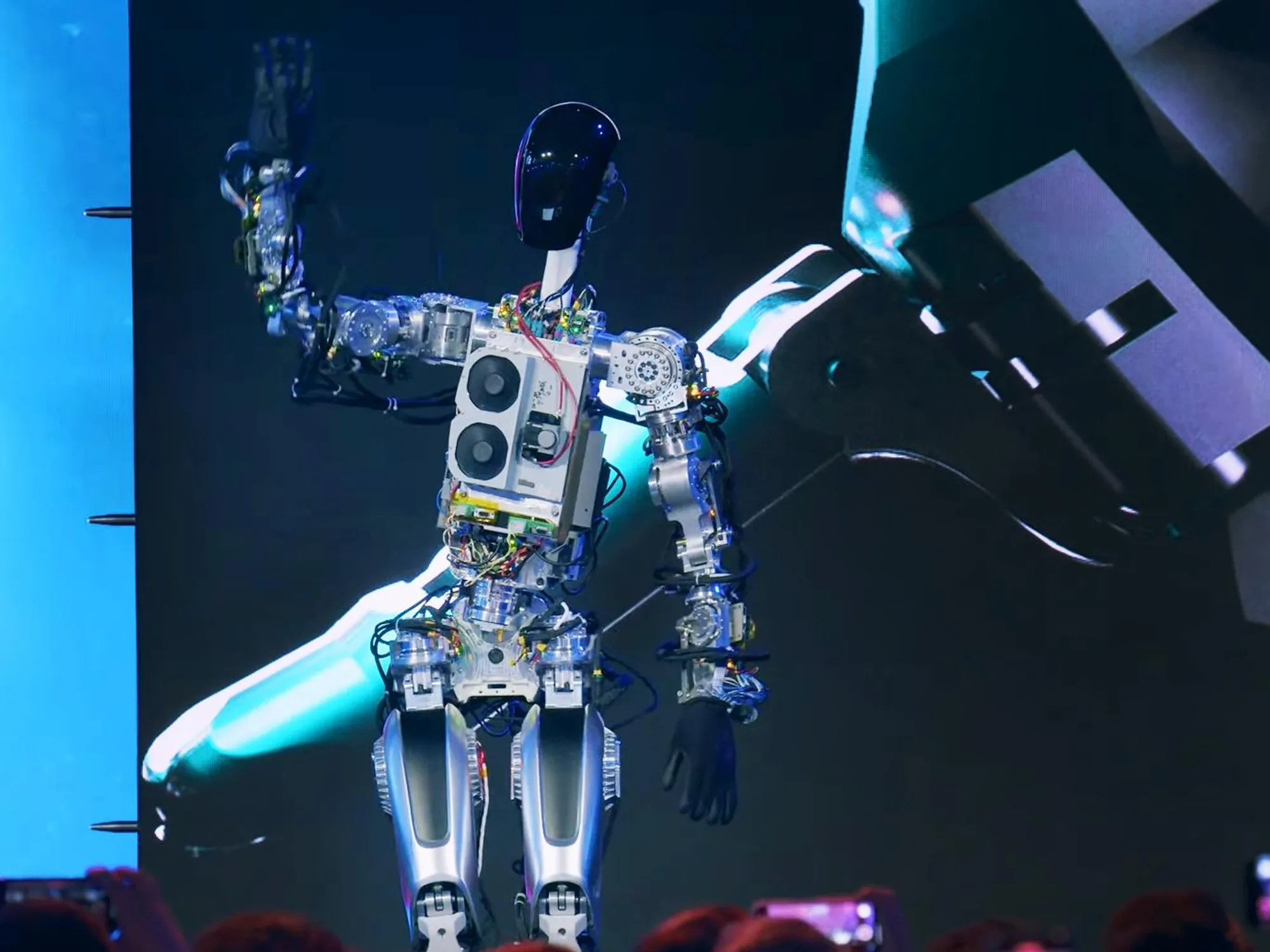

Since its debut in 2021, Tesla’s humanoid robot, Optimus, has captivated the world with its ambitious goal of reshaping labor, automation, and human-machine interaction. While the automotive giant has earned a reputation for revolutionizing electric vehicles and autonomous driving technology, the introduction of a bipedal robot, designed to perform a wide range of human tasks, has raised eyebrows and sparked a wave of excitement across various industries. But how far has Tesla’s robot come since its first prototype? In this article, we’ll explore its journey—from its conceptual beginnings to its current state—and discuss the future potential of this groundbreaking technology.
The Genesis of Tesla’s Robot: A Bold Vision for the Future
Tesla’s CEO Elon Musk first introduced the idea of the humanoid robot in 2021 during Tesla’s AI Day event. Musk’s vision was clear: a robot capable of performing mundane tasks, which would eventually replace human labor in repetitive or dangerous jobs, dramatically reducing costs for businesses and freeing people from monotonous work. This idea has long been a staple of science fiction, but Tesla aimed to make it a reality through the application of its cutting-edge AI and robotics expertise.
The original concept, which Musk presented, was a robot standing at 5’8″ (173 cm) tall, weighing about 125 pounds (57 kg), and capable of walking at a speed of 5 mph (8 km/h). The robot was designed to carry out simple tasks such as grocery shopping, picking up objects, and delivering tools, all while interacting with the world in a human-like manner.
The First Prototype: A Leap into the Unknown
Tesla’s first working prototype of Optimus was unveiled in 2022, marking a significant milestone in the development of humanoid robots. The robot, although far from perfect, demonstrated Tesla’s progress in building an autonomous machine capable of walking and performing basic movements.
At this stage, the robot was not yet fully functional in terms of performing complex tasks. Instead, it was more of a proof-of-concept to show the public that Tesla was serious about pursuing this ambitious venture. The initial prototype demonstrated some of the key features Musk had envisioned—like walking and maintaining balance—but it was still far from the polished version that would eventually be deployed in real-world applications.
The unveiling of the first prototype generated significant interest in both the tech community and the general public. Critics were quick to praise the robot’s potential, but they also pointed out the significant hurdles that still needed to be overcome. The robot had difficulty navigating complex environments, and its movements appeared stiff and robotic, lacking the smoothness and fluidity of human motion.
Despite these limitations, the prototype was an impressive start, considering that developing humanoid robots is an extremely challenging task. The integration of AI, machine learning, and advanced sensors is necessary to create a robot that can move naturally and interact with its environment in a meaningful way.
Advancements in AI and Robotics: Overcoming Early Challenges

One of the main challenges Tesla faced in the development of its robot was perfecting its AI algorithms. In order for a humanoid robot to be effective in performing real-world tasks, it needs to understand and process complex visual information, make decisions in real-time, and adapt to a wide variety of situations. Tesla has long been at the forefront of AI development, using neural networks to power its self-driving cars. These same algorithms were applied to Optimus, allowing the robot to gradually learn from its environment.
In the early stages, Optimus was equipped with a simple neural network that allowed it to perform basic tasks like walking and standing up. However, as Tesla continued to refine its AI models, the robot began to show improvements in its ability to handle more complex movements and interactions. For example, by 2023, the robot was able to perform more intricate tasks, such as lifting objects, picking up tools, and even following simple commands from human operators.
Another significant advancement came in the form of sensors and hardware. Tesla equipped Optimus with a suite of advanced sensors, including cameras, LIDAR, and ultrasonic sensors, to allow the robot to perceive its environment and react accordingly. These sensors help the robot navigate through obstacles, detect objects, and perform tasks with a level of accuracy that was previously unattainable in humanoid robots.
Tesla also focused on refining the hardware design of the robot to make it more flexible and durable. The early prototypes were bulky and had limited dexterity. However, over time, the company improved the joint mechanisms, allowing Optimus to move more fluidly and perform more human-like motions. These enhancements in hardware and AI are what will ultimately allow Tesla’s robot to fulfill its promise of becoming a versatile, autonomous helper in a variety of settings.
Real-World Applications: The Future of Labor and Automation
While the development of Tesla’s robot is still in its infancy, the potential applications of Optimus are vast. The company envisions the robot performing a wide range of tasks, from assisting in factories to helping with household chores and elderly care. Musk has suggested that, eventually, Optimus could be deployed in industries such as warehousing, logistics, and even healthcare.
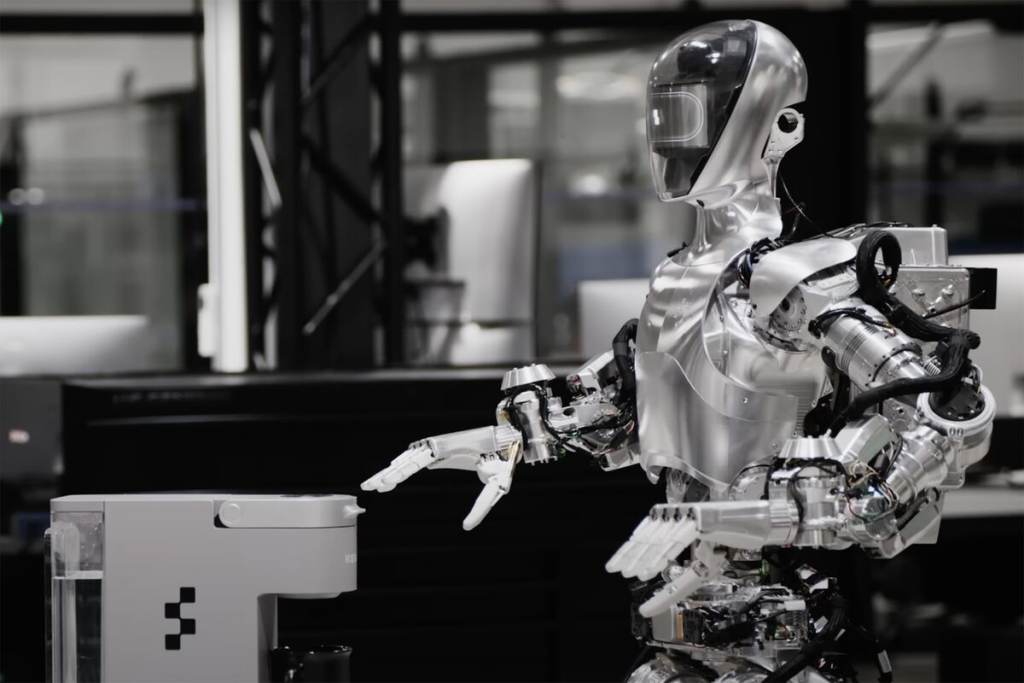
One of the most exciting prospects is the robot’s ability to enter the world of caregiving. As the global population ages, there is an increasing demand for healthcare workers and caregivers. Tesla’s robot, with its ability to assist with daily activities like lifting, feeding, and medication reminders, could alleviate the burden on human caregivers, making it easier to care for elderly patients or those with disabilities.
In industrial settings, Optimus could take over dangerous or repetitive tasks, such as assembling parts, lifting heavy objects, or performing maintenance work in hazardous environments. This would not only increase efficiency but also reduce the risk of injuries in the workplace.
Moreover, Tesla’s focus on automation could result in cost savings for businesses, allowing them to operate more efficiently while simultaneously improving the quality of service or production. As robots like Optimus become more capable and affordable, they could reshape entire industries, leading to the widespread adoption of autonomous workers across the globe.
Ethical and Societal Implications: A Double-Edged Sword
As with any groundbreaking technology, the development of Tesla’s humanoid robot raises important ethical and societal questions. The automation of labor could lead to job displacement for millions of workers around the world, particularly in sectors that rely heavily on manual labor, such as manufacturing, logistics, and customer service.
While Tesla envisions a future where robots take on mundane tasks, the displacement of workers could have significant economic and social consequences. Critics argue that this could exacerbate income inequality, as those who lose their jobs may struggle to find new employment in an increasingly automated world. Furthermore, the widespread use of robots in caregiving and healthcare could create new challenges in terms of human connection and emotional support, which are crucial aspects of these industries.
The rise of humanoid robots also raises questions about the role of artificial intelligence in society. As robots become more autonomous and capable of making decisions, there will be growing concerns about their ability to act ethically and responsibly. Ensuring that Tesla’s robot, and others like it, adhere to ethical guidelines will be critical in preventing unintended consequences.
Tesla’s approach to AI and robotics will need to be accompanied by thoughtful regulation and oversight to ensure that these technologies are deployed responsibly and equitably. Balancing the benefits of automation with the potential risks to society will be a delicate task, but one that must be addressed as the technology continues to evolve.
The Road Ahead: Optimus’ Potential and Challenges
Looking forward, the potential of Tesla’s humanoid robot is immense. As Tesla continues to refine its AI and robotics technologies, Optimus could evolve into a highly sophisticated and adaptable machine capable of performing a wide range of tasks with unprecedented precision and efficiency. The company’s deep expertise in AI, machine learning, and sensors gives it a unique advantage in the race to develop the next generation of humanoid robots.
However, challenges remain. Perfecting the robot’s physical design to match human dexterity, improving its AI to understand complex tasks, and addressing societal concerns around automation will be key hurdles that Tesla must overcome. The company’s track record of pushing the boundaries of technology suggests that it may well be up to the task. However, whether the humanoid robot can fully meet its potential in the next decade will depend on both technological advancements and societal acceptance.
The future of Tesla’s robot is still unfolding, and the journey from its first prototype to a fully functional humanoid assistant will be fascinating to watch. As it progresses, it has the potential to change the way we work, live, and interact with technology in profound ways. Whether it succeeds or falters, one thing is clear: Tesla’s ambitious venture into humanoid robotics is a step toward a future where artificial intelligence and robots play a much larger role in our daily lives.