









Bipedalism, the ability to walk upright on two legs, is one of the defining features of humans and some animals. It allows for efficient movement, freeing up the hands for tool use and other tasks. But have you ever wondered what makes bipedalism so stable? How do we maintain balance when walking or running, even though we have a small base of support (our two feet)? The answer lies in the control systems that govern our movements, specifically between open-loop and feedback-driven controls.
In this article, we will explore these two control mechanisms, their role in achieving stable bipedalism, and how they work in tandem to ensure that humans and robots alike can walk gracefully, without falling over.
Understanding Open-Loop Control Systems
Before diving into the specifics of bipedalism, let’s break down what an open-loop control system is. An open-loop system works on a “pre-programmed” set of instructions without adjusting for changes in the environment. Think of it as a machine following a script. Once the action is initiated, no feedback is used to adjust its movement.
In bipedal locomotion, open-loop control is useful for tasks that don’t require continuous adjustment. For example, when we walk, we often rely on pre-programmed motions stored in the brain, such as the basic timing and sequence of our leg movements. These motions don’t require constant recalibration during each step. Open-loop control ensures that our muscles move in a predictable, orderly manner, without needing continuous monitoring of every movement.
However, the major drawback of open-loop control is that it doesn’t account for external disturbances or changes in the environment. For instance, if you’re walking and trip on an obstacle, an open-loop system might not allow you to quickly adjust your balance to prevent a fall. This is where feedback-driven control systems come into play.
The Role of Feedback-Driven Control Systems
Feedback-driven control, on the other hand, works by continuously monitoring the state of the system (in this case, the body) and making real-time adjustments to maintain stability and desired outcomes. This is much like driving a car where the steering wheel constantly adjusts to keep the car on course, based on feedback from the road.
In the context of bipedalism, feedback systems use sensory input to constantly adjust movement patterns. These sensors—located in the muscles, tendons, and joints—provide real-time data about the position and movement of the body. The central nervous system processes this information and sends corrective signals to muscles to prevent falls and ensure stable walking.
Sensory Feedback Mechanisms in Bipedalism
To understand how feedback-driven control helps us walk, it’s essential to examine the sensory feedback mechanisms that play a critical role. The primary types of sensory feedback used during bipedalism include:
- Proprioception: This is the sense of body position. Specialized sensory receptors called proprioceptors in muscles and joints send signals to the brain to tell us the position of our limbs in space. For example, when walking, proprioception helps us detect the position of our legs, ensuring that they are properly aligned for the next step.
- Vestibular Feedback: The inner ear contains structures that detect changes in balance and orientation relative to gravity. When you tilt or sway, the vestibular system provides information to your brain, helping you adjust your posture accordingly.
- Visual Feedback: While proprioception and vestibular feedback are crucial for walking, vision plays an essential role too. When walking through an environment, the brain processes visual cues to anticipate obstacles, determine walking speed, and adjust step length. Without sight, humans would still be able to walk, but visual input helps to refine the process.
Together, these sensory systems contribute to the finely-tuned feedback loops that ensure we remain upright during locomotion.
Open-Loop vs Feedback-Driven Control in Practice
Now, let’s discuss how these two control strategies interact during real-world bipedalism. While open-loop control sets the foundation for our movements, feedback-driven control allows us to adapt and recover from unexpected disturbances.
Take a moment to think about walking on a busy sidewalk. For the majority of the time, the rhythmic motion of your legs follows a predetermined sequence. This is the open-loop system at work—your brain has a “walking program” that runs without requiring constant updates. However, if you suddenly trip on an uneven surface or encounter an obstruction, feedback systems take over. Your body instantly senses the imbalance, and your brain sends corrective signals to your legs and arms to prevent a fall.
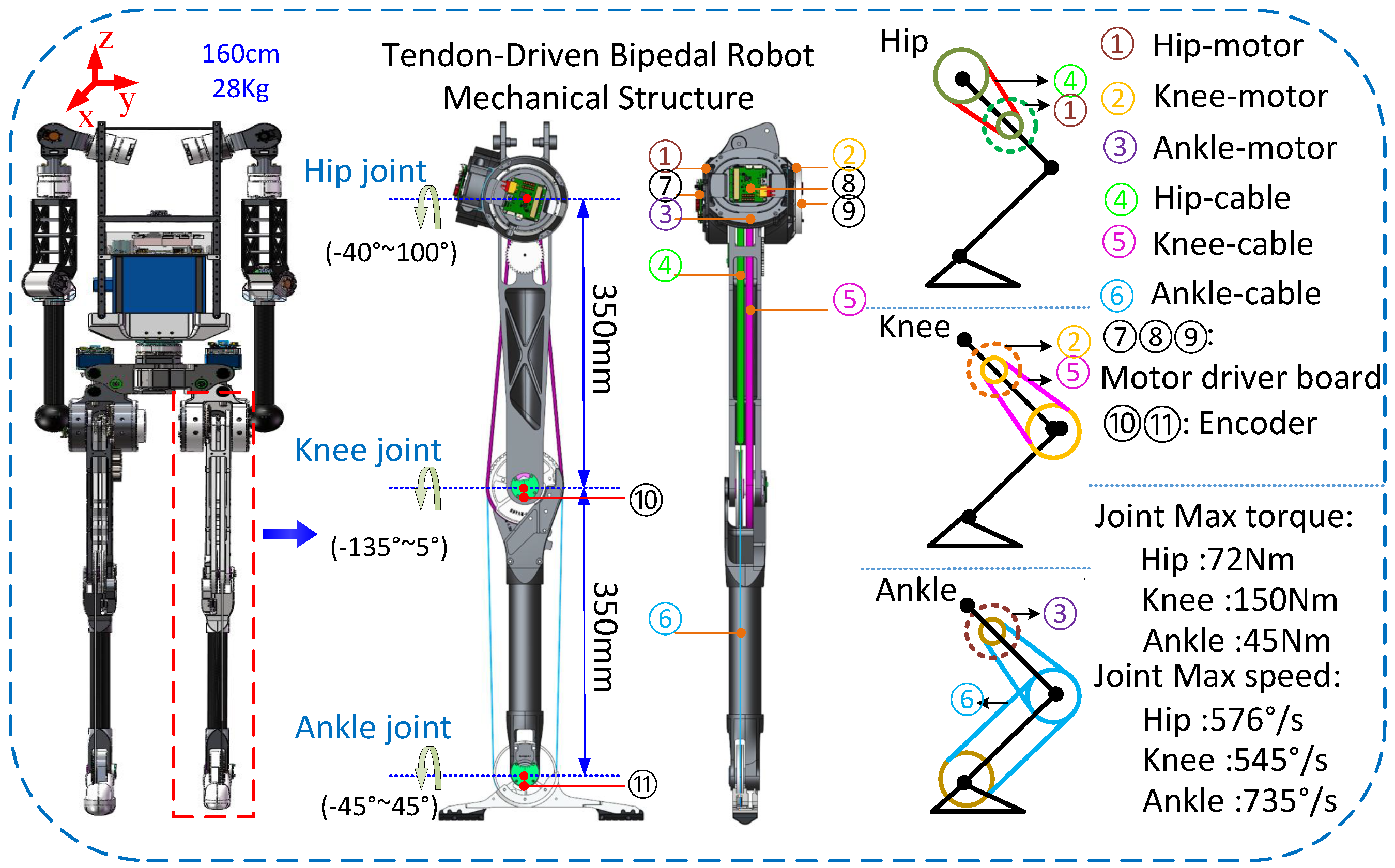
This interaction between open-loop and feedback-driven controls can be seen in robots as well. Robots designed for bipedal walking often combine pre-programmed movement sequences (open-loop) with real-time sensors (feedback) to maintain stability and adapt to dynamic environments.
Stability in Bipedalism: The Perfect Balance Between Control Systems
The key to stable bipedalism is maintaining a delicate balance between open-loop and feedback-driven controls. The open-loop system ensures that walking is energy-efficient by providing predictable movements. At the same time, the feedback system allows the body to respond to unexpected changes, such as a sudden gust of wind, a trip, or uneven terrain.
In research and robotics, this balance is critical. Early attempts to design robots with stable bipedalism often relied too heavily on one system over the other. For example, open-loop robots might move in a straight line without adjusting for external changes, while feedback-driven robots required more computational power to process real-time data. Today, the most advanced robots achieve stable bipedalism by seamlessly integrating both systems.
The Biomechanics of Stability
So, how exactly does the body achieve this balance between open-loop and feedback-driven systems? It all boils down to the biomechanics of walking, specifically how our body’s segments—legs, torso, and arms—coordinate to maintain balance.
The primary force driving us forward during walking is the “propulsive force,” generated by muscle contractions in the legs. This force is balanced by the “reactive force,” which acts through the foot when it makes contact with the ground. Our body needs to carefully manage this force distribution to avoid falling forward or backward.

The brain’s motor cortex continuously calculates and adjusts the necessary forces to keep the body in the ideal position. When a disturbance occurs—such as an unexpected object or uneven surface—the brain uses feedback from proprioception and other sensors to adjust posture and walking speed in real-time.
Robots and Bipedalism: Lessons from Nature
One of the most intriguing aspects of studying human bipedalism is how it informs the development of humanoid robots. Scientists and engineers often look to the human body as a model for creating robots that can walk on two legs. Understanding the interaction between open-loop and feedback-driven control is essential for building stable, energy-efficient robots.
In recent years, we’ve seen significant advancements in bipedal robot design. Robots like Boston Dynamics’ Atlas or Honda’s ASIMO integrate sophisticated sensors, machine learning algorithms, and feedback control mechanisms to achieve impressive feats of balance and movement. These robots rely on the principles of both open-loop and feedback-driven systems to walk on various terrains, climb stairs, and even perform gymnastic feats like backflips.
Challenges and Future Research Directions
Despite these advances, there are still challenges in achieving stable bipedalism, both in humans and robots. For example, human walking relies heavily on muscle strength and joint flexibility, which can vary significantly between individuals. Additionally, certain conditions—such as age-related muscle loss or neurological disorders—can disrupt the fine-tuned feedback mechanisms that maintain stability.
For robots, while progress has been made, energy efficiency, adaptability to diverse environments, and real-time feedback processing still pose challenges. Many robots still struggle to navigate complex terrains, adapt to uneven surfaces, or handle the unpredictability of real-world conditions.
The future of bipedal robotics lies in advancing these feedback systems, incorporating more sophisticated sensors, and developing algorithms that can predict and react to changes in the environment with greater precision. By studying the open-loop and feedback-driven control systems of human bipedalism, we can continue to improve the walking abilities of robots and create more stable, efficient robotic systems.
Conclusion: A Unified Approach to Stable Bipedalism
In conclusion, stable bipedalism is the result of an intricate balance between open-loop and feedback-driven control systems. Open-loop controls provide predictable movement patterns that allow us to walk efficiently, while feedback-driven controls enable us to adapt to unforeseen challenges. Together, these systems work in harmony to ensure that humans—and robots—can navigate the world without falling.
Whether you’re studying biomechanics, robotics, or simply marveling at the wonders of human motion, understanding the role of these two control mechanisms provides valuable insight into one of the most sophisticated forms of locomotion. The future of bipedalism, both biological and robotic, lies in refining these systems to create more stable and adaptable movements.