









(Note: This article has been researched and written with web‑linked sources to ensure accuracy and timeliness.)
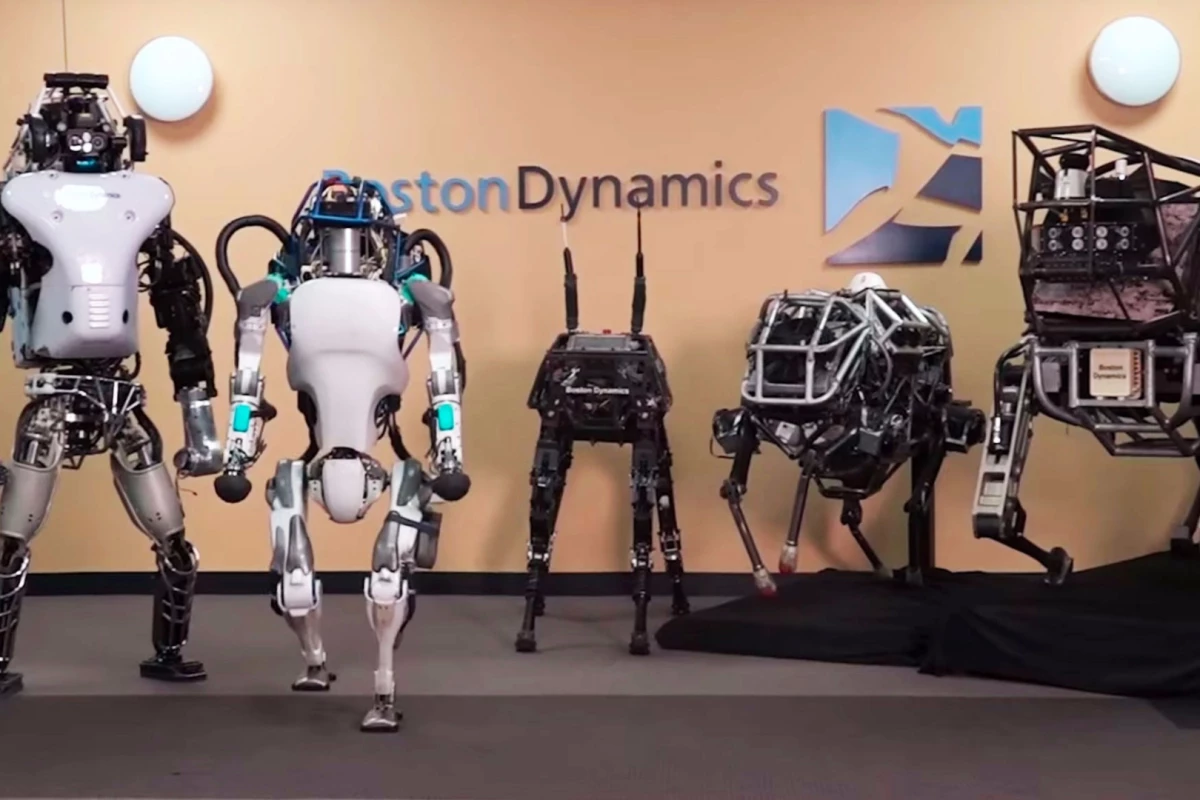
In the realm of robotics, few platforms have captured the imagination of engineers, researchers, and the public quite like Boston Dynamics’ humanoid robot Atlas. Over the past decade, Atlas has evolved from modest walking demonstrations to executing dynamic, complex motion sequences such as parkour, dancing, carrying objects, and — most intriguingly — performing robust push‑recovery locomotion. In this article, we’ll dive deep into Atlas’s push‑recovery locomotion algorithm, unpack what it teaches us about balance and agile motion in robots, and explore broader implications for robotics, AI, and future applications.
Atlas isn’t just a robot that walks — it’s a testbed for cutting‑edge locomotion and control algorithms, where the most advanced ideas in motion prediction, feedback control, and intelligent planning are tested against gravity, uneven ground, and unpredictable disturbances. What makes Atlas’s push‑recovery capabilities particularly remarkable is how it integrates prediction, real‑time control, balance modeling, and adaptive behavior into a unified system that keeps the robot upright under forces that would easily topple most machines.
The Basics: What Is Push‑Recovery in Robotics?
In biomechanics and robotics, push‑recovery refers to a robot’s ability to absorb or compensate for external forces that disturb its balance — for example, someone bumping into it, a strong gust of wind, or uneven terrain that suddenly shifts underfoot. In humans, push‑recovery emerges naturally from complex muscle reflexes, rapid perception, and a sophisticated balance system. Translating this to robots requires both an intelligent sensing framework and an advanced control algorithm that can determine how to respond in milliseconds.
The challenge of push recovery isn’t simply to react — it’s to decide ahead of a disturbance what actions will maintain balance, and then execute those actions reliably. Atlas’s locomotion algorithm approaches this problem through model predictive control (MPC) and dynamic balance evaluation, allowing it to anticipate future motion states and adjust its actions in real time.
Model Predictive Control: The Engine Under the Hood
At the heart of Atlas’s balance and push‑recovery strategy is Model Predictive Control (MPC). MPC is a form of control where, at every moment, the robot predicts its immediate future state based on its current motion, forces, and planned actions. Using these predictions, MPC optimizes the robot’s controls to best achieve its balance and movement objectives over a short planning horizon.
Imagine walking down a sidewalk when someone lightly shoves you from the side. Instinctively, your brain predicts how your body will shift, how your feet should land, and how joints should respond to keep you upright. Atlas’s algorithm does something analogous: it continuously evaluates the outcomes of different control decisions, weighs them against measured forces and states, and selects the one that minimizes the risk of falling. This optimization approach works not only for steady walking but also for unexpected disturbances — the essence of push‑recovery.
MPC’s benefits include:
- Dynamic adjustment of motion trajectories because the robot can constantly recompute plans as conditions change.
- Predictive balance estimation, enabling early correction before errors grow large.
- Integration with perception and sensor feedback, allowing the control system to interpret reality rather than just react to it.
Importantly, MPC isn’t limited to balance alone — it supports high‑level coordination between locomotion and manipulation tasks, such as carrying or throwing objects while maintaining stability.
Sensing and Perception: Knowing Where You Are
Push recovery doesn’t happen in a vacuum — it relies on accurate sensing and perception. Atlas uses a suite of sensors including inertial measurement units (IMUs), force/torque sensors, joint encoders, and vision systems to build a live understanding of its body configuration and environment.
Sensors help estimate the robot’s center of mass, foot placement, terrain geometry, and external forces. All of this feeds into the motion planner and controller. In effect:
- Vision helps Atlas anticipate obstacles and prepare its motion strategy.
- Force sensors tell it when it experiences an unplanned shove.
- IMUs provide real‑time balance and orientation data.
This sensory integration allows the control algorithm to adjust foot placement, limb movement, and weight distribution before a small imbalance becomes a fall. That’s the key distinction between reactive and proactive stability.
Prediction + Optimization: The Secret Sauce
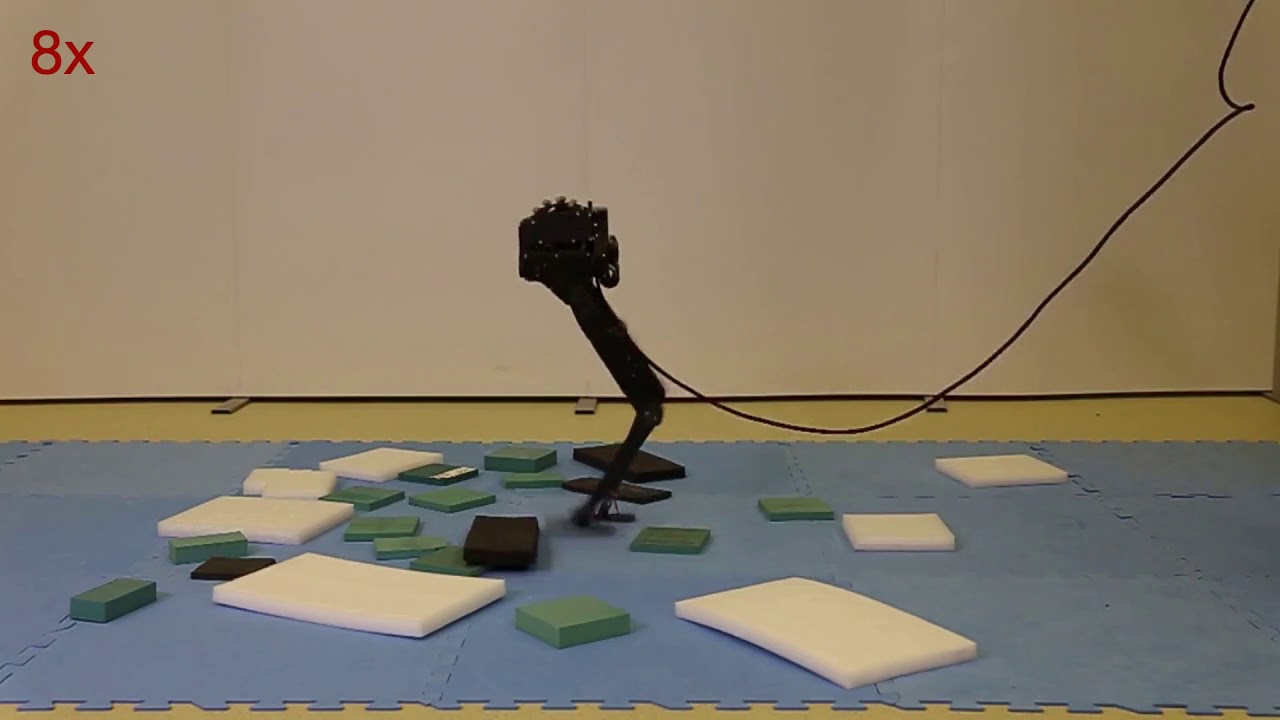
Most basic robots steer based on rules — “if X happens, do Y.” Atlas’s algorithm goes further: it models how different control choices will influence future motion and chooses the sequence of actions that best preserves balance while continuing toward its goal.
That’s why Atlas can do things like jump while carrying a payload: the controller doesn’t just say “stay upright.” It predicts how the added weight and momentum from the carried object will affect balance, then optimizes the motions to stabilize both the robot’s body and the object. This kind of anticipatory control requires both accurate models of the robot’s dynamics and fast optimization routines — something that was considered impractical just a decade ago.
This prediction‑driven approach is precisely what enables Atlas to react to disturbances at time scales shorter than direct feedback loops alone could manage. When an external force interrupts the robot’s planned motion, the controller reevaluates the upcoming trajectory and adjusts foot placement, torso orientation, and momentum in real time. That’s advanced push‑recovery.
Push‑Recovery as an Indicator of Robust Mobility
Push‑recovery isn’t just a cool trick — it’s a litmus test for robust robotic mobility.
In robotics research, push‑recovery often serves as a benchmark for how well a robot can handle real‑world scenarios like:
- Walking on uneven and slippery surfaces
- Interacting with dynamic environments
- Working alongside humans without tipping over
In research contexts, algorithms like those designed for Atlas often use models like Single Rigid Body dynamics or Hybrid Linear Inverted Pendulum (HLIP) to emulate human‑like balance strategies. Combining these with MPC allows the robot to adjust footstep timing, step location, and joint torques to recover balance quickly.
Interestingly, this field of study extends beyond Atlas — research has explored push‑recovery on other robots using reinforcement learning or human‑inspired balance strategies. Yet Atlas’s controller stands out for its integration of model‑based prediction with real‑time optimization, making it a flagship example of modern push‑recovery locomotion.
Beyond Locomotion: What This Teaches Us About Intelligent Machines
Atlas’s push‑recovery algorithm offers insights that go well beyond one robot. Here’s what this research teaches us:
1. Integration Is Key
Smart robots need tight integration between sensing, planning, and control. Siloed approaches (vision separate from control, balance separate from manipulation) simply can’t achieve the fluid adaptability seen in Atlas.
2. Prediction Beats Blind Reaction
Systems that predict future states — rather than only reacting to current errors — handle disturbances far better. This principle is equally relevant in autonomous cars, drones, and even financial bots that must anticipate change.
3. Dynamic Behavior Libraries Empower Diversity
Boston Dynamics and research partners are now using Large Behavior Models (LBMs) trained on diverse tasks to teach Atlas how to generalize balance strategies and locomotion skills across many situations. This approach goes beyond static control rules into learning‑driven adaptability.
4. Human‑Like Motion Requires Human‑Level Planning
Atlas’s capabilities remind us that smooth motion is not mechanical — it’s computational. Complex tasks like parkour, carrying objects, or handling pushes require nuanced planning, balance prediction, and an understanding of momentum and inertia — the same physics that govern human motion, now encoded in algorithms.
Practical Applications: Where Push‑Recovery Pays Off
Understanding push‑recovery isn’t just academic — it has real‑world impact.
Construction and Logistics
Robots that can balance under disturbance can operate in cluttered job sites, handle uneven flooring, and work safely alongside humans.
Healthcare and Elder Care
Assistive robots need to maintain balance when helping patients, navigating tight spaces, or being bumped accidentally — push‑recovery is essential.
Autonomous Systems
Any mobile robot — from delivery bots to planetary rovers — must handle unpredictable forces and terrain without external supervision.
Sports Science and Rehabilitation
Algorithms derived from push‑recovery research inform assistive exoskeletons and prosthetics, bringing more natural motion to medical robotics.
Challenges and Future Directions
Despite remarkable progress, push‑recovery algorithms still face limitations:
- Computational Demand: MPC requires heavy optimization — current systems rely on powerful onboard processors.
- Generalization: Adapting to completely novel environmental forces not seen in training remains hard.
- Sim‑to‑Real Gaps: Algorithms that work in simulation sometimes falter on real hardware due to unmodeled dynamics.
However, advances in reinforcement learning, neural predictive models, and hybrid control architectures are rapidly closing these gaps, promising even more capable robots in the years ahead.