








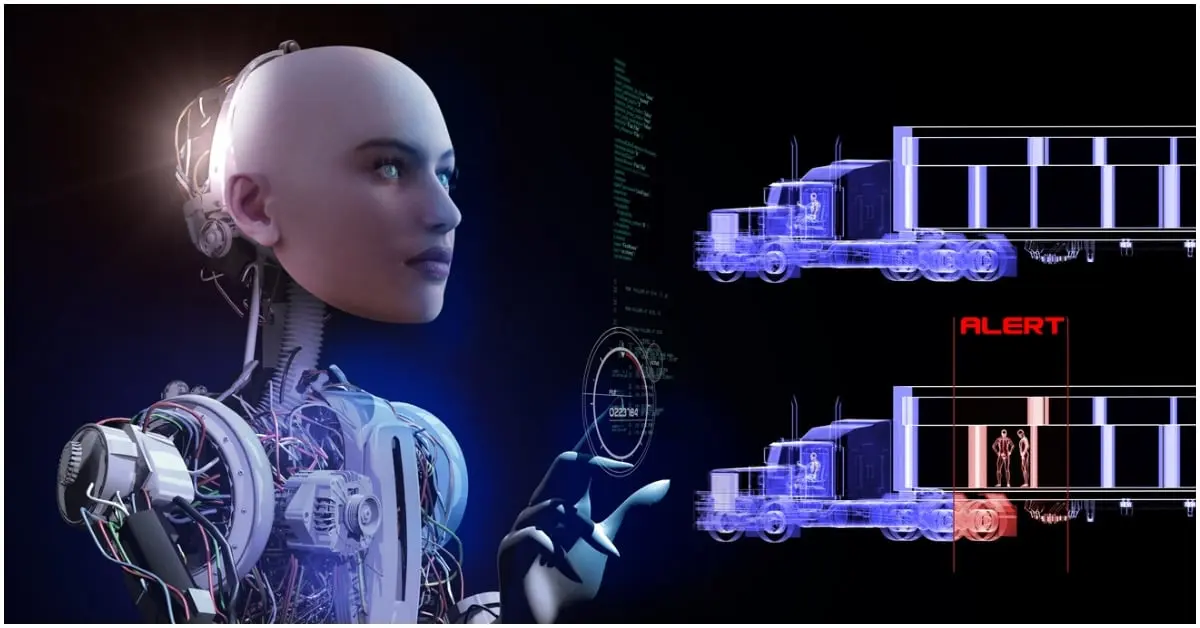

Humanity stands on the threshold of an extraordinary transformation. Robots — once confined to factory floors and sci‑fi novels — are rapidly taking on forms and functions that echo our own bodies, behaviors, and social norms. From humanoid arms that mimic the fluid movements of human hands to social robots that appear to feel, the push toward human‑likeness in robotics is unstoppable, intriguing, and deeply unsettling. But is there a limit to how human‑like a robot can become? This article explores that question from technological, philosophical, ethical, and societal angles — weaving expert insight, real‑world data, and bold speculation into a compelling narrative.
The Human Form: Why Robots Try to Look Like Us
Humans are built for a world designed by and for humans. Doors, tools, machines, vehicles — all are designed around a human’s range of motion, perception, and stature. Unsurprisingly, engineers have largely adopted the human blueprint for robots intended to integrate into human environments: two arms, two legs, articulated hands, and a head full of sensors.
This approach isn’t mere mimicry. A humanoid structure allows robots to navigate and interact with human spaces more naturally than wheels, treads, or alternative configurations. Humanoid robots can reach for door handles, climb stairs, and use tools designed for human reach and grip. These structural similarities make human‑like robots exceptionally versatile and valuable across industries.
Yet this form also highlights the first core limitation: engineering complexity. The human hand alone has over 27 degrees of freedom, with complex muscle‑tendon systems allowing fine manipulation and dexterity. Replicating that in robots with motors, gears, and control systems is vastly more challenging — and costly — than designing wheels or simple grippers.
Hardware Constraints: The Brutal Physics of Human Emulation
Despite dramatic advances in robotics, several hardware limitations constrain how human‑like robots can become — and may continue to do so for decades.
Energy and Power:
Humanoid robots depend on compact, lightweight power sources. Today’s batteries deliver limited runtime, often just a few hours before recharging is needed — far short of a human’s endurance. Operating complex motor systems and sensors continuously strains current power technology and creates heat that must be managed.
Actuation and Motion:
A human body moves with astonishing precision and grace. Translating neural commands into muscle tension — and coordinating thousands of such signals — remains an engineering marvel unmatched by modern robotics. While advanced robots like Boston Dynamics’ Atlas demonstrate remarkable agility, their mechanical complexity and control requirements reflect just how demanding human‑like motion truly is.

These constraints aren’t purely technical — they reflect physical laws and material science limits. Compact energy storage, highly efficient actuators, and ultra‑lightweight yet robust materials are all prerequisites for robots that match human performance in real‑world settings. Until such breakthroughs become engineering realities, robotic human‑likeness is bounded by the laws of physics.
AI and Autonomy: The Soft Limits of “Human‑Like” Cognition
If hardware defines the robot’s body, then artificial intelligence (AI) defines its mind. Here the limits become even more nuanced — blending cognition, learning, perception, and social intelligence.
Today’s robots largely rely on narrow AI: intelligence programmed or trained for specific tasks. They can recognize objects, follow spoken commands, or even mimic facial expressions, but they lack the broad, flexible reasoning that defines human thought.
For robots to approach human‑like autonomy, they must master:
Generalized reasoning: An AI that can adapt knowledge from one domain to another without retraining.
Natural conversation: Truly responsive dialogue, ingrained with context, nuance, and emotional understanding.
Self‑directed decision‑making: The ability to choose goals and evaluate outcomes independently — something humans excel at but robots currently cannot replicate.
While AI research makes impressive headway, profound questions remain. Can robots ever experience understanding or consciousness, or will they always simulate it? Can AI systems genuinely grasp complex social cues, emotional nuance, or moral ambiguity — or are they constrained to patterns and predictions? These questions are not merely technological but philosophical.
The Uncanny Valley and Human Perception
There is a psychological boundary to how human‑like machines should be, known as the uncanny valley. As robots become more human in appearance and behavior, human comfort increases — until we approach near‑perfect likeness. At that point, small imperfections cause discomfort, eeriness, or rejection. This phenomenon suggests that too much human likeness can backfire.
Research even indicates that people sometimes prefer robots that are clearly robotic rather than nearly human, because the latter triggers unrealistic expectations or social confusion. For certain tasks, a robot that looks somewhat mechanical but feels intuitive may be more effective and better accepted than an ultra‑humanlike counterpart.
This psychological barrier — rooted in human cognition — represents a kind of soft limit on how human‑like robots can practically be, regardless of engineering prowess.
Ethics, Identity, and the Robotic “Self”
As robots approach human‑like behavior, we encounter a different kind of limit — one that intersects with deep ethical questions about identity, autonomy, and responsibility.

Should robots be given rights if they become indistinguishable from humans in appearance and behavior? Do social robots deserve protections against mistreatment? What happens if robots claim preferences or choices that appear autonomous? These questions have moved from speculative fiction to serious academic inquiry.
Some scholars argue that we will continue to deny human‑like qualities to robots, not because they lack complexity but because humans instinctively refuse to treat non‑biological entities as equals — a bias termed anti‑robot speciesism. This suggests that the limit of robot human‑likeness may be not just technological, but cultural.
Moreover, there are ethical imperatives that shape robot design. Longstanding concepts like Asimov’s Laws of Robotics — updated for the era of autonomous AI — remain guiding principles in some robotics research and policy discussions.
Social Roles: Useful, Trustworthy, or Replaced?
The integration of human‑like robots into daily life raises practical limits shaped by society itself.
Trust and social acceptance: Research suggests that trust between humans and robots depends not only on performance but on perceived intentions and predictability. Robots that simulate emotions or social cues may be easier to trust in caregiving or education roles — but overshooting that line may provoke discomfort.
Labor and economy: Humanoid robots promise to disrupt labor markets, offering 24/7 labor without fatigue, hazard, or routine dissatisfaction. However, the pace at which robots can perform complex tasks — and whether they can do so more efficiently than humans — will dictate their economic viability and societal acceptance.
In many fields, less human‑like machines perform better and cheaper than humanoids. Specialized automation already dominates manufacturing because it does the job more effectively than a humaniform robot. A future with robots more human‑like than necessary is possible — but not guaranteed.
Regulation and Legal Limits
As robots become more integrated into society, governance becomes essential. Legal frameworks must address safety, liability, privacy, and ethical standards. Some experts even propose global treaties to define limits on humanoid function, military deployment, and corporate transparency.
Without such regulation, the push for ever‑more human robots could collide with public safety, privacy rights, and international norms. The limit here isn’t just what robots can do — it’s what society allows them to do.
Toward or Beyond Human‑Like?
Given the physical and cognitive constraints discussed, a compelling case emerges:
Yes, there may be practical limits to how human‑like robots physically and cognitively can become — constrained by energy, engineering, psychology, and ethics.
But no absolute barrier prevents continuous advancement — especially as materials science, AI, and robotic design evolve.
If robots reach levels of movement and cognition that match humans — or even exceed them in specific domains — we may transition from discussing human likeness to something entirely different: robotic identities with their own trajectories. The future may not look like replicants walking among us, but rather hybrid ecosystems where humans and robots co‑exist in complementary roles.