









The Uneasy Familiarity
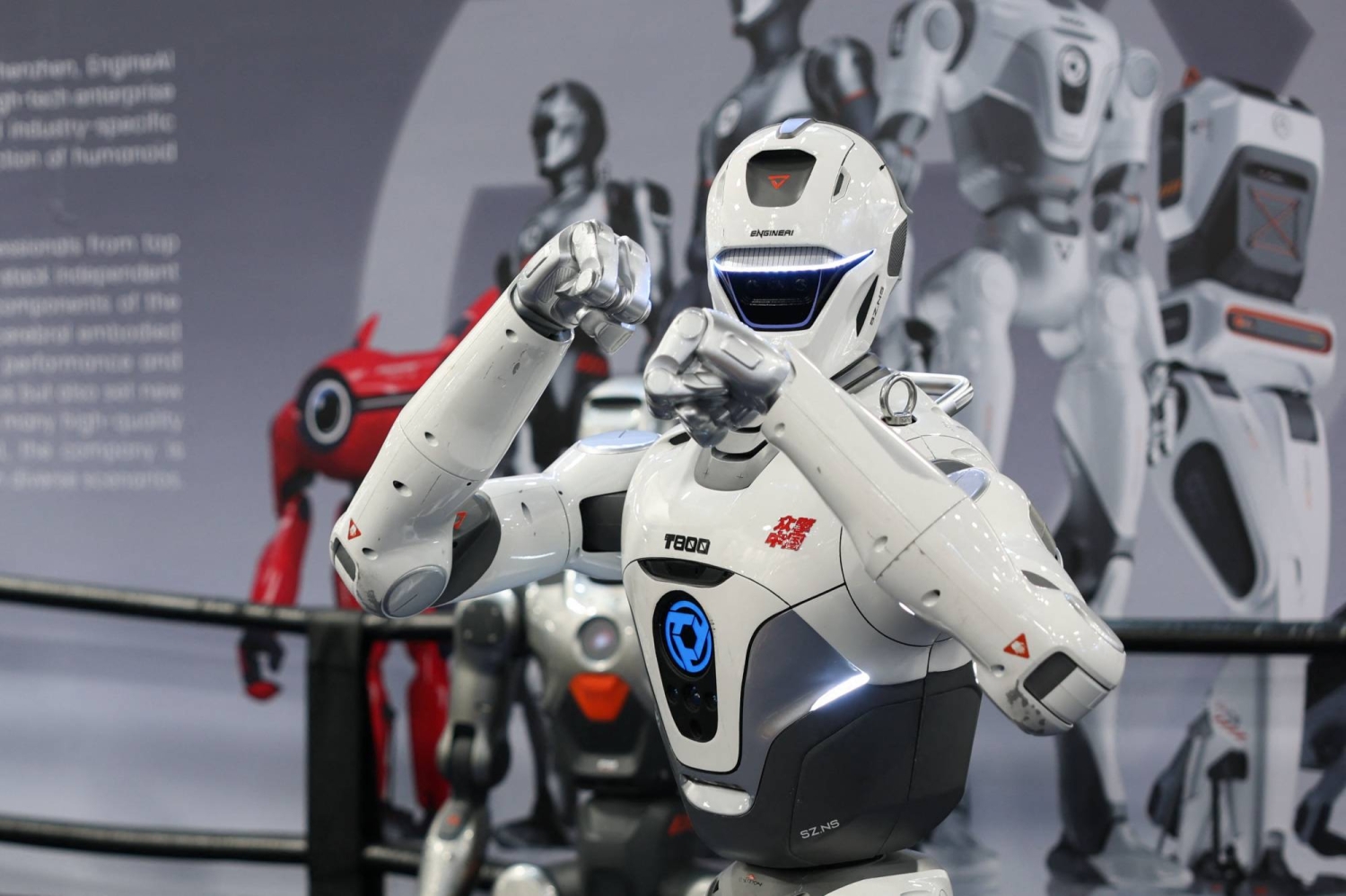
There is something deeply unsettling about a machine that looks like us.
Not because it is perfect—but because it is not.
A humanoid robot does not need to pass as human to provoke discomfort. In fact, it is precisely its almost-human quality that creates tension: the mechanical pause before movement, the slightly delayed response, the absence of emotion behind an otherwise human-like form.
This phenomenon is often described through the lens of the Uncanny Valley—a psychological response in which entities that closely resemble humans, but fall short in subtle ways, trigger unease or even revulsion.
But focusing only on aesthetics misses the larger point.
The real ethical tension surrounding humanoid robots is not how they look.
It is what they represent.
They blur boundaries that have long defined human society:
- Between tool and worker
- Between object and agent
- Between intelligence and autonomy
And once those boundaries begin to dissolve, the questions that follow are no longer technical.
They are moral.
The Illusion of Agency
One of the most immediate ethical challenges posed by humanoid robots is the illusion of agency.
When a machine walks upright, uses its hands, and responds to language, it invites us—almost irresistibly—to treat it as something more than a tool.
This is not a new phenomenon.
Humans have long anthropomorphized objects, from ancient idols to modern digital assistants. But humanoid robots amplify this tendency in unprecedented ways.
A voice assistant does not have a body.
A humanoid robot does.
And embodiment changes everything.
When a robot performs tasks in physical space—picking up objects, interacting with people, navigating environments—it begins to occupy a role that has historically been reserved for humans.
The ethical problem arises when perception diverges from reality.
A robot may appear autonomous, but in most cases, it is still operating within constraints defined by programmers, datasets, and algorithms.
Yet humans respond to it as if it has:
- Intentions
- Understanding
- Even emotions
This creates a dangerous ambiguity.
If a robot appears to make decisions, who is responsible for those decisions?
The manufacturer?
The operator?
The AI system itself?
Or does responsibility dissolve into the system as a whole?
Labor Without Rights
Perhaps the most immediate and tangible ethical issue is labor.
Humanoid robots are explicitly designed to perform tasks traditionally done by humans.
This raises a fundamental question:
What happens when labor is replaced by entities that do not require wages, rest, or rights?
Historically, automation has displaced certain jobs while creating others. But humanoid robots represent a different scale of disruption.
Unlike specialized machines, they are designed to operate in human environments.
This means they can potentially replace workers across a wide range of sectors:
- Logistics
- Manufacturing
- Retail
- Care services
The ethical concern is not just job loss.
It is the asymmetry between human and robotic labor.
Humans:
- Require compensation
- Have legal protections
- Possess dignity and rights
Robots:
- Have none of these constraints
From a purely economic perspective, the incentive is clear.
From an ethical perspective, it is deeply problematic.
If companies can replace human workers with machines that have no rights, what prevents a race to the bottom?
And more importantly:
What happens to the concept of work itself?
The Dignity Question
Work is not just a means of survival.
It is a source of identity, purpose, and social structure.
Humanoid robots challenge this in a uniquely direct way.
A factory robot does not resemble a human worker.
A humanoid robot does.
This resemblance carries symbolic weight.
When a humanoid robot replaces a human, it does not just take over a task—it appears to take over a role.
And that has psychological consequences.
Consider a warehouse worker replaced by a machine.
If the machine is an industrial arm, the replacement feels abstract.
If the machine walks, lifts, and operates like a human, the replacement feels personal.
It raises uncomfortable questions:
- Are humans being reduced to interchangeable units?
- Is human labor being devalued?
- Does resemblance imply equivalence?
These are not economic questions.
They are existential ones.
Surveillance in Motion
Humanoid robots are not just workers.
They are also sensors.
Equipped with cameras, microphones, and AI systems, they continuously collect data about their environment.
This creates a new form of surveillance:
Embodied surveillance.
Unlike fixed cameras, humanoid robots can:
- Move through spaces
- Follow individuals
- Interact directly with people
This expands the scope of data collection dramatically.
In workplaces, this could lead to:
- Increased monitoring of employees
- Behavioral tracking
- Performance analytics at unprecedented levels
In public or private spaces, the implications are even broader.
Who owns the data collected by these robots?
How is it stored, analyzed, and used?
And can individuals meaningfully consent to being observed by a machine that looks and behaves like a person?
The ethical challenge here is not just privacy.
It is power.
Emotional Manipulation
Another emerging concern is emotional interaction.
As AI systems become more advanced, humanoid robots may be capable of simulating empathy, responsiveness, and social cues.
This creates opportunities—but also risks.
In contexts such as elder care or education, emotionally responsive robots could provide support and companionship.
But there is a fine line between support and manipulation.
If a robot is designed to:
- Encourage certain behaviors
- Influence decisions
- Build emotional trust
Then it is not just interacting.
It is shaping human experience.
And unlike humans, it does so without genuine emotion or accountability.
This raises difficult questions:
Is it ethical to design machines that simulate care without feeling it?
Can emotional bonds with machines replace human relationships?
And who controls the objectives behind these interactions?
The Problem of Moral Status
As humanoid robots become more advanced, a philosophical question emerges:
Do they deserve moral consideration?
At present, the answer is generally no.
Humanoid robots do not possess consciousness, self-awareness, or subjective experience.
But the issue is not so simple.
Ethics is not only about what entities are—it is also about how we treat them.
Even if robots are not conscious, treating them as disposable or abusive objects could have indirect effects on human behavior.
For example:
- Does mistreating a humanoid robot normalize aggression?
- Does it erode empathy?
- Does it blur the distinction between acceptable and unacceptable behavior?
These questions are not hypothetical.
They reflect broader concerns about how technology shapes moral norms.
Regulation: Always Too Late?
One of the recurring patterns in technology is that regulation lags behind innovation.
Humanoid robots are no exception.
Current legal frameworks are not designed to address:
- Autonomous physical agents
- AI-driven decision-making
- Human-robot interaction
This creates a regulatory vacuum.
Companies can develop and deploy systems faster than policymakers can respond.
The risk is that ethical considerations become secondary to market incentives.
By the time regulations are introduced, practices may already be entrenched.
The challenge, then, is not just to regulate—but to anticipate.
The Cultural Dimension
The perception of humanoid robots varies across cultures.
In some societies, robots are seen as helpful companions.
In others, they are viewed with suspicion.
These differences influence:
- Adoption rates
- Ethical expectations
- Regulatory approaches
Understanding this cultural context is essential.
Ethics is not universal—it is shaped by values, history, and social norms.
Humanoid robots, by mimicking human form, inevitably interact with these cultural dimensions.
A Mirror, Not Just a Machine
Ultimately, humanoid robots are not just tools.
They are mirrors.
They reflect how we understand:
- Work
- Intelligence
- Identity
- Humanity itself
The ethical questions they raise are not new.
But they are intensified.
Because for the first time, we are building machines that do not just assist us.
They resemble us.
Conclusion: The Boundary We Must Define
The rise of humanoid robots forces a fundamental choice.
Not about technology—but about values.
What role do we want these machines to play?
What boundaries should they respect?
And what responsibilities do we bear as their creators?
The answers will shape not only the future of robotics.
But the future of human society.
Discussion about this post