









Introduction
In the swirling debate over the future of work, one question hovers above all others: Will robots displace millions of jobs or create new roles? This isn’t a mere thought experiment. It’s a central issue shaping economies, policy decisions, education systems, business strategy, and even cultural attitudes toward technology. From the assembly line to the front office, from healthcare to logistics, robotics and artificial intelligence (AI) are redefining labor in real time.
To answer this question, we must understand two forces pushing and pulling the employment landscape: the automation of tasks and the expansion of new opportunities. Both forces are powerful and real — yet they affect jobs differently depending on industry, region, skill level, and policy environment.
Let’s embark on a deep dive into what the evidence tells us about job displacement, job creation, and how humans and robots co‑evolve in the economy of tomorrow.
The Automation Wave: Reality or Myth?
Robots Aren’t Coming — They’re Already Here
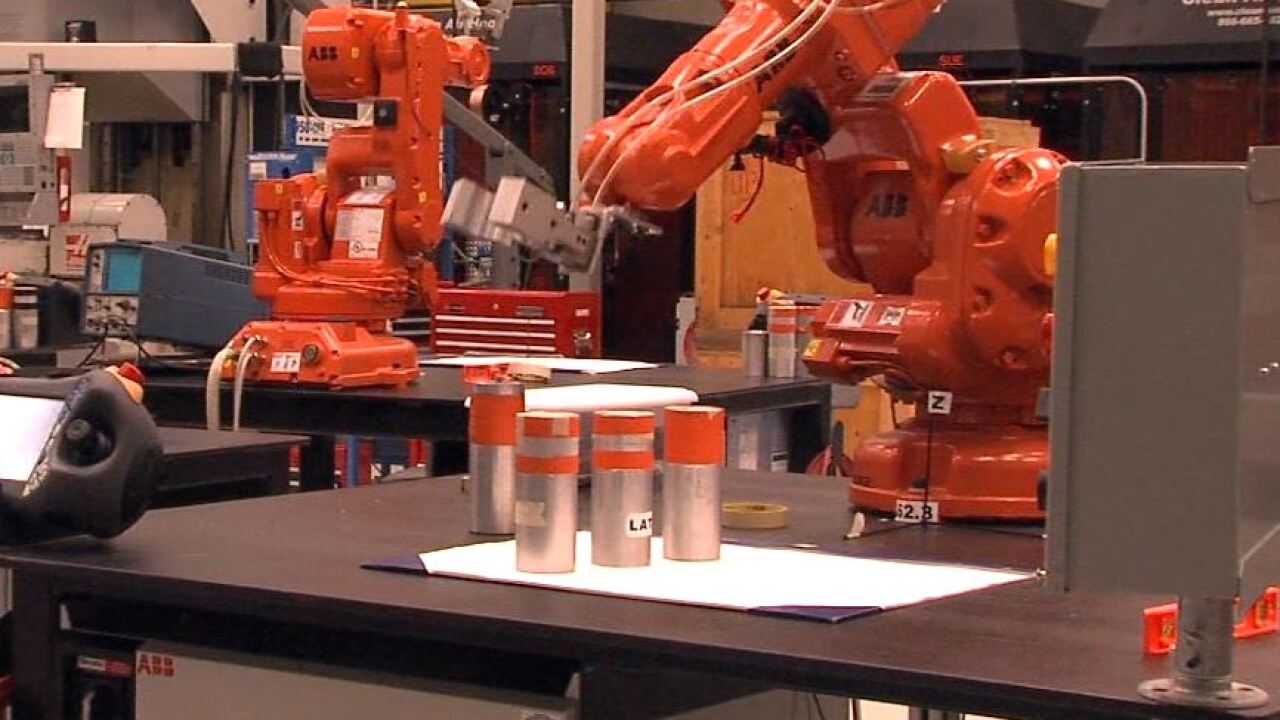
Automation isn’t a future threat — it’s an ongoing transformation. Robots have long been fixtures on factory floors, performing repetitive physical tasks with greater speed and precision than humans. Now, robots powered by AI are expanding beyond controlled environments into dynamic, unstructured tasks like sorting packages, assisting in surgeries, harvesting fruit, and delivering goods.
This shift from fixed, programmed machines to context‑aware, learning systems — sometimes called physical AI — means robots can adapt to more human‑like roles, interpreting environments and collaborating with workers rather than simply performing fixed sequences of motions.
What Jobs Robots Are Most Likely to Replace
The jobs most exposed to automation are those with tasks that are predictable, repetitive, and rule‑based — whether physical or cognitive. Examples include:
- Manufacturing line work: robots have steadily replaced repetitive production tasks.
- Warehousing and logistics: automated pickers, robots navigating fulfillment centers, and intelligent sorting systems reduce the need for human labor in routine tasks.
- Data‑entry and routine clerical roles: software automation can process thousands of structured data entries faster and with fewer errors than humans.
Across many labor markets, surveys and forecasts show millions of workers in entry‑level positions, clerical jobs, and basic services are vulnerable to automation in the next decade.
Do Robots Eat Jobs or Replace Tasks?
It’s key to recognize robots and AI often don’t “replace jobs” directly — they replace tasks within jobs. A cashier might no longer scan items manually at a grocery store because a self‑checkout kiosk does that, but the same store still requires people to manage customer service, respond to issues, and handle exceptions. This distinction frames the broader debate: disruption is real, but so is task restructuring.
Job Displacement: The Dark Side of Automation
Massive Displacement Projections
Industry and research forecasts warn that automation could displace millions of jobs in the medium term. For instance:
- The World Economic Forum reports that automation and AI could displace around 92 million jobs by 2030.
- Some analyses suggest that 40% of employers worldwide anticipate workforce reductions due to AI automation.
- Other industry reports note displacement in routine office, retail, and factory roles.
Such numbers highlight the scale of transformation, especially for workers lacking advanced digital skills or access to retraining pathways.
Differential Impact Across Demographics
Automation’s effects are not uniform. Young workers, older workers, and lower‑skilled employees are especially vulnerable. At the 2026 World Economic Forum, IMF leadership warned that young labor markets face significant disruption as automation affects roles that often serve as entry points to employment.
These disparities extend beyond age. Women in clerical roles, older manual workers, and communities with lower education levels often have fewer opportunities for rapid reskilling — deepening inequality risks if job displacement isn’t addressed proactively.
Worst‑Case Scenarios: Underemployment and Structural Shifts
Some analysts warn of structural shifts that could result in stagnant or declining employment levels if automation advances faster than new roles emerge. Without proactive policies and training infrastructure, automation might produce long periods of underemployment or segmented labor markets.
The Bright Side: Robots Creating New Roles
Robot‑Driven Job Creation
Here’s where context matters. Multiple credible forecasts show that technology’s job creation potential can exceed displacement — but only if economies invest early in skills and innovation.
For example, the World Economic Forum’s broader forecast suggests that emerging technologies could create 170 million new jobs globally by 2030 — outpacing the 92 million expected displaced roles.
These new roles tend to cluster in areas that demand:
- AI development and oversight
- Data science, analytics, and engineering
- Cybersecurity and digital infrastructure
- Cloud computing and robotics maintenance
- Green tech and sustainable systems engineering
- Creative industries and human‑centered professions
This reflects a broader trend: automation eliminates routine tasks, but innovation often expands the boundaries of what work is possible.
New Frontiers of Work
Beyond numbers, entirely new categories of work are emerging — some we barely recognize today. Examples include:
- AI ethics specialists
- Human‑machine interaction designers
- Autonomous systems trainers
- Augmented reality facilitators for remote collaboration
These roles illustrate that while robots automate tasks, they often augment human capabilities, creating demand for skills in creativity, judgment, empathy, complex problem‑solving, and strategic thinking.
The Path to High‑Value Role Expansion
Some industry leaders emphasize that automation is enhancing the value of certain jobs rather than eliminating them. For example:
- Construction and infrastructure roles supporting massive AI‑related buildouts (e.g., data centers) are increasingly high‑paid.
- Medical specialists such as radiologists may find their workflows augmented by AI tools, allowing focus on human‑centric tasks.
In this ecosystem, humans and machines work as collaborators, not competitors.
Balancing Displacement and Creation: A Nuanced Truth
Not an Either/Or Proposition
The most accurate answer to our title question is: robots will both displace jobs and create new roles — but their impact won’t be evenly distributed.
Automation is accelerating in areas where tasks are standardized and rule‑based. Meanwhile, new jobs often require higher levels of digital literacy, adaptability, and human‑centric skills. This shift raises critical questions about education, training, and societal support systems.
The displacement vs. creation narrative often misses this context: the success of humans in the future labor market depends on policy choices and skill development now.
Skills and Education as the Great Equalizer
Countries and companies that invest in continuous learning ecosystems — from vocational training to lifelong education — position their workforce for growth. Market needs include:
- Digital skills (coding, analytics, AI fundamentals)
- Creative and critical thinking
- Emotional intelligence and intercultural communication
- Adaptability and continuous learning
This shift suggests a future where workers are not static experts but versatile problem‑solvers, ready to collaborate with machines.
The Role of Policy and Ethics
Technological progress does not operate in a vacuum. Regulation, safety standards, fair access to education, and ethical norms all shape whether automation results in broad prosperity or unequal disruption.
At Davos and other global forums, leaders are calling for AI regulation, inclusive growth frameworks, and equitable access to training to ensure the benefits of automation are widely shared.
Conclusions: Co‑Creating the Future of Work
So, will robots displace millions of jobs or create new roles? The evidence points to both outcomes — displacement and creation — occurring simultaneously. The balance between these forces will depend on how societies prepare:
- Investing in human skills that complement automation
- Designing policies that protect workers while encouraging innovation
- Fostering lifelong learning ecosystems
- Shaping technologies around ethical and human‑centric principles
In a well‑governed transition, robots and AI don’t render humans obsolete — they unlock new realms of possibility for how we work, innovate, and contribute.
The question isn’t whether robots will change jobs — but how we humans will change with them.