









Introduction: The Dawn of a New Workforce
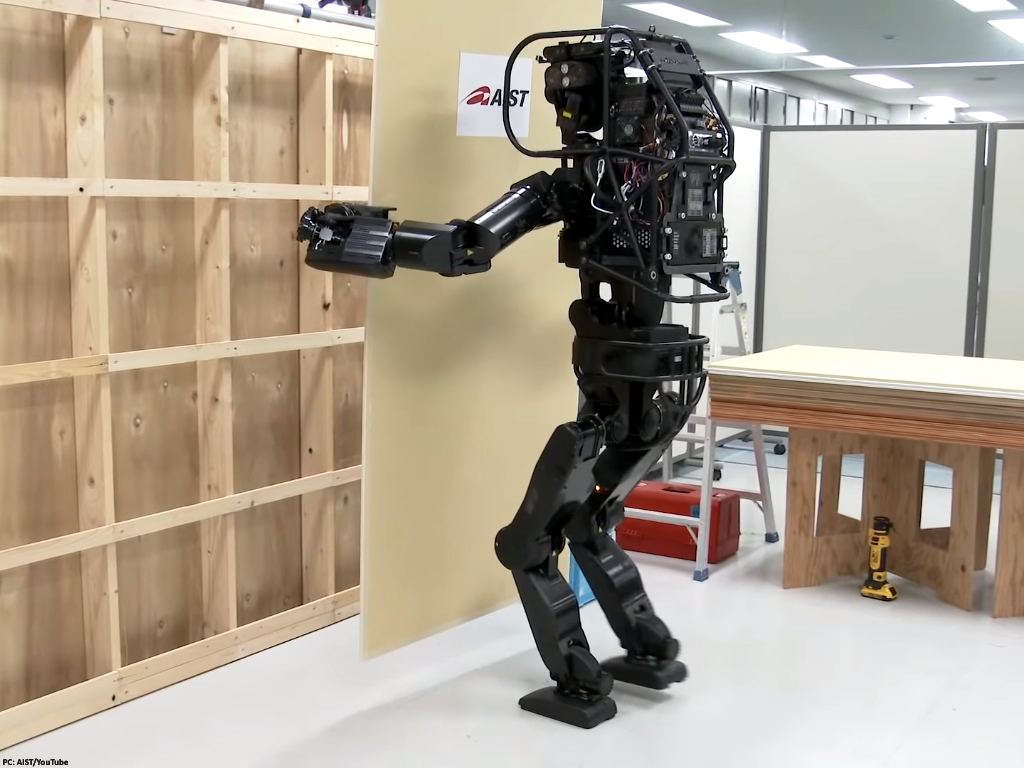
Humanoid robots — once the stuff of science fiction — are increasingly stepping out of labs and into environments that look a lot like real workplaces. In 2026, multiple indicators suggest we are not simply witnessing incremental technical progress, but the beginning of a structural shift in how physical work gets done. Whether it’s robots lifting parts on assembly floors, navigating logistics hubs, or preparing to assist in homes, the trajectory is unmistakable: humanoid robots are ready to leave the testing floor and earn their keep.
If you’ve ever wondered whether robots will soon become your colleague — not just a research exhibit — 2026 might well be the year we finally answer “yes” with tangible deployments.
Chapter 1: From Demonstrations to Deployments — A Reality Check
In the past decade, humanoid robots were mostly confined to labs, where researchers showcased stunning walking stabilizations or dexterous hand movements in controlled settings. These demonstrations were captivating but did not indicate near‑term commercial use.
Today, however, demonstrations are quickly being replaced with pilot deployments: robots tested in real factory aisles, logistics centers, and warehouses. Pilots aren’t mere PR stunts; they are engineering experiments designed to measure uptime, safety, and interaction with human workers on real workflows.
At major global events like CES 2026, multiple humanoid platforms were presented not as curiosities, but as real systems with pricing, timelines, and use‑case roadmaps suited to business environments. Robots were shown performing tasks such as household chores and industrial support functions, representing a major shift from past shows centered on prototypes.
This contextual shift — from “look how it walks” to “here’s what it can do” — is the hallmark of 2026.
Chapter 2: The Technological Foundations Enabling Real World Use
Several cross‑cutting technologies have matured around humanoid robots, making real‑world applications feasible:
AI & Embodied Intelligence
Robots are now equipped with AI systems that extend beyond scripted routines. Embodied intelligence — combining perception, reasoning, and physical action — allows robots to adapt to unstructured environments rather than just follow pre‑programmed sequences. This blend is what enables robots to detect objects, navigate human‑like spaces, and respond to dynamic scenarios.
Advanced AI models let robots interpret natural language, recognize objects, plan tasks, and learn from experience, narrowing the gap between laboratory behavior and workplace performance.
Sensory and Actuator Advances
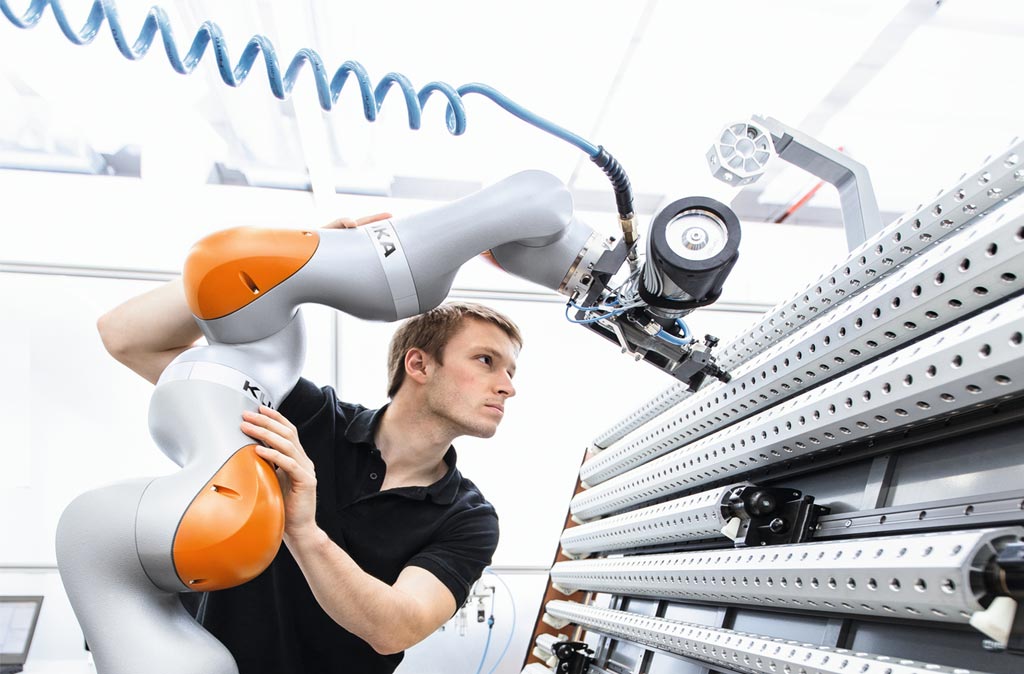
Breakthroughs in haptic sensing, precision joints, force feedback, and longer battery life mean that robots can perform tasks reliably for extended periods without constant human supervision. Sophisticated perception stacks bring together cameras, LiDAR, and tactile sensors to navigate and manipulate in three‑dimensional spaces — key for deployment outside controlled environments.
Cost Reductions
Humanoid robots used to be prohibitively expensive, but costs are dropping rapidly. Predictions once pegged units at well over $100,000; today, entry‑level humanoids are being marketed in the ~$20,000 range for early commercial customers — an inflection point that makes pilot projects financially justifiable for companies.
These technological and economic trends together establish a foundation for useful, not just novel, robot work.
Chapter 3: Early Use Cases — Where Robots Are Already Working
Industrial and Manufacturing Environments
Industrial settings are among the most advanced arenas for humanoid robot deployment. Several major companies are integrating robots for tasks previously handled by humans:
- Automotive assembly floors: Robots assist with parts handling and sequencing, filling labor gaps for repetitive, ergonomically strenuous tasks.
- Logistics and warehouse operations: Robots equipped with advanced perception systems move boxes, load bins, and work alongside humans in storage facilities.
- Smart manufacturing facilities: Large manufacturers like Foxconn are incorporating humanoids into automated lines, supported by AI platforms for real‑time training and coordination.
These early industrial cases emphasize value creation: robots improve throughput, reduce injury risk, and fill labor gaps in environments where speed and repetition are dominant.
Pilot Healthcare and Service Roles
Beyond industrial floors, humanoid robots are beginning to appear in service roles. In hospitality and customer service, robots are being tested as greeters, assistants, and even caregivers in controlled settings. These roles still require significant human oversight but demonstrate a path toward broader human–robot collaboration.
Consumer and Home Support
While widespread home robot deployment — robots that autonomously cook, clean, or care for family members — remains aspirational, companies are already offering consumer humanoids capable of performing some household tasks under supervision. This is a major step toward normalization of robots within peoples’ daily lives.

Chapter 4: Technical and Practical Challenges
Stepping out of the lab doesn’t mean all hurdles are cleared. In fact, real‑world deployment highlights new complexities:
Safety and Human Interaction
Robots must share space with humans safely. This requires fail‑safe behaviors, robust perception, and policies that account for unpredictable human movement. Building trust in shared spaces — from warehouses to living rooms — remains a central engineering and ethical challenge.
Generalization and Adaptability
While robots perform well in controlled industrial contexts, household environments present extreme variability — cluttered rooms, pets, furniture of varied shapes — making general task planning difficult. Robots must interpret ambiguous instructions and break them into actionable sequences, a frontier still under active research.
Cost vs. Benefit
Although costs have dropped, deploying humanoid robots remains a significant investment. Businesses must justify this by proving measurable ROI — productivity gains, reduced injury costs, or labor support — before large‑scale adoption becomes mainstream.
Chapter 5: Economic and Social Impacts
The rise of humanoid robots raises big questions about the future of work. Reports suggest humanoid technologies could form a multibillion‑dollar industry by the mid‑2030s, with potential implications for labor structures and economic models.
Key impacts include:
- Labor augmentation: Robots are likely to take on tasks that are repetitive, hazardous, or ergonomically challenging, not necessarily replace all human work.
- New roles: Human workers may shift into supervision, maintenance, and robot‑training roles, creating new skill demands.
- Workplace transformation: Businesses might redesign workflows to integrate robots as collaborative teammates rather than stand‑alone machines.
Societal considerations — from job displacement to robot ethics — will shape how equitable and sustainable this integration becomes.
Chapter 6: Regulation, Governance, and Public Perception
As robots enter workplaces and public spaces, governments must establish standards for safety, accountability, and privacy. Clear regulatory frameworks are crucial to ensure public trust and prevent misuse.
Public perception is equally important. Stories of robots dancing, running marathons, or performing sports capture attention, but real adoption hinges on confidence in reliability and utility. Educating the workforce and general public remains essential to acceptance.
Conclusion: Is 2026 the Year?
So, is 2026 the year humanoid robots step out of labs and into real workplaces? The evidence argues yes — but with nuance.
2026 isn’t the year robots take over all jobs. Instead, it is the year they demonstrably move into structured work environments beyond labs, in the form of pilot deployments, production support, logistics operations, and early service roles.
This real‑world presence reflects a shift in mindset: from research milestones to practical contributions. The pace of adoption may vary by sector, and challenges remain, but the foundational technologies, economic incentives, and use cases are converging in a way that makes the leap from concept to reality not just possible — but underway.
In short, 2026 is not simply a milestone year — it may well be the beginning of an era where humanoid robots become part of the workforce fabric.