








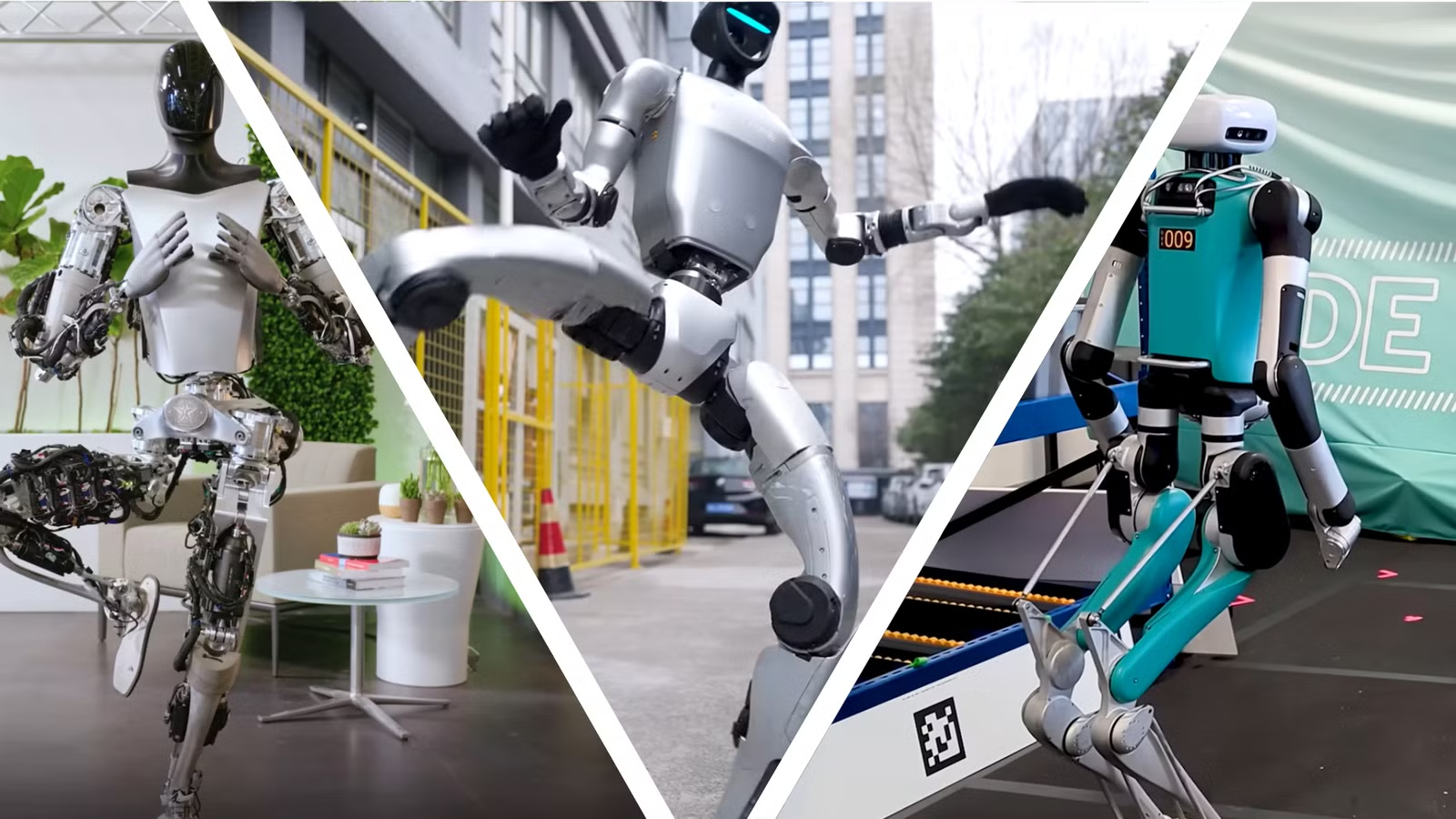

Humanoid robotics — machines that physically resemble and interact with the world much like humans — is one of the most exciting frontiers in technology today. From walking and grasping objects to conversing naturally and helping us live better lives, humanoids promise to transform how humans work, learn, care for others, and explore new environments. But amidst the hype, investment, and intense media attention, a critical question arises: How do we meaningfully measure progress in humanoid robots?
In this article, we explore the real, scientifically grounded, and practically useful metrics that researchers, developers, and industry watchers can use to judge how far humanoid robots have truly come — and how far they still must go.
Defining “Progress” in Humanoid Robotics
Progress isn’t a single number or a press release claim — it’s a constellation of capabilities that must collectively improve for humanoids to genuinely approach humanlike utility in real-world environments. Some progress is easy to quantify — like how fast a robot walks — but other aspects such as adaptability, collaboration, robustness, and even social compatibility are subtler and demand thoughtful metrics rooted in science and human-centered design.
Below we group key metrics into themes that together provide a deep picture of actual capability gains.
1. Locomotion and Physical Dexterity: Motion Metrics
At the heart of humanoid robotics is the ability to move reliably under real-world conditions. Walking on flat ground isn’t enough. We want robots that can handle slopes, uneven terrain, obstacles, and recover from slips. To capture this, researchers employ physically grounded metrics that go beyond simple distance walked.
a. Stability and Balance Scores
These measure how well a humanoid robot maintains upright posture and resists perturbations. A stable robot should not fall when lightly bumped or when stepping on unexpected surfaces. Standardized tests measure:
- Recovery time after disturbance
- Deviation from expected trajectory
These are especially critical for general-purpose humanoids intended to operate in unstructured environments like homes or construction sites.
b. Walking Efficiency Metrics
Robots can be evaluated on speed, energy consumption per meter, and step variability. A robot that walks quickly but uses enormous energy or cannot sustain motion over time is less progressive than one that moves efficiently and sustainably.
c. Motion Difficulty Scores (MDS)
Beyond raw performance lies the concept of how hard a motion actually is for a robot to learn and execute. Advanced research introduces motion difficulty metrics that quantify how sensitive a motion is to small deviations — offering insight into whether a robot truly masters a movement or simply performs it under narrow conditions.
By combining difficulty with execution performance, we can see whether advances are coming from better control algorithms or simply easier tasks.
2. Sensorimotor Integration and Perception Capabilities
Humanoids must sense and interpret the world to act autonomously. This involves vision, depth perception, tactile sensing, force feedback, and seamless sensor fusion. Metrics here assess how well a robot understands and interacts with its surroundings.
a. Object Recognition & Manipulation Accuracy
Being able to recognize an object in a cluttered scene, estimate its shape, size, and weight, and then grasp it reliably is a foundational goal. Performance metrics include:
- Precision and recall in visual detection tasks
- Success rate in grasping tasks
- Time to complete manipulation tasks
These metrics should ideally be tested in diverse lighting, clutter, and dynamic scenarios to reflect real-world complexity.

b. Functional Task Success Rates
This measures whether a robot completes a meaningful task (e.g., loading dishes, folding laundry) under real environmental variability. Here, success isn’t only about perfect execution, but flexible adaptation.
c. Sensor Fusion Latency and Consistency
A robot’s ability to integrate vision, force feedback, and proprioception quickly and reliably impacts its responsiveness and safety. Metrics that capture lag, consistency under noise, and cross-sensor agreement reveal how robust the system truly is.
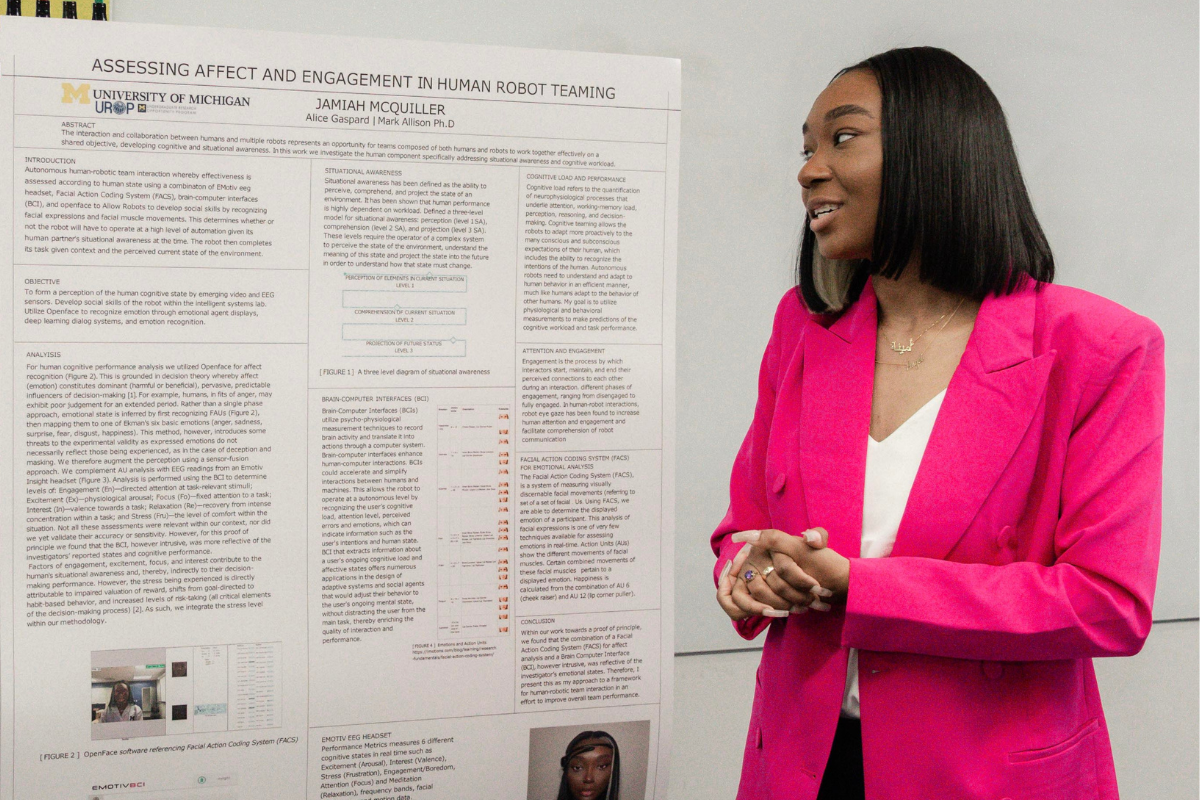
3. Human–Robot Interaction (HRI): Social and Collaborative Metrics
Robots do not operate in isolation — they interact with humans. Progress here means not only technical performance but socially aware and context sensitive interaction.
a. Social Compatibility Scores (e.g., RoSAS)
Social acceptance isn’t just “likes or dislikes.” Metrics like the Robotic Social Attributes Scale (RoSAS) measure perceived warmth, competence, and comfort, capturing how well a robot fits into human environments — from homes to public spaces.
b. Helpfulness and Collaboration Metrics
Beyond presence is contribution. How much does a robot help a human achieve shared goals? Metrics that quantify improved task success when a robot assists a person (compared to human-only performance) give insight into real-world utility.
These might include:
- Reduction in human effort
- Task time savings
- Human trust and comfort levels
c. Adaptive Responsiveness in Interaction
A strong metric captures how quickly and appropriately a robot adjusts to human cues — verbal, gestural, and physiological. In healthcare and assistive contexts, responsiveness can be life-affecting.
4. Cognitive Skills: Decision-Making, Learning, and Autonomy
Physical skill must be matched by intelligent decision-making. Advanced humanoids require metrics to assess planning, learning, and adaptability.
a. Task Generalization Score
Measuring a robot’s ability to transfer skills learned in one context to novel tasks reveals true learning progress. For instance, can a robot trained to load a dishwasher adapt its grasp planning to fold towels?
b. Robustness to Novel Situations
A key metric here is failure tolerance: environments or conditions that were not in the training data. Metrics evaluate whether the robot:
- Detects when it doesn’t know
- Safely aborts or seeks clarification
These are critical aspects of autonomy that ensure safe deployment outside laboratories.
5. Real-World Deployment Metrics
We can theorize all we want, but deployment in uncontrolled environments — factories, hospitals, homes — is the acid test. Here the emphasis shifts toward measurable impact and reliability.
a. Uptime and Mean Time Between Failures (MTBF)
Engineering metrics like MTBF are long-standing in industrial automation, and they matter in humanoid robotics too. Reliable operation without frequent maintenance reflects true engineering maturity.
b. Task Throughput and Efficiency vs Human Performance
Real companies now report humanoids achieving portions of human-level productivity — for example, 30–50% of human worker efficiency in stacking or quality control tasks — highlighting both progress and the remaining gap.
A metric that compares robot performance over long operational cycles provides an objective benchmark for economic feasibility.
c. Safety and Compliance Metrics
In human-centric environments, safety metrics are crucial:
- Collision rates
- Safe distance adherence
- Incident reporting frequency
These aren’t optional — they govern regulatory approval and social acceptance.
6. Cross-Domain Benchmarks: Standardized Testing Suites
To compare progress across platforms and research labs, standardized benchmarks are indispensable. Initiatives in humanoid robotics include community-driven test scenarios that:
- Define common task suites (walking, object manipulation, navigation)
- Uniform scoring mechanisms
- Difficulty scaling
These help reduce bias in reported results and encourage reproducible research.
The Big Picture: Composite Indices
Individual metrics matter, but progress in humanoid robotics is best judged through integrated indices that simultaneously account for:
- Physical capability
- Perception and cognition
- Social interaction
- Real-world reliability
Composite indices give a holistic view of readiness for deployment rather than isolated technical milestones.
Why These Metrics Matter
Humanoid robotics faces both immense opportunity and deep skepticism. Industry forecasts predict exponential growth in market size and applications, yet challenges remain in energy, perception, robustness, adaptability, and cost.
Well-defined, transparent, real metrics allow developers to:
- Benchmark reliably across platforms
- Guide R&D investment decisions
- Articulate human-robot value propositions for customers
- Inform policymakers on safety and regulation
They also help us navigate the philosophical questions of what humanoids should be, ensuring progress serves human needs responsibly, ethically, and sustainably.
Conclusion: Toward Meaningful Metrics for Humanlike Robots
If we measure only isolated capabilities — like walking speed or grasp strength — we risk mistaking novelty for progress. True progress in humanoid robotics emerges when machines can integrate perception, cognition, interaction, and physical action in real-world contexts with reliability, safety, and human compatibility.
The metrics outlined here — spanning locomotion, perception, collaboration, learning, autonomy, and deployment — form a rigorous foundation for assessing that progress. They move us beyond buzzwords and marketing claims toward a systematic, research-driven understanding of where humanoid robots stand — and where they must go next.