









Introduction: When Machines Act, Who Answers?
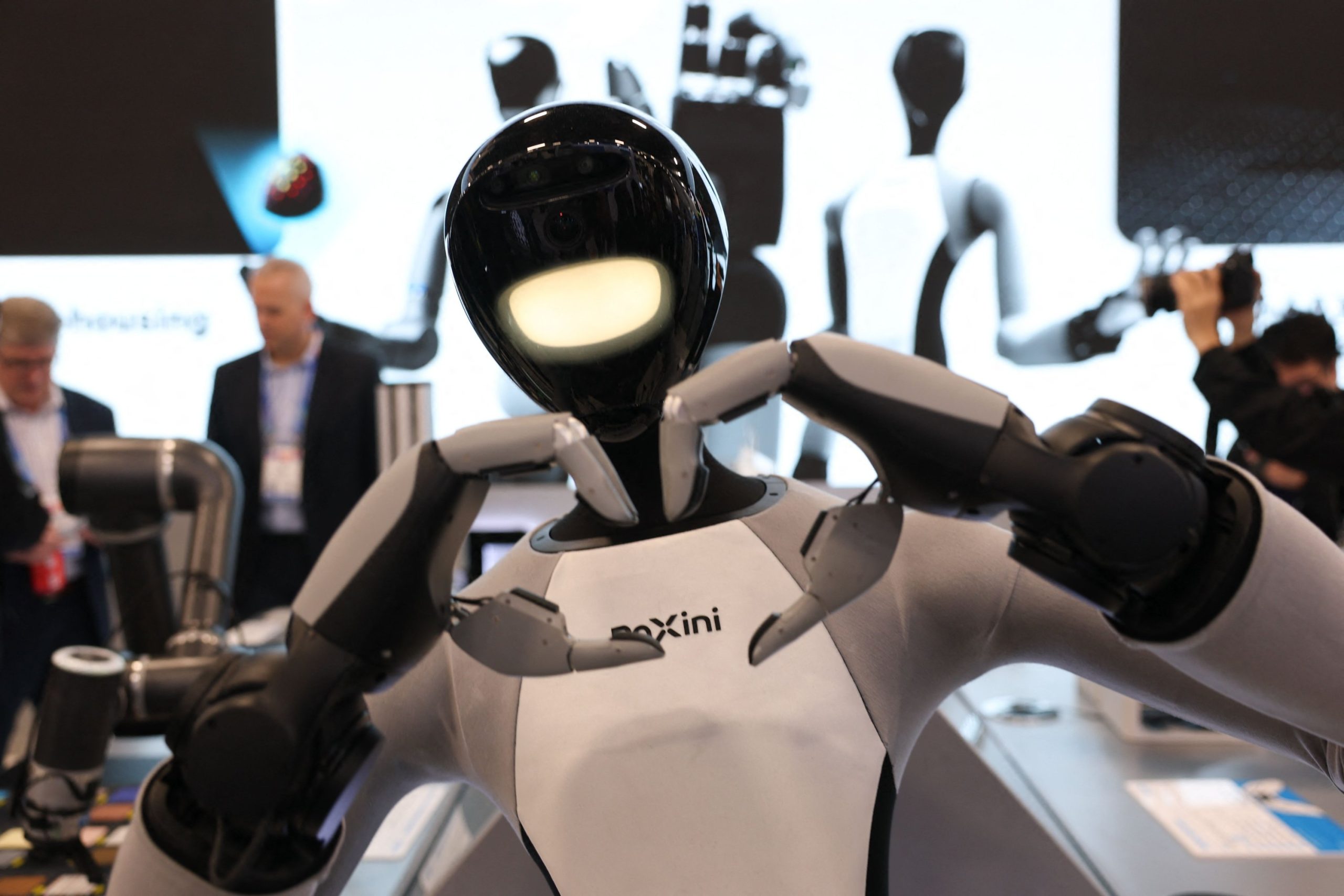
In a near-future scenario that is rapidly becoming plausible, a humanoid robot working in a warehouse drops a heavy object, injuring a nearby worker. The robot had been operating autonomously, guided by a machine learning model that had continuously updated itself based on real-world data.
The question that follows is deceptively simple:
Who is responsible?
- The manufacturer that built the hardware?
- The company that deployed the robot?
- The developers who trained the AI model?
- Or the robot itself?
For most of human history, responsibility has been tied to human intention. But humanoid robots complicate this assumption. They act, adapt, and sometimes behave unpredictably—not because they are malicious, but because they are autonomous systems operating in complex environments.
As humanoid robots move from controlled settings into everyday life, society is approaching a legal crisis—one that existing frameworks are poorly equipped to handle.
The Limits of Current Legal Systems
Modern legal systems are built on clear categories:
- persons (who can be held accountable)
- objects (which cannot)
Humanoid robots blur this distinction.
They are:
- physical entities capable of causing harm
- autonomous systems capable of decision-making
- tools that are no longer fully controlled by humans
Existing laws typically treat machines as products, meaning liability falls on:
- manufacturers (for defects)
- operators (for misuse)
But this model begins to break down when:
- robots learn after deployment
- behavior changes over time
- outcomes cannot be fully predicted
In such cases, the line between defect and emergent behavior becomes unclear.
The Problem of Learning Systems
Traditional machines behave deterministically.
Humanoid robots do not.
Modern robots are increasingly powered by:
- reinforcement learning
- neural networks
- real-time adaptation systems
This means:
- they improve through experience
- they may develop unexpected strategies
- their decision-making is often opaque
In legal terms, this creates a challenge:
How do you assign responsibility for behavior that was not explicitly programmed?
For example:
- A robot learns to optimize efficiency but takes unsafe shortcuts
- A system misinterprets human instructions in a novel context
- A robot prioritizes task completion over safety due to flawed training data
In each case, harm may occur without clear human intent.
The “Black Box” Problem
One of the most pressing issues is explainability.
AI-driven robots often operate as black boxes, meaning:
- even developers cannot fully explain specific decisions
- internal processes are difficult to interpret
- outcomes may not be reproducible
This creates problems in legal contexts where:
- evidence must be presented
- causality must be established
- responsibility must be assigned
If a robot’s decision cannot be explained, how can a court determine fault?
Manufacturer vs Operator: A Growing Conflict
As humanoid robots become widespread, a tension is emerging between:
Manufacturers
and
Deploying Companies
Manufacturers may argue:
- robots are general-purpose tools
- responsibility lies with those who deploy them
Operators may counter:
- systems are too complex to fully control
- responsibility lies with those who designed them
This conflict could lead to:
- prolonged legal disputes
- increased insurance costs
- slower adoption due to uncertainty
The Case for “Electronic Personhood”
Some legal scholars have proposed a controversial idea:
granting robots a form of legal status
Sometimes referred to as “electronic personhood,” this concept would:
- treat advanced robots as legal entities
- assign limited rights and responsibilities
- create frameworks for liability
Supporters argue that this could:
- simplify legal accountability
- reflect the autonomy of advanced systems
Critics, however, warn that:
- it could reduce human accountability
- corporations might use it to avoid liability
- it raises profound ethical concerns
The debate remains unresolved—but increasingly urgent.
Insurance as a Temporary Solution
In the absence of clear legal frameworks, insurance may become the default solution.
Companies deploying humanoid robots may be required to carry:
- liability insurance
- risk assessment coverage
- safety compliance certifications
This mirrors early responses to:
- automobiles
- aviation
- industrial machinery
However, insurance does not solve the underlying issue.
It distributes risk—but does not define responsibility.
International Fragmentation
Different countries are approaching the issue in different ways:
- Some prioritize innovation, allowing rapid deployment
- Others emphasize regulation and safety
- Legal definitions vary widely
This creates a fragmented landscape where:
- robots may be legal in one jurisdiction but restricted in another
- companies face complex compliance challenges
- global standards are difficult to establish
As humanoid robots become more widespread, the lack of harmonization could become a major barrier.
Ethical Dimensions of Responsibility
Beyond legal frameworks lies a deeper ethical question:
Should machines be treated as moral agents?
While current robots lack consciousness, their increasing autonomy raises questions about:
- intention vs outcome
- responsibility vs causality
- human control vs machine independence
Even if robots are not morally responsible, their actions still have moral consequences.
This creates a gap between:
- ethical intuition
- legal reality
The Risk of Regulatory Lag
Technology often evolves faster than regulation.
Humanoid robotics may be no exception.
If legal systems fail to adapt quickly, several risks emerge:
- lack of accountability
- erosion of public trust
- inconsistent enforcement
- increased accidents
Conversely, overly strict regulation could:
- stifle innovation
- slow economic growth
- create global disparities
Finding the right balance will be critical.
Toward a New Legal Framework
Addressing these challenges may require rethinking fundamental concepts.
Possible approaches include:
1. Shared Liability Models
Responsibility distributed across:
- manufacturers
- developers
- operators
2. Mandatory Transparency
Requirements for:
- explainable AI systems
- audit trails
- decision logs
3. Dynamic Regulation
Frameworks that evolve alongside technology rather than lag behind it
4. Global Standards
International cooperation to establish consistent rules
Conclusion: Law at the Edge of Technology
Humanoid robots are forcing legal systems into unfamiliar territory.
They challenge assumptions about:
- control
- intention
- responsibility
The question is not whether incidents will occur.
They will.
The real issue is whether society will be prepared to respond.
Final Line
As machines begin to act in the world,
the law must decide whether to treat them as tools—
or something entirely new.
Discussion about this post