








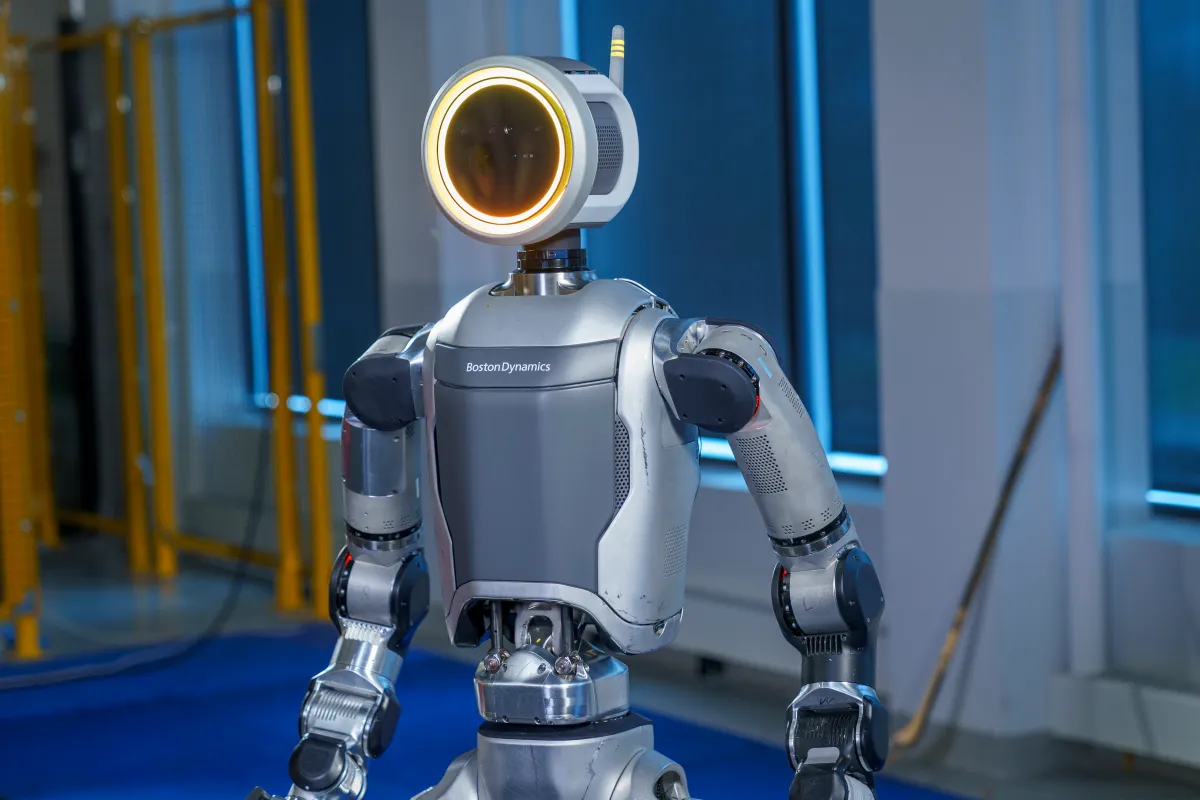

The answer isn’t a simple yes or no anymore. What once seemed like a dazzling viral stunt machine — flipping, dancing, and scrambling over obstacles with parkour grace — is now evolving into something far more grounded and consequential: a humanoid robot engineered for real‑world work. This transition marks one of the most fascinating pivots in robotics history — from spectacle to utility.
In this deep dive, we’ll explore what Atlas really is, how it has evolved, where it’s headed, and whether it’s truly ready for everyday industrial, commercial, and real‑world tasks beyond the viral parkour routines that made it famous.
1. From Internet Fame to Industrial Reality: A New Chapter for Atlas
For over a decade, Boston Dynamics’ Atlas robot captivated global audiences with its astonishing athleticism — sprinting, leaping, balancing, and contorting its humanoid frame in ways most never expected from a machine. Videos of Atlas performing backflips and navigating obstacle courses were not just viral hits; they were proof points in robotics evolution.
Yet those parkour feats — impressive as they were — served a deeper purpose. They functioned as stress tests for balance, coordination, perception, and dynamic control, all of which are foundational capabilities for any robot expected to work reliably outside controlled environments.
Today, the narrative is changing:
- Atlas is being repositioned as a commercial, industrial robot rather than a social media stunt actor.
- Boston Dynamics is integrating autonomy and perception systems that go well beyond scripted motion sequences.
- The robot is being put into real factory settings — with Hyundai planning large‑scale deployment in manufacturing plants.
This shift reflects a broader trend: humanoid robots are finally transitioning from research curiosities to potential workforce assets.
2. The Core Engineering Behind Atlas’ Real‑World Readiness
Atlas’ progression from physics demonstrations to industrial proficiency is rooted in innovations on several key fronts.
a. Advanced Locomotion and Control Systems
Atlas’ ability to move dynamically — run, jump, balance, and recover — isn’t just for show. It stems from cutting‑edge control algorithms like Model Predictive Control (MPC), which predicts and adjusts motions in real time to keep the robot stable even on complex terrains or while manipulating objects.
This combination of predictive planning and real‑time adaptation is essential for robots that must operate around humans or in unpredictable settings, such as warehouses or factory floors.
b. Human‑Scale Perception and Manipulation
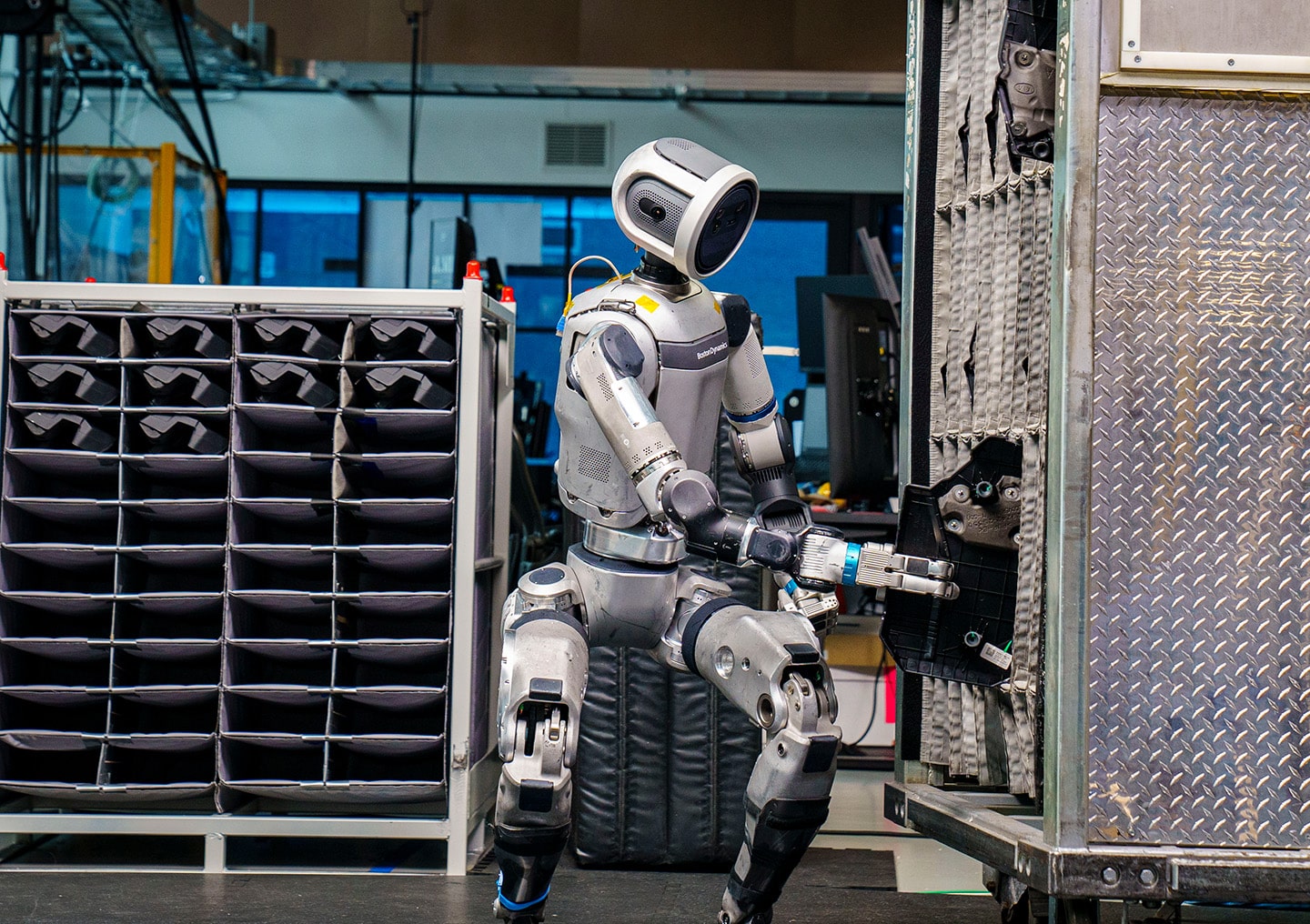
Unlike wheeled industrial robots that operate in highly structured environments, Atlas is designed to function in human‑oriented spaces — i.e., the same workstations, walkways, and tools that people use.
- Full 360° perception through stereo cameras allows Atlas to “see” the environment.
- Tactile sensing and dexterous hands enable manipulation of objects with a range of grasps — pinch, power, and transitional grips.
- 52+ Degrees of Freedom (DoF) allow complex motion sequences and nuanced manipulation.
These sensing and manipulation capabilities are absolutely critical if Atlas is to handle real tools, materials, and parts rather than just clear floors and obstacle courses.
c. Integrated Intelligence and Learning Frameworks
A significant leap forward comes from embedding AI and machine learning into Atlas’ control stack. Boston Dynamics and partners are exploring Large Behavior Models (LBMs) — unified neural frameworks that let Atlas perform multiple tasks with shared sensor inputs and motor outputs rather than isolated behaviors.
This kind of generalized approach is reminiscent of how large language models operate — one model, many tasks — and could be a game‑changer for real‑world adaptability.
3. Early Real‑World Deployments: Proof of Concept or Genuine Utility?
One of the clearest signals that Atlas is transitioning from “lab toy” to “workhorse” is the real‑world testing underway.
a. Hyundai Factory Integration
In a major commercial development, Hyundai — Boston Dynamics’ majority stakeholder — plans to deploy Atlas robots in its U.S. manufacturing facilities by 2028. These robots will start with parts sequencing and logistics workflows, gradually advancing to more complex assembly operations.
This isn’t some speculative future — it’s a defined roadmap toward industrial integration.
b. Autonomous Real‑World Operations
Atlas already demonstrates autonomous movement to charging stations and can swap batteries on its own. It integrates with enterprise systems like warehouse and manufacturing execution software, enabling coordinated work in human environments.
That level of autonomy is closer to what industrial automation demands than anything offered by most service robots today.
4. Limitations: What Atlas Still Can’t Handle (Yet)
Even as Atlas makes strides toward practical utility, there remain significant challenges before it can claim full readiness for broad real‑world deployment.
a. Task Learning Speed and Flexibility
While Atlas can perform specific tasks reliably, general task acquisition — especially for novel operations — remains a work in progress.
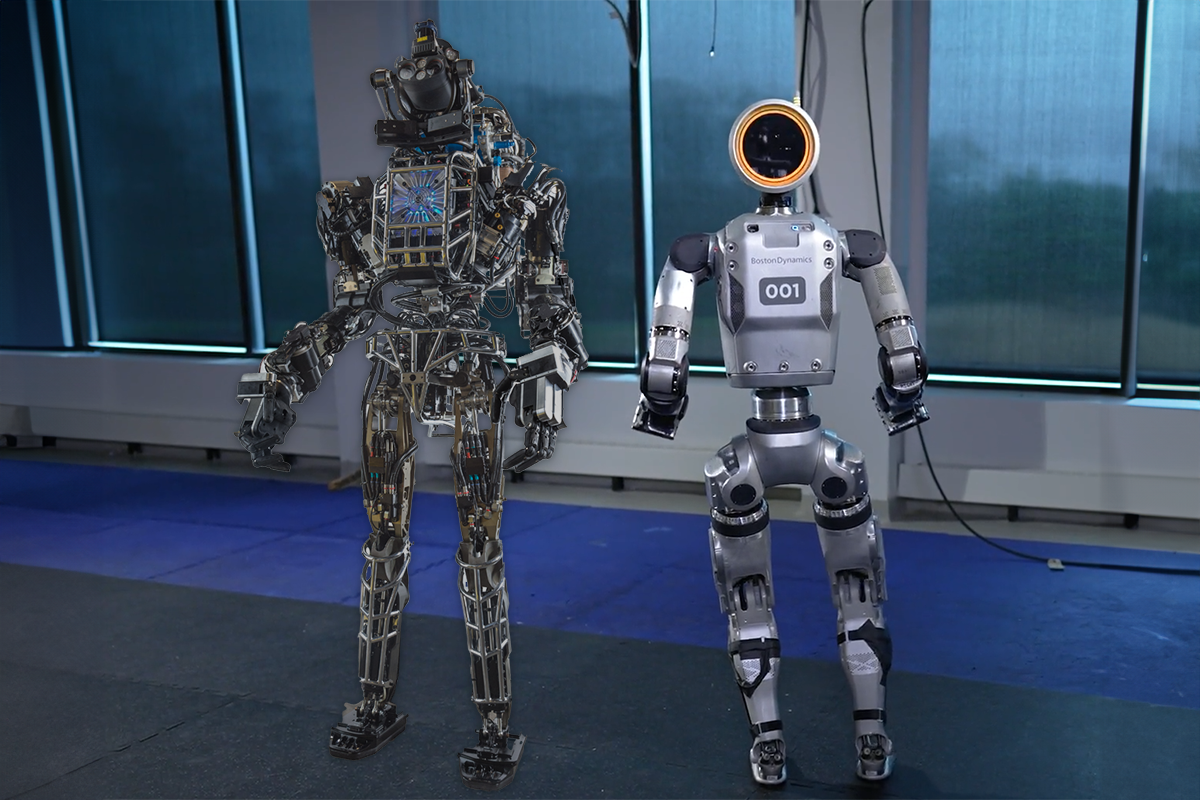
Boston Dynamics’ leadership has emphasized that Atlas will need the ability to learn new tasks within 24–48 hours to cope with the variety of jobs in a realistic factory setting — a capability that is still under active development.
b. Energy and Power Constraints
Robots like Atlas operate on batteries, and operational endurance is still limited compared to human workers or fixed industrial automation. Continuous four‑hour operations are a breakthrough technologically, but long shifts or extended complex tasks require further innovation.
c. Complexity of Human Environments
Unlike structured industrial cells, unstructured environments — outdoors, public spaces, disaster zones — bring perceptual and planning challenges that current Atlas versions aren’t fully equipped to handle autonomously without human support.
5. The Ethical, Economic, and Social Dimensions of Atlas’ Real‑World Use
As Atlas shifts toward real‑world deployment, broader implications must be considered — from ethical concerns to labor impact.
a. Labor and Economy
Atlas and similar humanoids could automate tasks traditionally done by human workers, especially in manufacturing and logistics. This raises questions about job displacement, reskilling, and economic impact — topics that deserve serious planning before widescale adoption.
b. Trust and Safety
Deploying robots in shared human spaces requires confidence in safety systems. Atlas uses sensor fusion and autonomous perception to navigate dynamic settings, but ensuring predictable behavior alongside humans remains a priority.
c. Responsibility and Morality
Who is responsible if a robot makes a mistake? From accidents to data privacy, humanoid robots like Atlas introduce challenges that go beyond engineering into ethics, regulation, and public policy.
6. The Future: What’s Next for Atlas?
Boston Dynamics’ Atlas is no longer just an experimental stunt robot. The emerging version — fully electric, equipped with sophisticated perception, autonomy systems, and enterprise integration — is being positioned as a next‑generation industrial humanoid.
Yet “ready for real‑world tasks” doesn’t mean “every task, everywhere.” The robot is still evolving. Its initial real‑world uses will likely be repetitive, structured, and risk‑tolerant tasks — assembly, logistics, sorting, material handling. As AI models mature and real‑world training expands, more flexible, adaptive roles could become feasible.
In the long run, the real question isn’t just whether Atlas can perform tasks but whether it can understand, adapt to, and work alongside humans in an integrated, safe, and socially responsible way.