








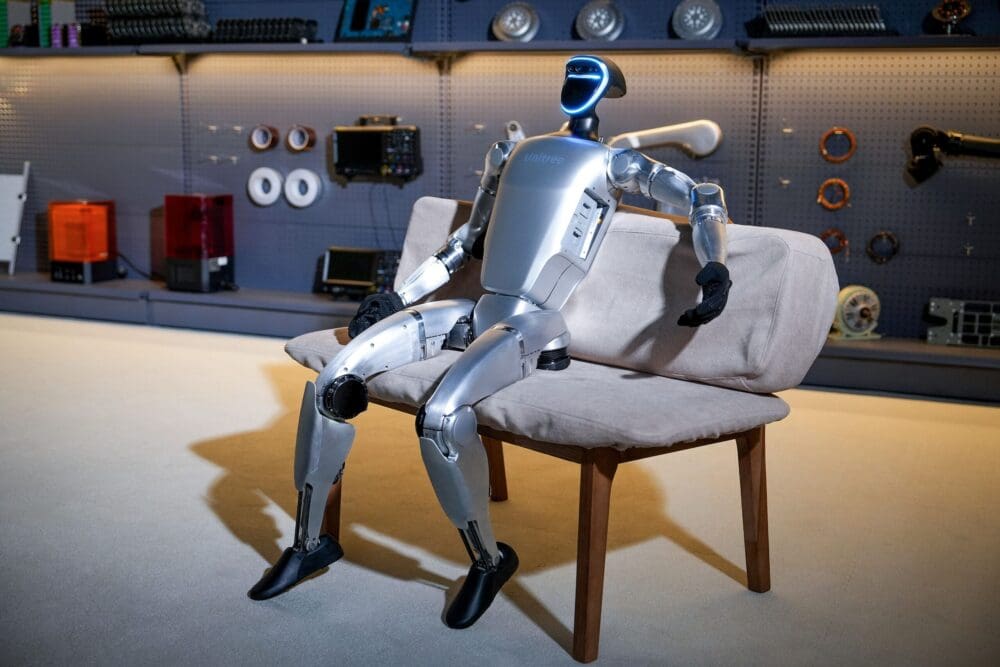

In the dynamic world of legged robotics, agility has emerged as the central measure of a robot’s usefulness. Agility goes beyond walking in a straight line — it means accelerating quickly, adapting to unpredictable terrain, maintaining balance after impacts, and executing complex maneuvers in real environments. Traditionally, elite robotics companies like Boston Dynamics and Agility Robotics have dominated this space, powering robots like Spot and Digit with advanced motion control and perception systems. However, a new generation of more affordable agile robots — led by companies like Unitree Robotics — is rapidly closing the gap between cost and capability. This article examines whether affordable bots like Unitree’s platforms are actually beating elite models in agility and real‑world tasks, or whether what we’re seeing is a more nuanced shift in robotics expectations and performance.
1. Understanding the Agility Benchmark in Legged Robotics
Agility in robotics is not a single metric. It encompasses multiple aspects:
- Dynamic locomotion: the ability to run, climb, jump, and change direction quickly.
- Balance and recovery: how well a robot stabilizes after disruptions such as slips or collisions.
- Terrain adaptation: the capacity to traverse uneven ground, stairs, slopes, and obstacles.
- Control intelligence: how effectively the robot uses perception and learning to adapt its motion in real time.
Elite systems like Boston Dynamics’ Spot are widely recognized for these capabilities, particularly their fluidity and resilience in complex, industrial environments. Spot’s control system and leg design have set a benchmark for quadruped agility — but at a price point that reflects years of research, proprietary engineering, and industrial‑grade hardware. The latest Spot configurations are priced in the high five figures, often approaching six figures with accessories and enterprise support packages. In contrast, many Unitree robots aim at a price point magnitudes lower, targeting hobbyists, educational institutions, and modest‑budget research labs.
2. Affordability and Agility: The Unitree Strategy
Unitree Robotics, headquartered in Hangzhou, China, has made headlines for producing legged robots at dramatically lower prices than traditional players — without completely sacrificing performance. Their lineup spans from small quadrupeds like the Go1 and Go2 to humanoid models like the R1 and full‑feature G1.
The strategy is simple but disruptive:
- Vertical integration: Unitree designs and manufactures core components (motors, joints, control boards) in‑house to reduce costs.
- Optimized mechanics: Lightweight builds and efficient actuation systems allow for surprisingly nimble motion.
- Modular design: Users can upgrade sensors and compute hardware without reengineering the entire robot.
As a result, models like the Unitree Go2 can cost as little as a few thousand dollars while still offering dynamic movement and obstacle negotiation typically seen in much more expensive quadrupeds.
3. Quadruped Agility: Unitree Go1/Go2 vs Elite Competitors
The Go1 and Go2 models demonstrate how affordable robots are achieving impressive agility metrics relative to their price class:
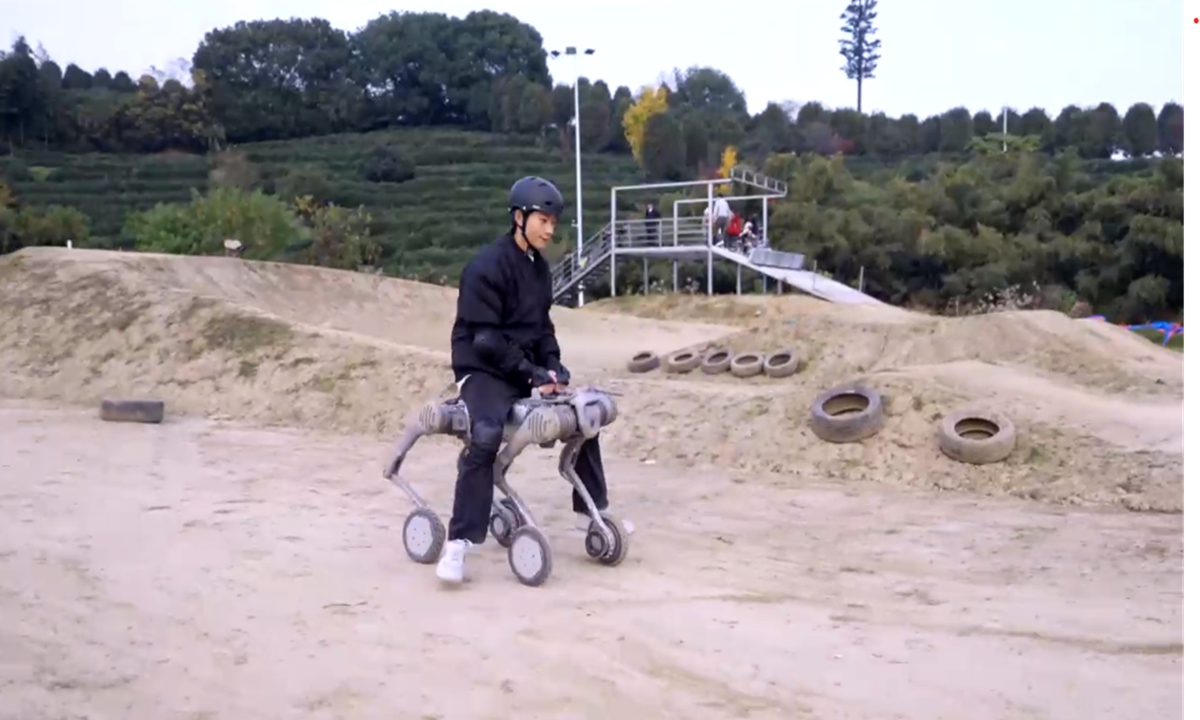
- Speed & Motion: The Go2 is reported to reach speeds of around 5 m/s, which is competitive with or even higher than many premium quadrupeds in practice tests.
- Terrain handling: Unitree quadrupeds use advanced sensing such as 360° LiDAR and visual SLAM (simultaneous localization and mapping) to detect obstacles and adapt gait — a capability few robots offered under $10,000 could claim even a few years ago.
- Control and balance: Newer Unitree models can execute rapid corrective actions and side‑follow behaviors that respond dynamically to terrain and user movement.
Elite models like Spot still hold advantages in rugged industrial deployments, payload capacity, and enterprise ecosystem integration — and they benefit from proprietary software stacks and extensive field testing. However, Unitree’s agility metrics clearly demonstrate that affordability no longer implies severely limited motion performance. The gap in pure motion dynamics — particularly in speed and balance recovery — has narrowed significantly.
4. Humanoid Agility: Unitree R1 and G1 vs Premium Humanoids
Humanoid robots represent perhaps the most demanding agility challenge. They must balance complex degrees of freedom, sensor feedback, locomotion control, and often manipulation tasks. Traditionally, humanoids such as Boston Dynamics’ Atlas or Agility Robotics’ Digit have been the benchmarks, but they come with extremely high cost barriers and limited availability outside research labs.
Enter Unitree’s R1 and G1 humanoid lines:
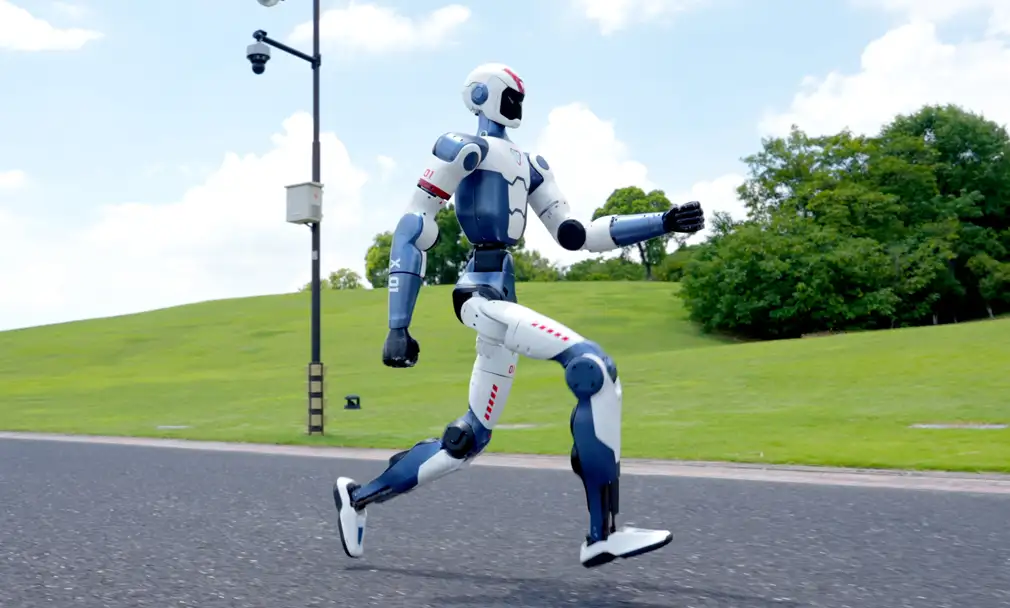
- Unitree R1: At roughly $5,900, the R1’s price is an order of magnitude lower than most comparable humanoids, and its dynamic abilities — such as rapid arm motion, high‑speed movement, and responsive balance — have been showcased in public demonstrations, including flips, boxing comparisons, and fast recovery maneuvers.
- Unitree G1: While not as cheap as the R1, the G1 still lands in a price band far below industrial‑grade humanoids and offers substantial agility with a sophisticated joint system and 2 m/s movement capabilities.
By democratizing access to humanoid agility, Unitree enables researchers and small teams to experiment with full‑body motion planning and environment interaction — something previously feasible only for major corporate or academic labs.
5. What “Beating” Really Means: Benchmarks vs Real‑World Performance
The idea that affordable robots are “beating” elite models in agility needs context. If the benchmark is purely dynamic motion metrics — speed, balance recovery, or terrain negotiation — then certain Unitree robots do match or exceed specific elite systems in controlled scenarios. For example, performance figures from independent robot spec comparisons place Go2’s speed and control responsiveness favorably against traditional premium quadrupeds.
However, true agility is not just raw metrics:
- Perception depth: Elite robots often deploy richer, redundant sensor suites (LiDAR, stereo vision, IMUs) that support complex autonomous navigation in unknown environments.
- Environmental robustness: Industrial use cases demand IP‑rated ruggedness and fail‑safe recovery systems tailored to real‑world hazards.
- Software & ecosystem: Proprietary API support and software frameworks from elite vendors often enable enterprise integrations that affordable robots still struggle to match.
Therefore, in specific agility domains — particularly speed and basic dynamic balance — affordable models can and do rival elite platforms. But when agility must be paired with complex environment perception and mission‑critical reliability, elite systems remain ahead. The trajectory suggests, however, that the gap in real‑world performance is shrinking fast.
6. Democratization of Robotics: More Than Just Price
Perhaps the most significant shift is not that affordable robots have unilaterally overtaken elite models, but rather that access to agile robotics has democratized dramatically:
- Research labs can now acquire multiple agile platforms where before they could only afford one — accelerating experimentation and software development cycles.
- Small businesses and startups can prototype robotics solutions for real‑world tasks (e.g., inspection, light logistics, campus patrol) without prohibitive capital expenditure.
- Education programs can teach locomotion control and perception on real hardware rather than simulation alone.
This democratization expands the pool of innovation and shrinks the barrier to entry for meaningful contributions to robotics agility research and application — a shift that may ultimately accelerate the evolution of intelligent, mobile machines far beyond current elite frameworks.
7. The Future: Hybrid Models and Collaborative Robotics
Looking forward, many analysts predict an ecosystem where affordable agile robots complement elite systems:
- Standardized modular sensor packages could bring richer perception systems into cheaper platforms.
- AI‑driven adaptive controllers could allow even low‑cost robots to learn robust motion strategies across varied environments.
- Swarms or fleets of affordable units could perform distributed tasks — something a single high‑end robot cannot efficiently achieve alone.
In such ecosystems, the term “beating” may become less useful — because each class of robot will excel in different mission profiles, and collective performance rather than individual supremacy will shape real world utility.
Conclusion: Affordable Agility Is Here — But With Nuance
Affordable robots like those from Unitree are not universally outpacing elite robotics systems across every agility metric, but they are dramatically redefining expectations. In raw agility performance — especially in speed, balance, and dynamic motion — more accessible robots are closing the gap and, in some measured scenarios, matching or exceeding traditional benchmarks. In addition, their price points open up whole new sectors of use, enabling research, education, and small‑scale deployments previously impossible.
What this means for the future of agile robotics is profound: mobility and adaptability are no longer the exclusive province of ultra‑expensive machines. Instead, they are fast becoming ubiquitous capabilities, diffused across a broader landscape of applications. And that change — more than any single comparison on agility — may be the most important trend in robotics today.