









In the world of robotics, there’s always been a divide — a gulf between hobbyists tinkering in their garages and the elite research labs building next‑generation machines. For decades, humanoid robots were locked behind the gates of big budgets and expensive ecosystems. But the Unitree R1 humanoid robot — and critically, its accessible software development kit (SDK) — promises to reshape what’s possible for individual makers, student teams, and curious developers. At an entry price near $5,900, this robot is challenging assumptions about who gets to build, program, and play with realistic humanoid machines.
A New Era: What the Unitree R1 Brings to the Table
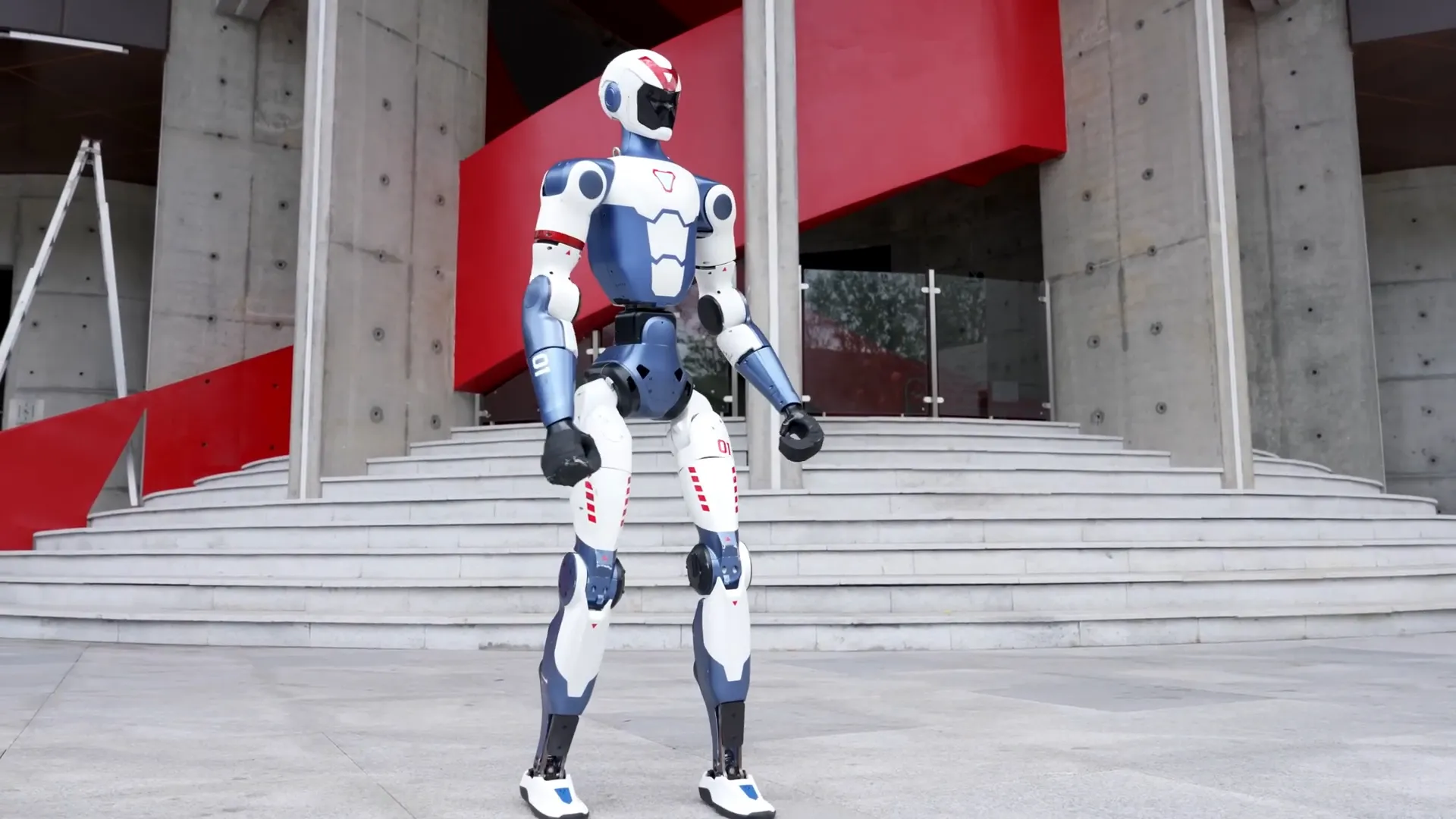
At its heart, the Unitree R1 is a lightweight, fully customizable humanoid platform with a sprawling application spectrum — from research labs and educational settings to hobbyist workshops. Weighing roughly 25 kg and standing about 1.2 meters tall, the R1 combines a robust mechanical structure with a rich suite of sensory and computing capabilities.
Agility Meets Accessibility
The R1 boasts 24–40 degrees of freedom (depending on configuration), enabling expressive, dynamic motion including walking, balance control, and gestures. Low inertia motors and advanced joint architecture make smooth, lifelike motion a reality outside industrial floors.
Think of a robot that can walk and reposition itself, react to visual cues, and interpret voice commands — without needing a college‑level robotics team to operate it. This sensory fusion comes from integrated cameras, IMUs, and on‑board AI modules that give developers a significant toolkit right out of the box.
Open Interfaces, Open Mindsets
What sets the R1 apart from many of the robots that preceded it isn’t just price — it’s how open the system is to programming and development. Official documentation and interface layers expose joint control, sensory data, and motion control through an SDK that supports mainstream programming environments and robotics toolchains.
Unlike black‑box robotics platforms with proprietary, restrictive APIs, Unitree’s SDK lets users interact at the hardware level — from torque settings on individual joints to real‑time sensor streaming and external cloud integrations. That kind of transparency is rare in the humanoid robotics scene until now.
SDK Power: What Hobbyists Can Actually Do
So what does a hobbyist actually do with the SDK? The possibilities are vast and surprisingly approachable:
1. Programming in Familiar Languages
Users can write code in Python and C++, and connect through familiar robotics frameworks like ROS 2 (Robot Operating System). These aren’t niche languages — they’re the go‑to tools for students and indie developers alike.
This dramatically lowers the barriers for hobbyists: if you’ve ever coded in Python or experimented with ROS, you already have the foundation to start building movement algorithms, vision processing routines, or interactive behaviors on a real humanoid robot.
2. Simulation‑to‑Real Bridging
One of the biggest hurdles in robotics development has historically been moving from simulation environments into the physical world. The R1’s SDK supports mainstream simulation platforms, so code tested virtually can be deployed on hardware with minimal friction. This sim‑to‑real transition is a huge leap for anyone building robots in their spare time.
3. Sensor and AI Integration
The SDK exposes not just motor control but multi‑modal sensory data — vision feeds, audio cues, IMU readings, and more. This makes it possible to experiment with cutting‑edge AI workflows like SLAM (Simultaneous Localization and Mapping), gesture recognition, or even voice‑driven navigation apps.
It’s one thing to write a line‑following robot on a microcontroller, but it’s another thing entirely to build a humanoid that can respond to gestures or navigate an unfamiliar room with its own perception stack.
4. Custom Behaviors and App Ecosystems
Beyond physics, the SDK allows developers to build layered experiences: imagine telepresence apps, mobile control dashboards, or cloud‑connected orchestration systems that command a fleet of R1 robots. This is no longer industrial research lab territory — hobbyists are genuinely empowered to innovate at multiple layers of abstraction.
Where Accessibility Meets Complexity
Of course, democracy doesn’t mean simplicity. While the SDK unlocks powerful control, it does require foundational skills in programming and robotics concepts. Understanding kinematics, perception pipelines, and feedback control systems doesn’t happen overnight — but for hobbyists ready to learn, the R1 platform rewards curiosity with real machine behavior.
The Learning Curve
Unlike plug‑and‑play toy robots, the R1 expects users to grasp core robotics topics:
- Inverse kinematics and motion control
- Sensor fusion and perception
- Energy management and safety protocols
- Real‑time feedback loops
These aren’t trivial concepts, but with accessible SDKs, open documentation, and community tools Flourishing (including ROS 2 and cross‑platform libraries), a motivated hobbyist can bridge this gap far more easily than a decade ago.
Where the Hobbyist Community Fits In
The true test of accessibility isn’t whether anyone can theoretically program it — it’s whether a vibrant, engaged community grows around it. Early signs are promising:
- Forums and online groups are already discussing SDK use cases.
- Students show interest in building real humanoid projects.
- Hobbyists compare the R1 to robotics tools like Arduino or Raspberry Pi in terms of inspirational reach.
This mirrors historical transitions in other tech fields: once complex FPGA boards were only in labs — now they live in classrooms and makerspaces. Similarly, the R1 could become the default platform for humanoid experimentation in the 2020s.
Limitations and Realities
No technology is perfect, and the R1 is no exception. Current battery runtime is roughly one hour — not full shift operation — and hands lack dexterous manipulation in base variants. Some users caution that lower‑end models without secondary development access may feel like toys rather than true programmer tools.
This means hobbyists must think strategically: for deep experimentation, the full SDK‑enabled version is where the real value lies. Even then, success favors those who invest time in learning core robotics principles.
Conclusion: A Genuine Step Toward Democratized Robotics
So does the Unitree R1 SDK make robotics accessible to hobbyists? The answer is a resounding yes — but with nuance.
By coupling a humanoid platform that’s affordable relative to historical norms with an SDK built on open standards and widely used toolchains, Unitree has dramatically lowered entry barriers. This is not a watered‑down toy; it’s a developable, programmable, real humanoid robot platform.
For hobbyists willing to ride the learning curve — and for communities ready to share code and insights — the R1 represents a transformational moment in the robotics hobby ecosystem. It feels much like earlier revolutions sparked by Arduino boards, Raspberry Pis, and hobby drones — environments that once lived in labs but now populate desks, clubs, and YouTube tutorials globally.
As both hardware and SDK ecosystems mature, we may look back on the Unitree R1 as the gateway drug that brought humanoid robotics into the hands (and code editors) of builders everywhere.