








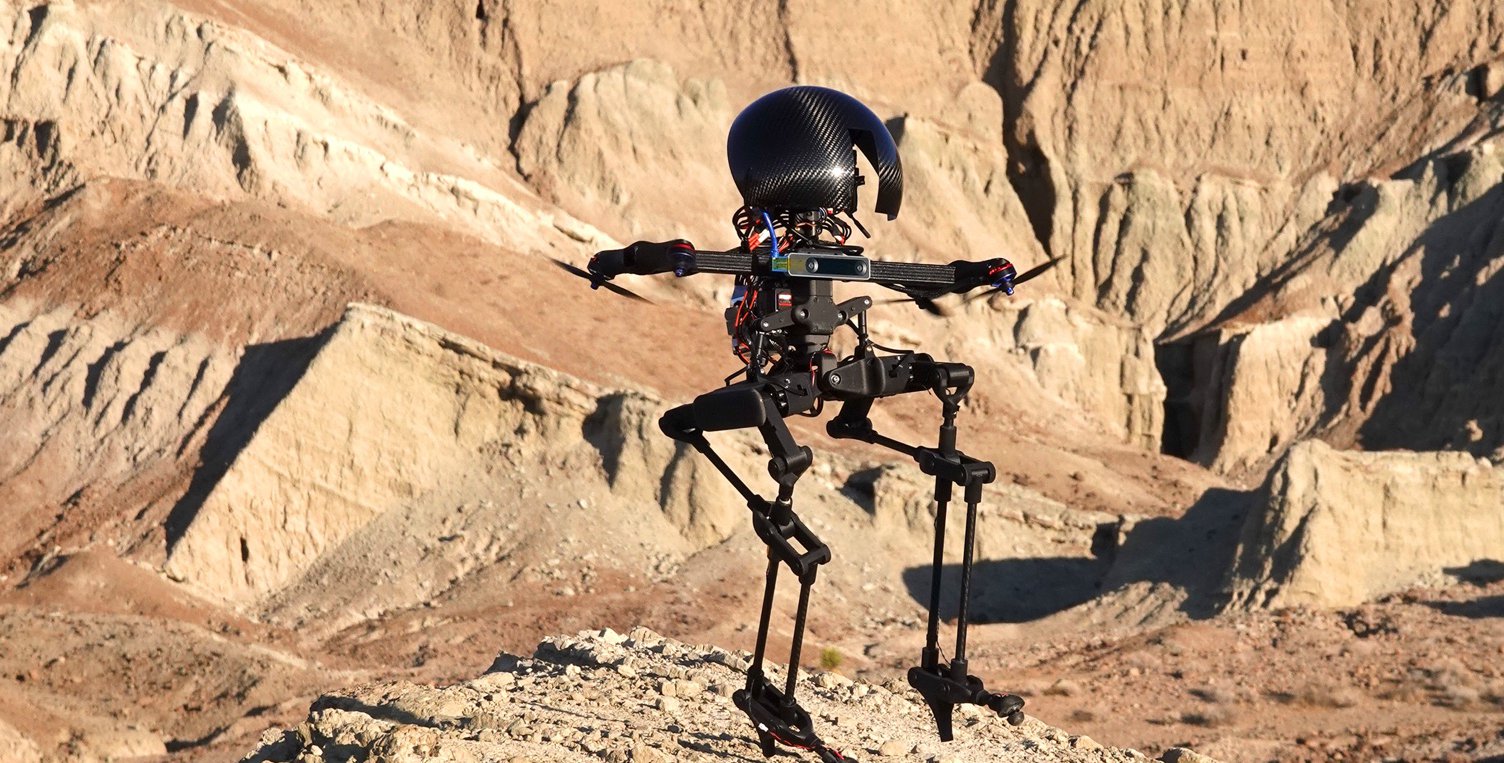

In the world of robotics, balance isn’t just about staying upright — it’s about survival, adaptability, and intelligent interaction with the world. From humble self‑righting toys to advanced humanoid robots navigating cluttered environments, researchers have realized that robots don’t live in isolation. They operate in a dynamic physical world where walls, floors, railings, and even shadows have the potential to help them stay on their feet. But can robots actually use walls and environmental dynamics to improve balance and stability? The short answer is yes — and the science behind it is both fascinating and highly practical.
In this deep‑dive article, we’ll explore how the environment helps robots balance — through physical contact, sensor interpretation, predictive modeling, advanced control systems, and biomechanics — while keeping things lively, engaging, and grounded in real research. We will cover:
- How balance works in robots
- Using walls and environmental contacts
- Dynamic models and predictive control
- Sensor fusion and environmental perception
- Learning‑based balance strategies
- Design challenges and future directions
Let’s begin.
1. What Is Balance For Robots? A Living Analogy
Imagine walking through a narrow corridor in the dark. Your arms stretch out instinctively to feel the walls. These walls suddenly became part of your balance system — a stabilizing “third limb.” Humans do this effortlessly; robots need specially designed systems to achieve similar behavior.
In robotics, balance is the ability to maintain a stable posture or motion state while resisting external disturbances. These disturbances include bumps, slopes, uneven terrain, and external forces. For humanoid robots (robots with a human‑like shape), maintaining dynamic balance is especially difficult because they walk upright on two feet, just like humans.
Traditional balance strategies plan gait and leg motions based on physics models like inverted pendulums — models that estimate the robot’s center of mass and how it changes during walking. These baseline strategies work well for smooth environments, but fall short when the robot encounters real‑world complexity like objects, walls, or irregular surfaces.
2. Posture, Environment and Dynamic Interaction
For decades, balance control algorithms assumed that robots should avoid contact with walls or objects unless necessary. The strategy was: don’t bump into things, and plan a trajectory that avoids obstacles. But real environments aren’t obstacle‑free. Walls are everywhere, from tight hallways to kitchen corners. Instead of treating walls as hindrances, what if robots could treat them as allies?
This is where environment exploitation comes into play — using walls, furniture, or surfaces not just to avoid collisions, but to assist in maintaining balance through intentional contact or bracing.
Recent research has shown that robots can use walls to recover, brace, and stabilize — much like humans do instinctively.
Wall‑Assisted Recovery and Bracing
A standout example comes from a study where humanoid robots use walls to recover from perturbations — external pushes during walking. By enabling the robot to brace with its arms against vertical surfaces, researchers were able to improve stability significantly compared to traditional leg‑only strategies.
Here’s how this works in conceptual terms:
- The robot detects an external push or imbalance.
- It evaluates the nearby environment through sensors.
- A predictive control model determines if using a nearby wall to brace will help.
- The robot adjusts its motion plan in real time.
- The robot’s arms or other contact surfaces engage with the wall to help stabilize the motion.
This approach expands the possibilities of how robots recover from disturbances and extends balance beyond pure locomotion — into interaction with the environment.
Biomechanics Meets Robotics
There are strong parallels between human biomechanics and these new robotics approaches. Humans instinctively reach out to a wall or railing to stop a slip or regain balance. Robots that leverage similar environmental interactions must similarly rely on multi‑contact dynamics — orchestrating foot placement, arm motion, and body posture in a unified manner.
Importantly, robots that use multi‑contact strategies — where arms, legs, and environmental surfaces all contribute — open doors to more biologically inspired movement.
3. Physics Models and Predictive Control
To understand how robots use contact with the environment, we need to look at how they reason about balance mathematically.
3.1 Inverted Pendulum Models
A classic way to model robot balance — especially during walking — is the inverted pendulum model. The idea is that a robot’s center of mass (CoM) acts like a pendulum whose pivot point is at the foot contact with the ground. Keeping that inverted system upright requires constant adjustments.
However, relying solely on leg contact has limitations:
- Unexpected pushes can destabilize the robot
- Complex terrains can reduce margin for balance
- Reactive stepping isn’t always feasible
3.2 Model Predictive Control (MPC) with Environmental Actions
Model Predictive Control (MPC) is a control strategy where future states are predicted and used to optimize decisions in real time. In the context of robot balance, MPC can guide:
- Foot placement
- Center of mass trajectories
- Joint torques and body posture
- Environmental interactions such as bracing against walls
In recent work, researchers combined simplified body models with MPC to allow robots to intentionally use walls during balance recovery. For example:
- Identify wall geometry and distance in real time
- Predict whether making contact would improve stability
- Compute optimal trajectories to brace using limbs
This real‑time decision process goes beyond traditional avoidance strategies, allowing robots to treat the environment as part of the support structure.
3.3 Multi‑Contact Stability Criteria
Another related line of research looks at multi‑contact scenarios — not just single leg or hand contact. In these cases, robots balance using a combination of contacts with the ground and the environment, calculating balance criteria that include:
- Friction constraints
- Contact force distributions
- Center of Mass support polygons
These impact‑aware balance criteria help predict whether a robot can maintain stability even while colliding or pressing against external objects — turning potential disturbances into stabilization opportunities.
4. Sensing the World: Perception Meets Balance
Balance is not just motion — it’s perception plus motion.
A robot that aims to use the environment for balance must see and feel its surroundings. There are two main systems that make this possible:
4.1 Visual and Proprioceptive Sensors
Robots often use a blend of sensors to understand their position and orientation:
- Inertial Measurement Units (IMUs): Detect acceleration and angular velocity
- Cameras / Depth Sensors: Create 3D maps of nearby surfaces
- Force/Torque Sensors: Detect contact forces between the robot and environment
- Proprioception: Joint angles and internal state information
This combination helps robots build a dynamic model of the scene — including nearby walls and obstacles — which is critical for anticipatory balance control.
4.2 Environmental Force Sensing
Going beyond visual perception, force sensing allows robots to feel contact forces. This has two big benefits:
- Detecting subtle perturbations
- Estimating surface properties like compliance or rigidity
In traversal tasks involving cluttered obstacles, robots that use environmental force sensing are able to adjust their locomotion mode and actively decide whether to push, press, or slide against objects to improve balance and mobility.
This approach resembles insects like cockroaches that actively sense environmental forces to navigate through narrow gaps.
5. Learning‑Based Balance and Environment Interaction
Control theory provides deterministic strategies, but learning brings adaptability.
5.1 Reinforcement Learning for Balance
Roboticists are increasingly using reinforcement learning (RL) to train robots to deal with balance challenges by interacting with their environment.
Instead of relying purely on fixed motion plans, robots can learn:
- When to use a wall or surface to improve balance
- How to coordinate joint movements under complex perturbations
- What strategies minimize energy while maintaining stability

RL works by rewarding desired outcomes — like staying upright after a push — and penalties for falling. Over time, the robot develops policies that generalize across scenarios.
In fall recovery, learning frameworks have shown that combining learned estimators with proprioceptive history improves dynamic stability, and these policies work indoors and outdoors — adapting to diverse conditions.
5.2 Neural Networks and Contact Planning
Recent strategies also involve neural planners that predict optimal contact points on nearby surfaces, taking into account wall orientation, distance, and robot posture. These planners help robots choose where to brace to prevent falling before it happens, mimicking human intuition about using support surfaces.
6. Practical Use Cases: From Labs to Real‑World Tasks
So far, we’ve discussed ideas and research. But where does this matter in real applications?
6.1 Search and Rescue Robots
In earthquake scenarios or collapsed buildings, robots often have to move through narrow corridors, uneven rubble, and unpredictable support surfaces. Robots that can use walls or debris to stabilize themselves while walking — or push against them to avoid tipping — have a higher chance of mission success.
6.2 Humanoid Assistive Robots
Robots designed to work with people — from caregiving assistants to warehouse collaborators — can exploit nearby structures to guide their balance. Imagine a robot delivering packages through a cluttered office, or one helping a construction worker carry tools while bumping into walls. The ability to leverage environments for balance can dramatically expand real‑world utility.
6.3 Industrial and Household Robots
Even seemingly trivial tasks like cleaning robots navigating furniture or delivery robots navigating hallways benefit from dynamic wall contacts and intentional environmental interactions.
7. Design Challenges and Ongoing Research
Despite exciting progress, implementing environment‑aided balance in robots remains challenging.
7.1 Sensor Limitations and Noise
Robust contact planning requires accurate perception. Noise in sensors (especially vision systems) can mislead balance decisions. Combining data from multiple sensors — sensor fusion — helps, but adds computational complexity.
7.2 Computational Constraints
Real‑time control systems must compute balance adjustments and predictive control solutions within milliseconds to react to perturbations. This demands fast compute units and efficient algorithms.
7.3 Safety and Compliance
Bracing against walls means forceful contact with the environment. Careful force control is required to avoid damaging either the robot or its surroundings. Compliance — the ability to yield slightly when contacting surfaces — is a major focus in robot design.
7.4 Human‑Robot Shared Spaces
In shared environments, robots cannot freely press against humans or delicate objects for balance. Understanding when and how to use environmental support without harming people or property remains a critical research topic.
8. The Future of Environmental Balance in Robotics
The next decade promises leaps forward. Researchers are exploring:
- Adaptive body plans that change shape for balance
- Soft robotics that deform resiliently when contacting surfaces
- Artificial proprioception that merges neural and mechanical feedback
- Digital twin environments for virtual validation of balance strategies in real world designs before deployment
One exciting direction is designing built environments with robot friendliness in mind — where walls and supports aren’t just obstacles, but collaborative partners in movement.
Ultimately, the question Can robots use walls and environment dynamics for better balance? isn’t just theoretical. The answer is already unfolding in research labs and early application prototypes, and it heralds a future where robots will navigate complexity — not by avoiding the world — but by embracing it.