









Humanoid robots—once the stuff of science fiction—are marching toward reality with renewed vigor and global ambition. As of early 2026, we are roughly one year into what many in the robotics industry are calling the inaugural phase of humanoid deployment. This moment has been shaped by breakthroughs in artificial intelligence, mechanical design, perception systems, and commercial partnerships that aim to push humanoids out of labs and into everyday environments—industrial, commercial, even domestic. But how close are we, really? Is the promise of humanoid robots becoming a tangible reality, or is this just another hype cycle in emerging technology?
The short answer: substantial progress has been made—yet fundamental challenges remain. The current landscape shows undeniable momentum, tentative real-world use cases, and a clear shift from conceptual demos to limited operational deployments. Yet efficiency gaps, cost constraints, and technical hurdles continue to shape the timeline. This article explores what’s happened in the past year, what’s working, what’s not, and what lies ahead.
A Global Surge in Humanoid Development
Humanoid robotics right now isn’t dominated by a single player—far from it. Instead, the field resembles a global battleground of innovation. Major firms in the U.S., China, Europe, and beyond are actively racing to refine and industrialize humanoid technologies.
In the United States, Tesla’s Optimus program remains among the most high-profile efforts. Elon Musk publicly reaffirmed plans to sell Optimus robots to the public by the end of 2027, while limited versions are already performing basic factory tasks internally. This reflects a strategy that tightly couples hardware development with Tesla’s AI systems, even though critics note initial production may be slow.
Across the Pacific, Chinese robotics firms like UBTech and XPeng are aggressively pursuing humanoid use cases. UBTech signed a deal with Airbus to expand robot use in aviation manufacturing—a sign that industrial applications are becoming more than just proof-of-concepts. Meanwhile, XPeng showcased its humanoid IRON, emphasizing not only performance but also human-centric design elements like “huggable” form factors to improve acceptance.
Smaller companies like Norway’s 1X Technologies are targeting the home humanoid market with robots designed for household tasks—and even subscription services. Boston Dynamics and Hyundai are developing advanced versions of their own bipedal platforms. Industry data, including global robot counts and market forecasts, suggest explosive growth potential: in 2025 there were roughly 16,000 humanoids deployed worldwide, with projections reaching well over 100,000 by 2027.
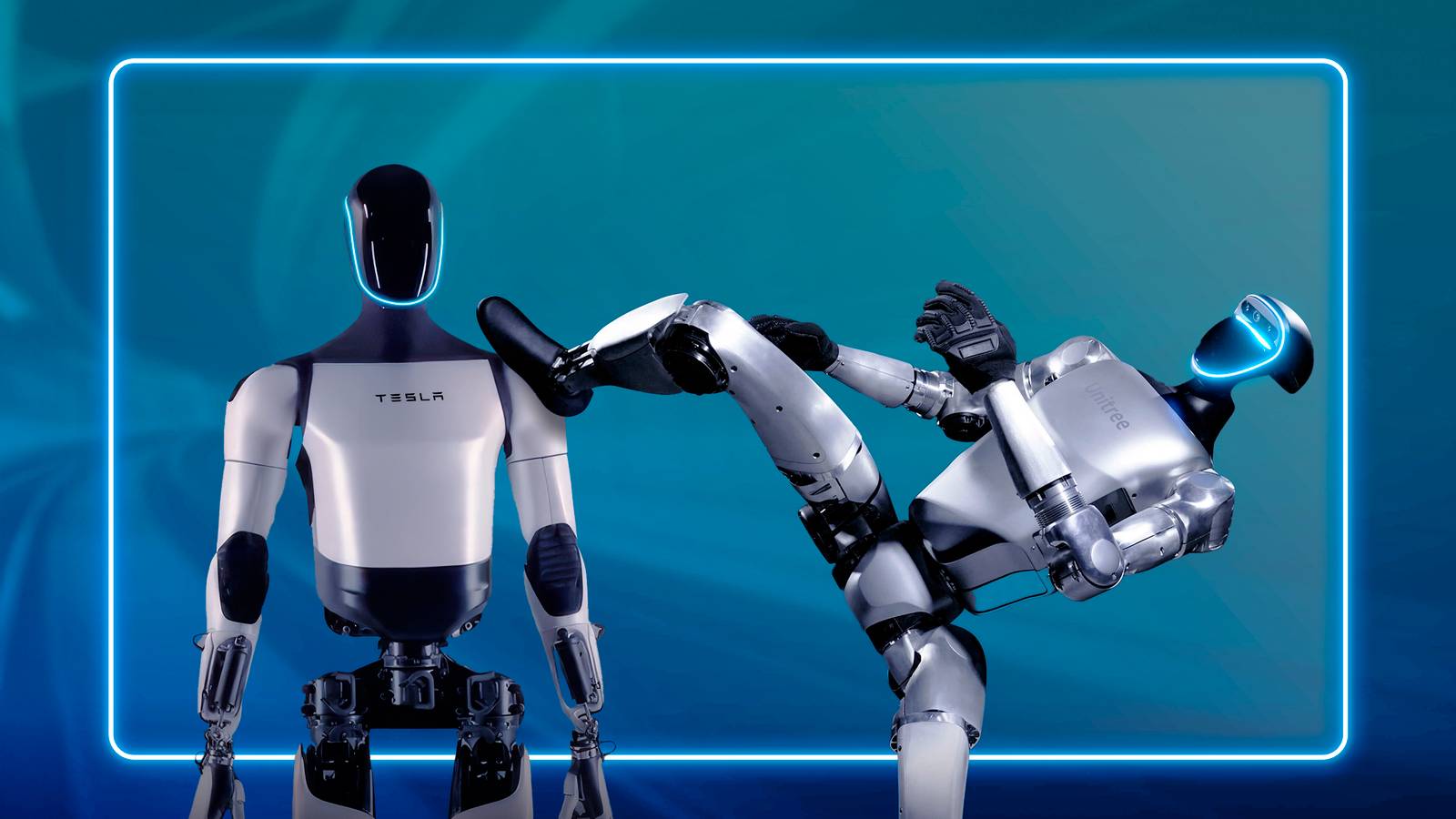
Academic labs and foundational AI research are concurrently pushing the technology forward. Innovative AI models that unify vision, language, and action are emerging, enabling robots to better understand and navigate human environments.
Real-World Deployments: Where Humanoids Are Actually Used
One of the clearest signs of progress is the shift from controlled research environments to pilot deployments in real industries.
Manufacturing and Logistics
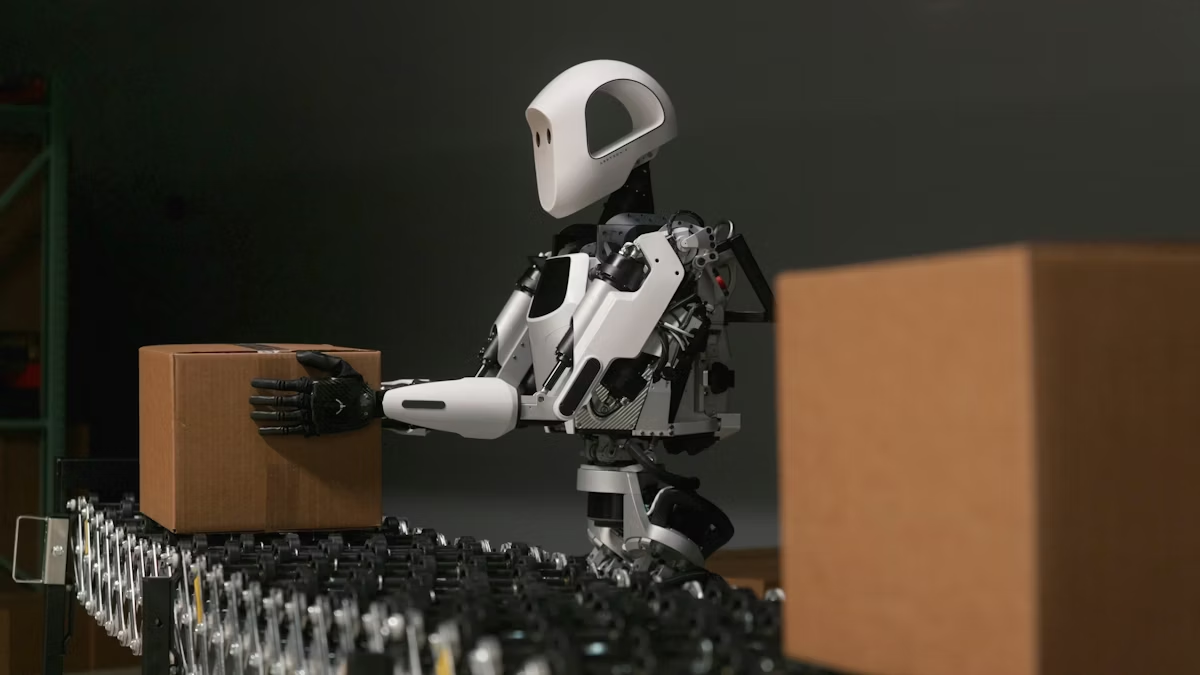
Factories and logistics hubs are early landing grounds for humanoids. Because most industrial infrastructure is built around human task layouts—walkways, shelves, tools—humanoid form factors provide distinct advantages over traditional automation arms or fixed robots.
In aviation manufacturing, UBTech’s humanoid robots are being tested for assembly tasks. Although still far less efficient than human workers, these deployments validate practical robot use outside research labs.
Warehouses have also begun experimenting with humanoid systems, though widespread adoption remains limited and expensive. Industry analysts suggest that the next two years could see broader pilots if these robots prove cost-effective in logistics environments.
Commercial and Service Roles
Beyond industrial sites, humanoids are emerging in service sectors such as retail, public information kiosks, and hospitality. XPeng’s IRON is being positioned as retail guides in stores, demonstrating how humanoids with engaging designs can serve public-facing roles.
Household Assistance
Consumer-oriented humanoids are still nascent but gaining traction. Robots like 1X’s NEO are designed to handle mundane home chores. These systems today often combine teleoperation with autonomous learning—meaning early adopters may need human operators for more complex tasks before autonomy improves.
The Technical Landscape: Breakthroughs and Bottlenecks
While industrial adoption is growing, the technical challenges that define humanoid robotics remain significant.
Mechanical Mobility
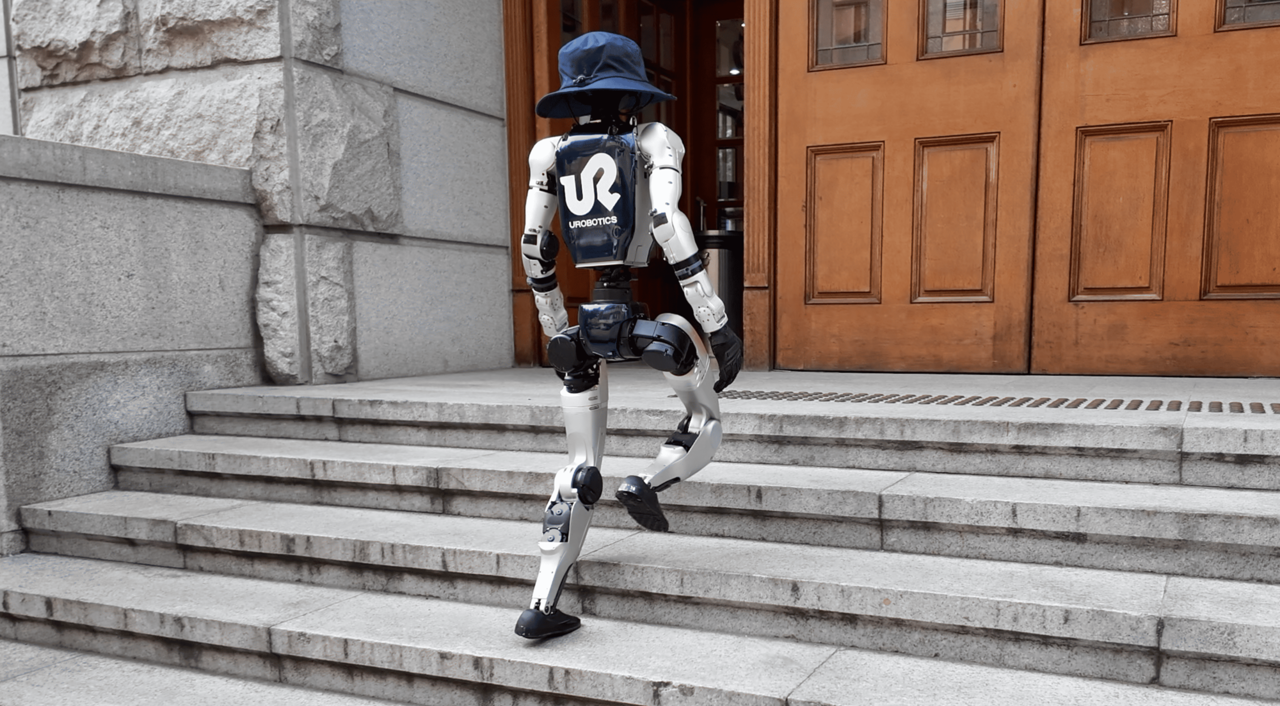
Recreating human locomotion—walking on two legs, balancing, responding to uneven terrain—remains extraordinarily complex. Although some models can execute impressive gymnastic moves or urban navigation demonstrations, real-world environments are much less predictable than controlled shows.
Battery life and power efficiency are other constraints. Many present robots operate for limited durations—often under two hours per charge—making them impractical for full work shifts without docking or tethered solutions.
Intelligence and Perception
Robots now leverage large vision-language-action models that allow them to interpret complex instructions and environments, but integrating these systems into real-time control remains a frontier challenge. Research on unified motion frameworks and whole-body behavioral models demonstrates concrete progress, though the field is still far from general-purpose autonomy.
Gaps Still Holding Back Full-Scale Reality
Despite progress, there are concrete measures showing how far humanoid robotics must go to truly fulfill early promises.
Performance Efficiency
Leading humanoid units still achieve only a fraction of human efficiency in complex tasks. For example, worker-grade tasks can be performed at 30–50% of human capability, limiting competitive advantage and ROI in many industries.
Cost and Scalability
The cost to produce, maintain, and deploy humanoid robots remains high. Early consumer units are often priced beyond the reach of average buyers, and industrial pilots frequently require tailored environments or human support. Price forecasts suggest gradual declines, but mass-market affordability is still years away.
Public Trust and Safety
Humanoids that look and move like people present unique ethical, privacy, and psychological challenges. Social acceptance, regulatory frameworks, liability questions, and human trust are major non-technical barriers. While not directly slowing technology, they shape the pace and manner of adoption.
A Balanced Verdict: Progress With Pragmatic Expectations
The last year has confirmed that humanoid robotics is not a flash in the pan. The field is moving past impressive demos into meaningful commercial exploration. Major companies are investing billions; governments are crafting supportive strategies; and early deployments are generating real data. New AI frameworks focused on multimodal perception and action are bridging the gap between robot hardware and physical intelligence in ways that were merely conceptual a few years ago.
Yet the promise of humanoids fully replacing humans—or performing all human tasks autonomously—is not yet a reality. The industry has shifted into a proof-of-performance era where benchmarks, real ROI, and measurable utility take precedence over futuristic rhetoric. Humanoids may soon become practical in selective roles where their human-like bodies provide leverage over fixed robots. However, general-purpose humanoids that operate seamlessly across varied environments remain on the horizon, projected to expand significantly toward the late 2020s.