








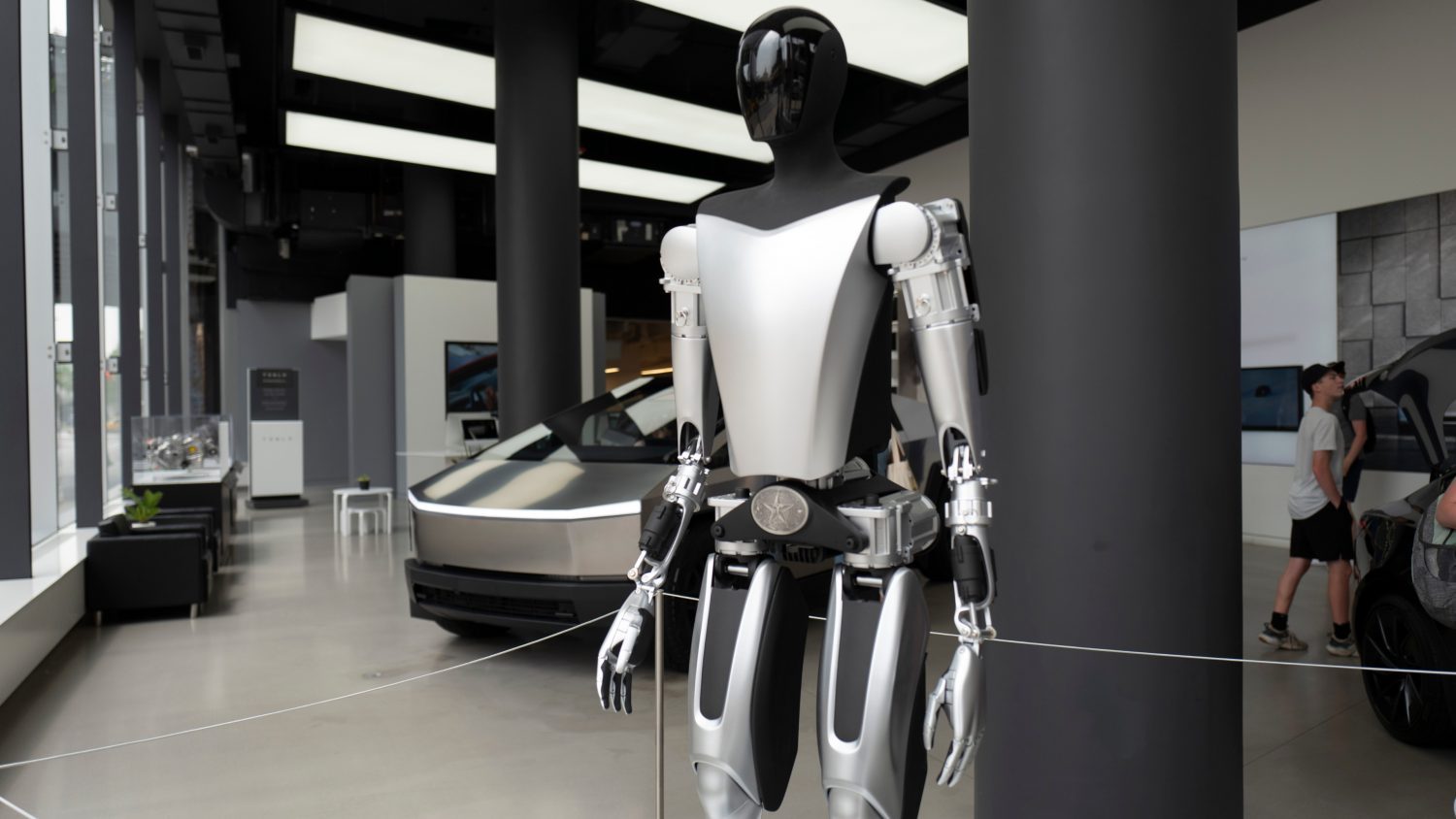

In the fast-paced world of robotics and artificial intelligence, expectations often evolve faster than the machines themselves. When Tesla first unveiled Optimus, its humanoid robot project, it captured the world’s imagination with bold claims — visions of robots capable of performing everyday human tasks, contributing meaningfully to industry, and eventually becoming mass-produced on a scale never before seen. The excitement was palpable, yet skepticism lingered: could Tesla realistically deliver on these promises? Now, six months into intensive development and early deployment, it’s time to ask a crucial question: Has Optimus learned more than expected?
To answer this, we must explore what Optimus was designed to be, where it stands today, the breakthroughs and slowdowns it has faced, and what this means for the future of robotics and human-machine collaboration.
The Genesis of a Robot: What Optimus Was Expected to Achieve
At its core, Optimus is a humanoid robot — a bipedal, general-purpose machine intended to operate in environments built for humans. Announced in 2021 by Tesla’s visionary CEO Elon Musk, Optimus was pitched as far more than a company stunt. It was described as:
- A robotic system capable of undertaking repetitive, mundane, or dangerous tasks humans prefer not to do.
- A platform that, with further iterations, could eventually be affordable and ubiquitous.
- A stepping stone toward a future where automation and AI fundamentally change industrial labor and everyday life.
From the first prototype shown in 2022, Tesla communicated ambition. Musk envisioned a future where humanoid robots are not confined to specialized labs but integrated into workplaces and homes, performing chores, assisting with care work, and even supporting medical procedures.
However, promise and reality often diverge in robotics. Early expectations for Optimus were tempered by the sheer complexity of building machines that must operate safely and autonomously in unpredictable environments. Six months later, the progress offers a fascinating blend of ambitious success, pragmatic recalibration, and a clearer view of the road ahead.
A Snapshot of Optimus’ Current State
In early 2026, Tesla continues to refine Optimus. The company has confirmed that:
- Optimus units are being used in internal factory settings to perform basic tasks.
- The robot is executing simple physical chores autonomously, such as folding laundry and wiping surfaces.
- Optimus is in early stages of production with slow initial output, and Tesla plans for broader manufacturing later in the year.
Factory Deployment
One of the clearest indicators of progress is that Optimus robots are already deployed in Tesla’s own facilities. Rather than remaining purely in laboratory simulation, at least a handful of units are operating on the factory floor. These robots aren’t taking over complex assembly lines yet, but they are performing tangible functions — a milestone that few humanoid robots outside highly specialized research labs have achieved at this scale.
The use of Optimus in a manufacturing setting signals confidence that the robot’s sensor systems, motor control, and AI coordination are sufficient for supervised industrial tasks. It also reflects a broader industry trend toward integrating robotics into real-world workflows rather than purely simulated environments.

Learning Through Practice: The AI Behind Optimus
Knowing that Optimus is physically working in factories is one thing — but what about its learning capabilities?
Unlike traditional robots programmed with fixed instructions, Optimus is built around machine learning and neural networks. Its software is designed to improve over time, learning how to adapt to new tasks, interpret sensory data, and coordinate complex motions. Early training strategies involved motion capture suits and teleoperation — where human operators guide robots remotely — but Tesla shifted toward a vision-only learning model designed to scale data collection more rapidly. This shift aligns Optimus’ learning methodology with Tesla’s broader AI efforts, including those in self-driving technology.
Why does this matter? Because true adaptability — the ability for a robot to generalize lessons from one task to another — is a hallmark of advanced AI. If Optimus continues to improve through camera-based learning from human behavior and environmental feedback, it can transcend rigid programming and start to “understand” its tasks in context.
Notable Capabilities: Looking at the Data
In the six-month window leading up to this analysis, there have been several specific demonstrations of Optimus’ abilities that exceed what many expected:
1. Dexterous Hands and Manipulation
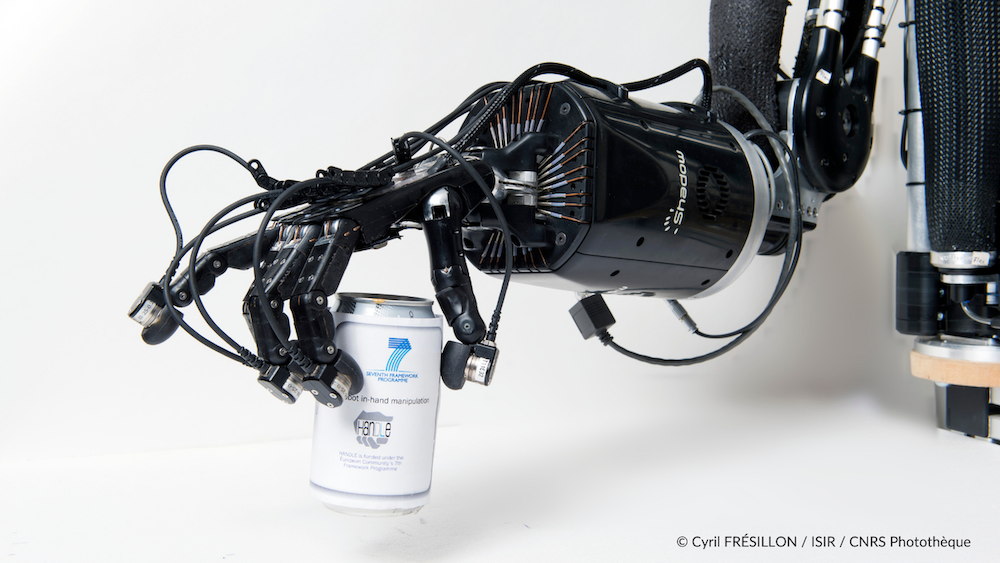
One of the standout anecdotes comes from a Tesla executive who noted that Optimus can fold laundry, wipe tables, and even perform actions like shaking hands — tasks that require fine motor control and tactile coordination. This is not trivial. Manipulating objects with human-like delicacy involves complex sensors, adaptive grip strength, and real-time adjustment to unpredictable variables in the environment.
This indicates that Optimus’ mechanical design and control algorithms have matured past basic locomotion. Instead of merely walking or balancing, it can now interact intelligently with objects — an essential skill for any robot meant to work among humans.
2. Autonomous Motion and Navigation
Reports also suggest that Optimus has demonstrated basic autonomous navigation capabilities in controlled office and lab environments. While still limited, the progress toward independent movement without teleoperation training is significant. Robots must interpret sensor inputs, calculate spatial maps, and adjust movement paths dynamically — all under constraints that humans handle instinctively every day.
The Slow, Realistic Pace of Robotics Development
For all its breakthroughs, progress has not been without challenges — and those challenges are instructive.
Production Challenges
Tesla has openly acknowledged that Optimus production will begin slowly and scale over time. Engineers are grappling with the complexity of producing new actuator designs and building supply chains for robotic components that don’t yet exist in large volumes. Unlike cars — Tesla’s core business — each Optimus robot integrates a bespoke interplay of mechanical parts, sensors, and AI systems that require meticulous calibration.
This slow pace isn’t unique to Tesla. Robotics companies around the world — whether in Boston Dynamics, AgiBot in China, or startups pushing bipedal humanoids — confront similar structural hurdles. Hardware reliability, software safety, and real-world adaptability remain formidable challenges.
Earlier Technical Overhauls
In mid-2025, Tesla reportedly paused part procurement and paused some production activities to refine hardware and software. This kind of design revision is common in cutting-edge engineering, but it means timelines shift and earlier expectations must adjust accordingly.
The important takeaway isn’t that progress stalled — it’s that Tesla prioritized a deeper foundation of reliability over superficial timeline targets.
Surpassing Expectations or Resetting Them?
So, three questions now loom large:
1. Has Optimus learned more than expected?
For many observers, the answer leans yes. Optimus now performs autonomous physical tasks — something many doubted within mainstream robotics would happen this early. Early deployment in real workflows and improvements in tactile manipulation are meaningful achievements that go well beyond mere conceptual demos.
2. Are these leaps bigger than the hype?
This is more nuanced. Tesla’s public narrative has historically tied bold timelines to visionary goals, sometimes outpacing technical readiness. Competitive robotics companies often take years — even decades — to cross similar thresholds. In that sense, what Optimus has achieved in a relatively compressed time frame is impressive.
Balancing Hype, Reality, and Future Potential
At its heart, optimism and realism must coexist in any disruptive technology. Mistaking hype for progress — or vice versa — leads to confusion. Tesla has walked this line with Optimus, delivering measurable advancements while acknowledging slower than forecast production and continuous design refinement.
Beyond Six Months: Mid-Term Trajectory
In future months, several milestones could further validate or challenge current perceptions:
- Expanded autonomy — Robots that can perform a broader set of tasks with minimal human oversight.
- Robust safety and reliability — Demonstrating safe interactions in varied environments.
- Scalable production — Ability to mass-manufacture robots at lower cost.
- Learning transfer — Using AI models that adapt learned skills to new, untrained scenarios.
Each of these would push Optimus from lab novelty to practical utility.
The Broader Implications of Optimus’ Progress
Whether viewed as pioneering innovation or incremental engineering, Optimus’ development has broader significance:
Labor and Industry
Humanoid robots that can learn and adapt could redefine workforce dynamics, especially for repetitive or hazardous jobs. While this raises concerns about displacement, it also offers opportunities for humans to focus on higher-level tasks requiring creativity and judgment.
AI Safety and Ethics
Robots with autonomous learning power surface questions about ethical governance, transparency, and control. As Optimus and peers evolve, frameworks will be needed to ensure accountability and proper oversight.
Cross-Pollination of Technologies
Advances in robotics often accelerate related fields, including perception systems, AI learning architectures, and even material science. Optimus benefits from — and contributes to — this cross-domain innovation ecosystem.
Conclusion: A Nuanced Verdict
After six months of accelerated development and real-world experimentation, Optimus has indeed learned more than many expected, particularly in autonomous manipulation, factory deployment, and adaptive motion. Yet this progress is anchored in practicality rather than fiction — it validates the feasibility of advanced humanoid robots while highlighting the complexity that lies ahead.
In other words: Optimus is no longer a distant dream. It has become an emerging reality, albeit one maturing at a measured and necessary pace.