








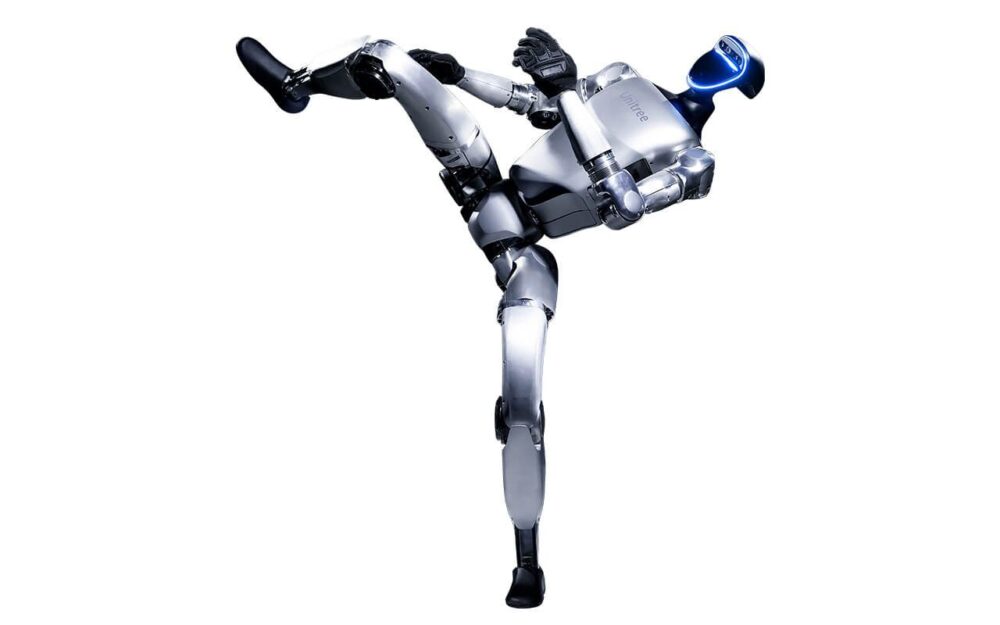

1. A Scene From the Near Future
It’s early morning.
A warehouse lights up, not with the noise of workers chatting, but with the soft hum of synchronized movement.
Rows of humanoid robots move in coordination—lifting, sorting, walking.
No complaints.
No breaks.
No hesitation.
Machines like Figure 01 and Tesla Optimus are no longer prototypes. They are workers.
And somewhere in that same city, a human worker refreshes a job listing page.
Nothing unusual has happened.
And yet, everything has changed.
2. The Most Uncomfortable Question
For years, we’ve asked:
What can robots do?
Now, a more uncomfortable question is emerging:
What happens when robots can do what we do?
Not just faster.
Not just cheaper.
But in ways that are indistinguishable in function.
Humanoid robots are different from previous machines.
They don’t just replace tasks.
They replace roles.
A robotic arm replaces your hand.
A humanoid robot replaces you.
3. The Design Choice That Changed Everything
It would have been easier to build machines that look nothing like us.
More efficient.
More specialized.
More optimized.
But instead, companies chose to build machines that:
- Walk like us
- Stand like us
- Work in the same spaces we do
Robots like Digit are designed not to transform the world—
but to fit into it.
And that decision carries a quiet implication:
The world does not need to change for machines.
Humans might need to change for machines.
4. The First Loss Is Invisible
When people talk about robots replacing jobs, they often focus on numbers:
- How many jobs lost
- How many created
- Which industries affected
But the first loss is not statistical.
It is psychological.
It is the moment when a person realizes:
“I am no longer necessary here.”
Not because they failed.
Not because they lack skill.
But because something else can do the same thing—
without being human.
5. The Value of Being Human
For most of history, human value has been tied to capability:
- Strength
- Skill
- Knowledge
But machines are catching up.
They can:
- Lift more
- Calculate faster
- Operate longer
So the question becomes:
If machines can match or exceed our capabilities, what remains uniquely human?
This is not just a philosophical question.
It is an economic one.
A social one.
A deeply personal one.
6. The Strange Comfort of Imitation
There is something paradoxical about humanoid robots.
They are unsettling—
yet strangely comforting.
A machine shaped like a human feels more familiar than one that is not.
This is why companies don’t just build efficient machines.
They build relatable ones.
But that familiarity comes at a cost.
Because the closer machines become to us, the harder it is to maintain a clear boundary between:
- Tool and companion
- Object and presence
- Simulation and reality
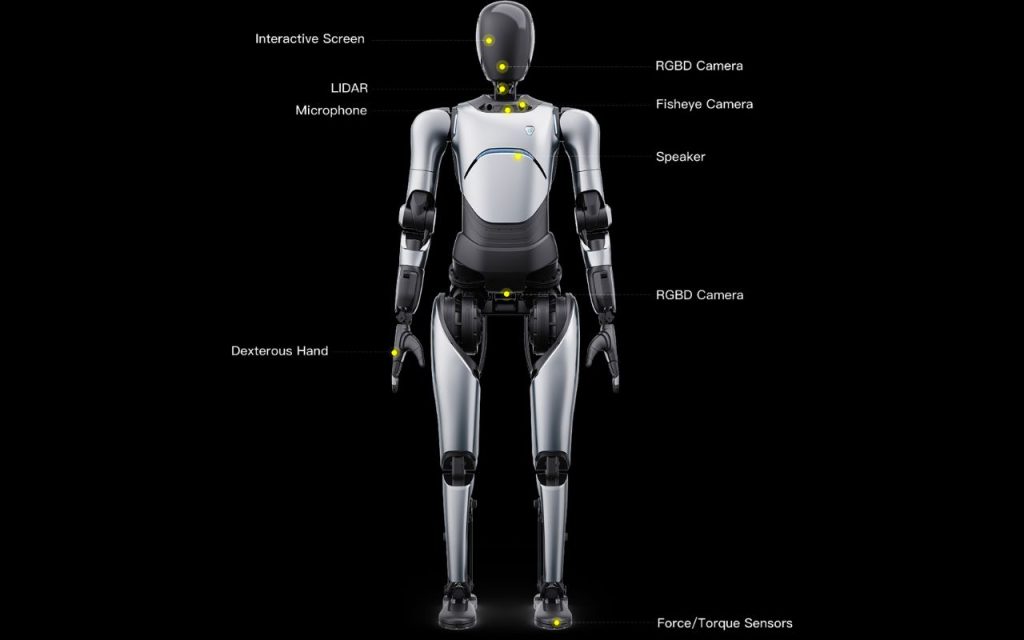
7. Emotional Confusion
In elder care facilities, hospitals, and homes, people are already interacting with machines that simulate human behavior.
They respond.
They “listen.”
They “assist.”
And something subtle begins to happen.
People start to:
- Thank them
- Talk to them
- Rely on them emotionally
Even when they know the machine does not feel.
This creates a new kind of emotional confusion:
Can something that does not care still make us feel cared for?
And if it can—
what does that say about human relationships?
8. Efficiency vs Meaning
Humanoid robots promise efficiency.
- Faster operations
- Lower costs
- Greater scalability
But efficiency is not the same as meaning.
Work is not just a way to produce value.
It is also a way to:
- Structure time
- Build identity
- Create purpose
If machines take over work, we don’t just lose jobs.
We risk losing a framework for meaning.
9. The Silent Shift of Power
Behind the visible rise of humanoid robots is a less visible shift.
Power.
The ability to deploy humanoid robots at scale belongs to a small number of entities:
- Large corporations
- Technologically advanced nations
Companies like Amazon are not just adopting robots.
They are shaping the infrastructure of the future.
And infrastructure defines power.
The question is not just who builds robots.
It is who controls the systems they operate within.
10. Coexistence or Replacement?
There are two dominant narratives about the future:
1. Coexistence
Humans and robots work together.
Machines augment human capability.
2. Replacement
Machines gradually take over most forms of labor.
Humans are displaced.
Reality will likely be somewhere in between.
But the balance between these outcomes is not fixed.
It will be shaped by:
- Policy decisions
- Economic incentives
- Social values
11. The Choice We Don’t Talk About
There is an assumption that technological progress is inevitable.
That once something can be built, it will be built.
And once it is built, it will be used.
But this is not entirely true.
Society makes choices.
About:
- Regulation
- Deployment
- Limits
The future of humanoid robots is not just a technical trajectory.
It is a collective decision.
12. A Different Way to Ask the Question
Instead of asking:
Will robots replace us?
We might ask:
What kind of world do we want to live in?
A world where:
- Efficiency is maximized at all costs?
- Human labor is minimized wherever possible?
- Machines perform most tasks?
Or a world where:
- Human participation remains central?
- Technology supports rather than replaces?
- Value is defined beyond productivity?
13. The Final Line
There is a line we are approaching.
Not a physical one.
A conceptual one.
The line where machines stop being clearly different from us.
And start becoming something else:
Not human.
Not tool.
But something in between.
Humanoid robots stand exactly on that line.
Conclusion: What We Are Really Building
In the end, humanoid robots are not just machines.
They are mirrors.
They reflect:
- What we value
- What we prioritize
- What we are willing to give up
The question is not whether they will become more like us.
They will.
The question is:
As they become more like us—
what will we become?
Discussion about this post