








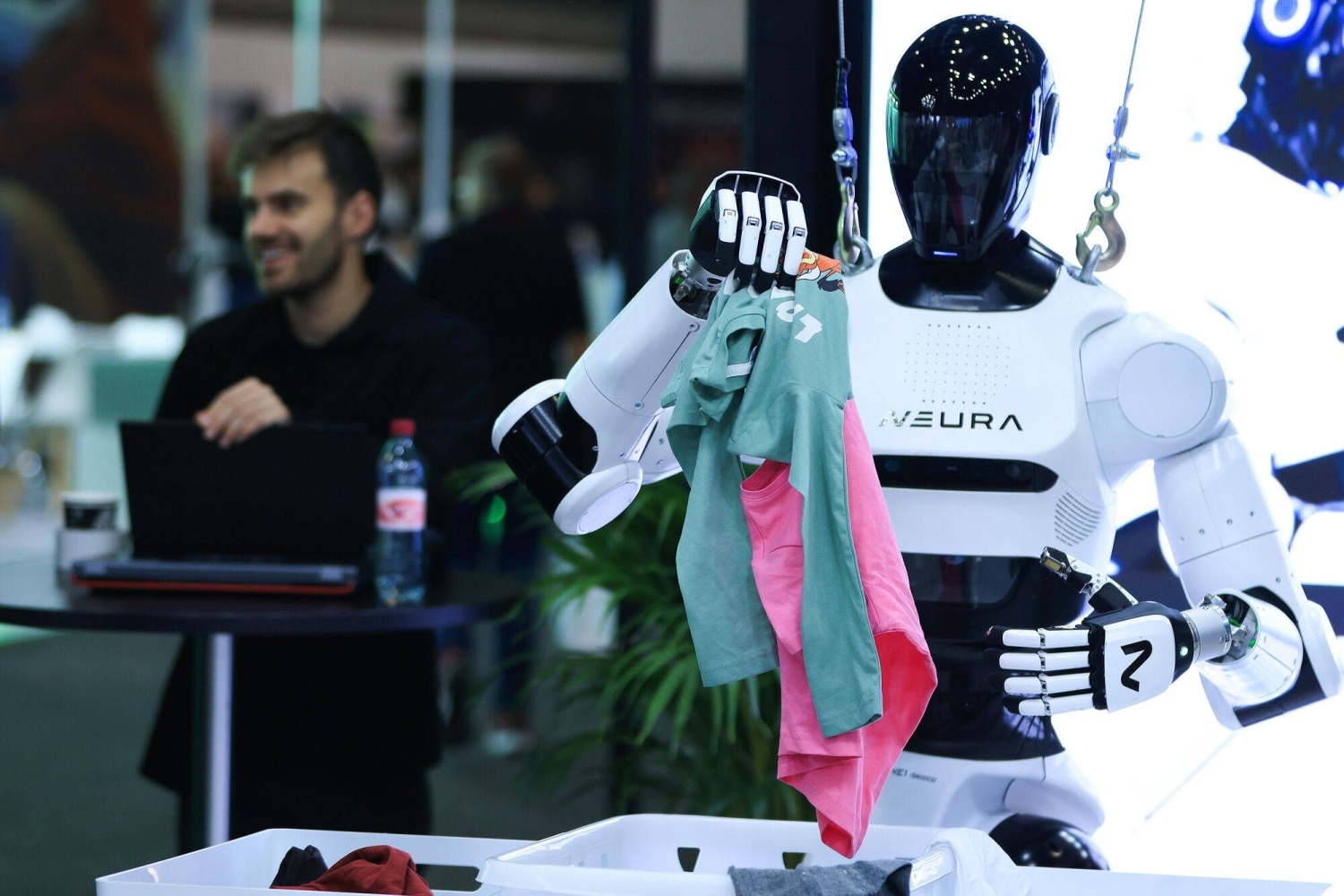

Introduction: A Question That Refuses to Go Away
The question sounds absurd—until it doesn’t.
Should robots have rights?
For most of modern history, the answer has been obvious. Machines are tools. Tools do not deserve rights.
But as humanoid robots become more advanced—walking, interacting, responding, and even appearing to “understand”—that certainty is beginning to erode.
Not because robots are conscious.
But because they are becoming socially embedded.
Across labs, boardrooms, and policy circles, a debate is emerging—not about what robots are, but about how humans should treat them.
To understand this debate, you have to listen to the people shaping it.
The Engineer: “It’s Just a System”
Dr. Alan Brooks, a senior robotics engineer, is direct.
“Let’s be clear,” he says. “These systems are not conscious. They don’t feel. They don’t think in any human sense.”
Brooks has worked on humanoid platforms similar to Figure 01 and Tesla Optimus. From his perspective, the ethical debate is often misplaced.
“People see a robot pick something up, respond to language, and they project intention onto it,” he explains. “But underneath, it’s still pattern recognition and control systems.”
He worries that discussions about robot rights distract from more urgent issues.
“The real ethical questions are about deployment—labor, safety, accountability—not whether a machine deserves moral consideration.”
For engineers like Brooks, the danger is not that robots will be mistreated.
It’s that humans will misunderstand them.
The Ethicist: “Treatment Shapes Behavior”
Dr. Lena Hoffman, an AI ethicist, disagrees.
“Whether robots are conscious is not the only question that matters,” she says. “Ethics is also about how our actions shape us.”
Hoffman studies human interaction with machines, particularly humanoid systems like Digit.
“If people routinely command, ignore, or even abuse humanoid robots, that behavior doesn’t exist in isolation,” she argues. “It can influence how they treat other humans.”
She points to research suggesting that repeated interaction with human-like machines can affect empathy and social norms.
“A robot that looks and behaves like a person occupies a moral gray zone,” she says. “And how we navigate that zone matters.”
Hoffman is not advocating for full legal rights for robots.
But she believes some form of ethical framework is necessary.
“Not for the robots,” she says. “For us.”
The Labor Advocate: “Rights for Robots, None for Workers?”
For Marcus Reed, a labor organizer, the conversation about robot rights is not just premature—it is offensive.
“We’re talking about giving rights to machines,” he says, “while millions of workers don’t have basic protections.”
Reed has been closely following the deployment of humanoid robots in logistics and manufacturing, including systems developed by companies like Amazon.
“Humanoid robots are being introduced into workplaces where people are already under pressure,” he says. “And instead of focusing on job security, wages, or working conditions, we’re debating whether the machines deserve rights?”
For Reed, the ethical priority is clear:
“Humans first.”
He worries that discussions about robot ethics could be used to distract from labor issues.
“It shifts the narrative,” he says. “From ‘How do we protect workers?’ to ‘How do we treat machines?’ That’s a dangerous move.”
The Tech Executive: “We Need a Framework—Fast”
From the corporate side, the conversation is more pragmatic.
Sarah Chen, a senior executive at a robotics firm, sees ethics as a necessary part of scaling the industry.
“We’re moving from prototypes to deployment,” she says. “That means these questions can’t be ignored anymore.”
Chen is not concerned about robot rights in the philosophical sense.
But she is concerned about public perception and regulation.
“If people feel uncomfortable with humanoid robots, adoption slows,” she explains. “And if regulators step in without understanding the technology, that creates other risks.”
For companies, ethics is not just a moral issue.
It is a strategic one.
“We need clear guidelines,” Chen says. “On interaction, data use, safety—everything.”
The Philosopher: “We’re Asking the Wrong Question”
Professor David Klein takes a step back.
“The question isn’t whether robots should have rights,” he says. “It’s what kind of society we’re building.”
Klein argues that focusing on robots themselves misses the broader ethical context.
“Humanoid robots are a reflection of human choices,” he explains. “They embody decisions about labor, power, and control.”
From his perspective, the debate about robot rights is a symptom of a deeper issue:
“We’re struggling to define the boundaries between humans and machines.”
Klein suggests reframing the conversation.
“Instead of asking what robots deserve,” he says, “we should ask what responsibilities we have as creators.”
The Care Worker: “It Feels Real—Even If It Isn’t”
In a small elder care facility, nurse assistant Emily Carter has a different perspective.
She has worked with early-stage assistive robots—machines designed to help with routine tasks and provide basic interaction.
“They’re not human,” she says. “I know that.”
But she also admits something more complicated.
“When a robot responds to you, looks at you, even just moves in a certain way—it feels real.”
Carter has seen residents form attachments to machines.
“They talk to them. Thank them. Sometimes even confide in them.”
This raises difficult questions.
Is it ethical to allow emotional attachment to something that cannot reciprocate?
Or is the benefit—reduced loneliness, increased engagement—worth the illusion?
“I don’t have a clear answer,” Carter says. “But it’s not as simple as people think.”
The Policy Maker: “We Are Behind”
Government regulators are watching these developments with growing concern.
“We are not prepared,” admits one policy advisor who asked not to be named.
Existing laws do not address:
- Autonomous physical agents
- AI-driven decision-making
- Human-robot interaction
“We’re trying to fit new technology into old frameworks,” the advisor says. “And it doesn’t work.”
The challenge is not just creating regulations.
It is doing so fast enough to keep up with technological change.
“If we wait until these systems are everywhere,” the advisor warns, “it will be much harder to set boundaries.”
Points of Tension
Across these perspectives, several key tensions emerge:
1. Consciousness vs Perception
- Engineers: Robots are not conscious
- Ethicists: Perception still matters
2. Human Rights vs Robot Ethics
- Labor advocates: Focus on workers
- Philosophers: Broader societal impact
3. Innovation vs Regulation
- Companies: Need flexibility
- Policymakers: Need control
4. Utility vs Emotional Impact
- Developers: Focus on function
- Users: Experience emotional responses
These tensions are not easily resolved.
And they are likely to intensify as humanoid robots become more common.
A Debate Without Resolution
What makes this debate difficult is that it has no clear endpoint.
There is no moment when society will collectively decide:
“Now robots deserve rights.”
Instead, the boundaries will shift gradually.
Through:
- Design choices
- Social norms
- Legal frameworks
And most importantly, through everyday interactions.
Conclusion: What This Debate Reveals
In the end, the debate about robot rights is not really about robots.
It is about humans.
About how we define:
- Agency
- Responsibility
- Dignity
- Relationship
Humanoid robots force us to confront these questions in new ways.
Not because they are human.
But because they are close enough to make the distinction uncomfortable.
And in that discomfort lies the real ethical challenge.
Discussion about this post