








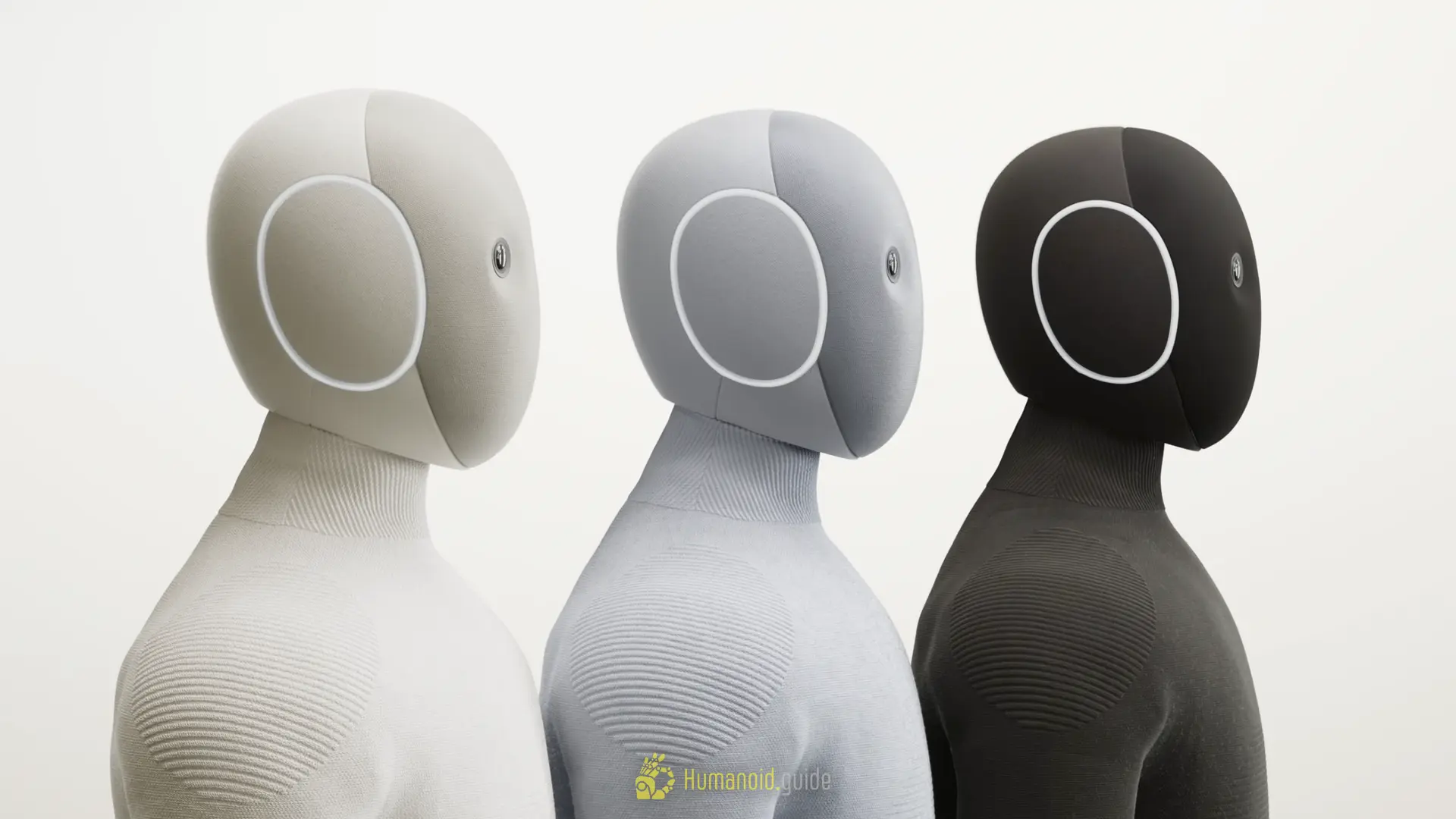

Imagine waking up to a world where a softly whirring assistant ambles into your kitchen, brews your coffee, and asks with a cheerful mechanical chirp, “Would you like breakfast in bed today?” This isn’t a scene from Star Trek or a Black Mirror episode—it’s the near‑future reality that robotics companies are racing to bring home. In 2026, humanoid robots designed for everyday household use are edging out of research labs and concept videos and into pre‑orders, pilot programs, and consumer consciousness.
Leading this charge is 1X Technologies’ humanoid robot, Neo, a budding pioneer among home‑grade robots that promises to transform the way we live, work, and even think about machines as companions. But the question on everyone’s mind is: Are humanoid robots like Neo really going mainstream this year?
In this deep dive, we’ll explore how close we are to having a humanoid robot in the living room, what barriers still stand in the way, the broader technological and social implications, and what it means for your future home.
1. A New Era of Everyday Robots: From Sci‑Fi to Shopping Cart
For decades, humanoid robots were confined to textbooks, research labs, and blockbuster movies. They were either clunky industrial arms used in factories, or humanoid prototypes that looked promising but never quite left the lab.
But that’s changing.
In late 2025, 1X Technologies officially opened pre‑orders for their humanoid home robot, Neo—designed to perform household tasks, interact via voice commands, and blend into domestic environments. The robot is priced at about $20,000 outright or $499 per month via subscription and slated to begin shipment in 2026.
This move signals a paradigm shift: robots built not just for industrial settings, but for everyday living spaces. Whether buyers view Neo as a practical assistant, a tech luxury, or a beta‑tester experience, the fact that consumers can buy one today is historic.
Why This Matters
Humanoid robots like Neo represent a blend of hardware sophistication and artificial intelligence that wasn’t possible just a few years ago. The tactile systems, AI models, and human‑robot interaction frameworks have matured enough to make these machines more than just curiosities.
That’s a huge leap. But it’s only part of the story.
2. The Tech Behind Homely Bots: How Neo Works
Design & Hardware
1X’s Neo stands roughly 1.68 meters tall and weighs about 30 kg—compact enough to navigate standard home spaces. Designed with soft exterior materials and tendon‑driven actuators, Neo’s limbs mimic human motion more gracefully than the stiff robots of the past.
Neo sports:
- Multi‑joint arms and articulated hands capable of gripping and moving objects.
- Visual sensors and microphones that allow it to perceive and respond to its environment.
- Built‑in AI software, including large language models, enabling voice interaction.
- A quiet operating noise level (about 22 dB).
These hardware choices make Neo both functional and approachable in a home setting. Its design reduces the intimidation factor often associated with industrial robots.
AI & Autonomy
Neo’s intelligence comes from a combination of sensory input and AI models. 1X recently announced advancements in its AI “world model” for Neo, allowing the robot to learn from video and sensory data without needing humans to micromanage its training.
However, autonomy is still a work in progress. In early deployments, more complex tasks may initially require teleoperation—meaning a human operator remotely guides the robot through tasks while it learns.
This human‑in‑the‑loop approach might sound futuristic or even dystopian, but it’s surprisingly practical: it speeds up training and ensures safety in unpredictable home environments. Over time, as Neo gains experience and data, autonomy is expected to improve.
3. Early Adoption vs. Mainstream Reality
So, is Neo going mainstream in 2026?
Not exactly—but we’re closer than most people realize.
Current Adoption Stage
1X and similar robotics firms are entering what many industry insiders call the “early adopter phase.” Neo isn’t yet ubiquitous—but it’s real, available for preorder, and entering homes for the first time.

- Early testers have already taken Neo into their homes for pilot programs.
- Preorders began in late 2025 and shipments are scheduled for 2026.
That said, mainstream adoption—where robots are as common as smartphones—is still ahead.
Barriers to Mainstream
Several challenges remain before humanoid robots become household staples:
1. Price
At roughly $20,000 or $499/month, Neo is a luxury purchase today. For many consumers, that’s a significant investment for a novel gadget.
Lower‑cost options are emerging—such as robots priced below $10,000—but they often trade off functionality or walking ability.
2. Autonomy Limitations
Early versions of Neo still rely on human operators for complex tasks and are not yet fully autonomous in real homes.
This makes the experience feel more like a beta test than a finished product.
3. Trust & Privacy
Allowing a robot with cameras and microphones into your home raises questions about data security, operator access, and privacy policies. Companies are trying to address these concerns, but trust is something consumers have to feel, not just be told.
4. What Tasks Can Robots Actually Do in Your Home Right Now?
Let’s be clear: Neo isn’t a magical housekeeper out of the box—but it can do useful work, and its capabilities will improve over time.
Tasks Robots Can Perform Today
Based on demos and early reviews, Neo can:
- Vacuum, tidy up, and move within a room.
- Water plants or carry items.
- Respond to voice commands and engage in basic conversation.
And thanks to AI:
- Neo can remember preferences and routines.
- It can learn new tasks through experience and human guidance.
Tasks Still Hard or Assisted
More complex chores—like folding laundry without supervision, loading a dishwasher fully autonomously, or cooking a meal without prompts—remain challenging and may require human intervention or remote teleoperation initially.
Think of Neo as a robotic assistant in training—helpful, improving, and much more capable than most gadgets, but still learning on the job.
5. The Broader Robotics Landscape: Competition & Innovation
While 1X’s Neo is generating headlines, it’s not alone. The humanoid robotics space is buzzing with innovation:
Competitors & Alternatives
- Figure AI’s Figure 03, aimed at household and industrial chores, represents a parallel effort pushing the boundaries of domestic robotics.
- Lower‑price robots like SwitchBot Onero H1 are making robots more accessible, albeit with trade‑offs in mobility.
Humanoid robots may take multiple forms—from fully bipedal assistants to hybrid mobile platforms—that together bring robotic helpers closer to mainstream reality.

Innovation Drivers
Several technological trends are accelerating progress:
- AI world models that allow robots to learn from real environments.
- Improvements in sensor technologies and adaptive controls.
- Cloud‑connected ecosystems that allow robots to share learning across units.
These changes are occurring rapidly, and they create a positive feedback loop: early adopters help train the next generation, which is smarter, safer, and more capable.
6. Social, Ethical & Practical Impacts
When robots become commonplace, it’s not just about technology—it’s about people.
Privacy and Trust
Robots with cameras and microphones in private homes trigger legitimate concerns about data collection, security, and external access. Consumers need transparency about:
- What data is captured?
- Who can see it?
- How it’s stored and used?
Companies will need to build trust frameworks that make users feel secure.
Labor and Economy
Will robots replace jobs, or augment human labor?
Humanoid home robots could shift labor patterns in:
- Caregiving and eldercare.
- Household chores and maintenance.
- Support for people with disabilities.
But they could also disrupt job sectors that rely on domestic help or entry‑level physical labor.
Human‑Robot Relationships
There’s a psychological side, too. As robots become more human‑like, people may:
- Develop emotional attachments.
- Expect social responses.
- Treat robots as companions rather than tools.
This raises questions about how we define relationships with machines—issues that extend beyond technology into philosophy and ethics.
7. So, Is Neo Going Mainstream This Year?
The short answer: Not fully—yet.
But humanoid robots like Neo are definitely breaking out of development labs and entering real homes in a way that was pure science fiction a few years ago.
Neo and its peers are marking the early adopter phase—where tech moves from prototypes to consumer reality. In 2026, we’re seeing:
- Preorders and early home deliveries.
- Data‑driven improvements in autonomy.
- Multiple competing robot platforms emerging.
But mainstream adoption—when robots are affordable, autonomous, and ubiquitous—is still on the horizon. Expect that shift to accelerate over the next few years as technology matures, costs fall, and consumers grow more comfortable with AI in the home.
Conclusion: The Home Robot Revolution Has Begun
In 2026, the era of home‑grade humanoid robots is no longer a distant dream. Companies like 1X Technologies with Neo are pushing the boundaries of what robots can do in everyday life, bringing us closer to a future where human‑robot coexistence in our homes is the norm—not the exception.
Will every household have a humanoid robot this year? Probably not.
But will thousands of families start experiencing life with a robot assistant in 2026? That’s almost certain.
The robot revolution has begun—and it’s stepping right into the living room.