








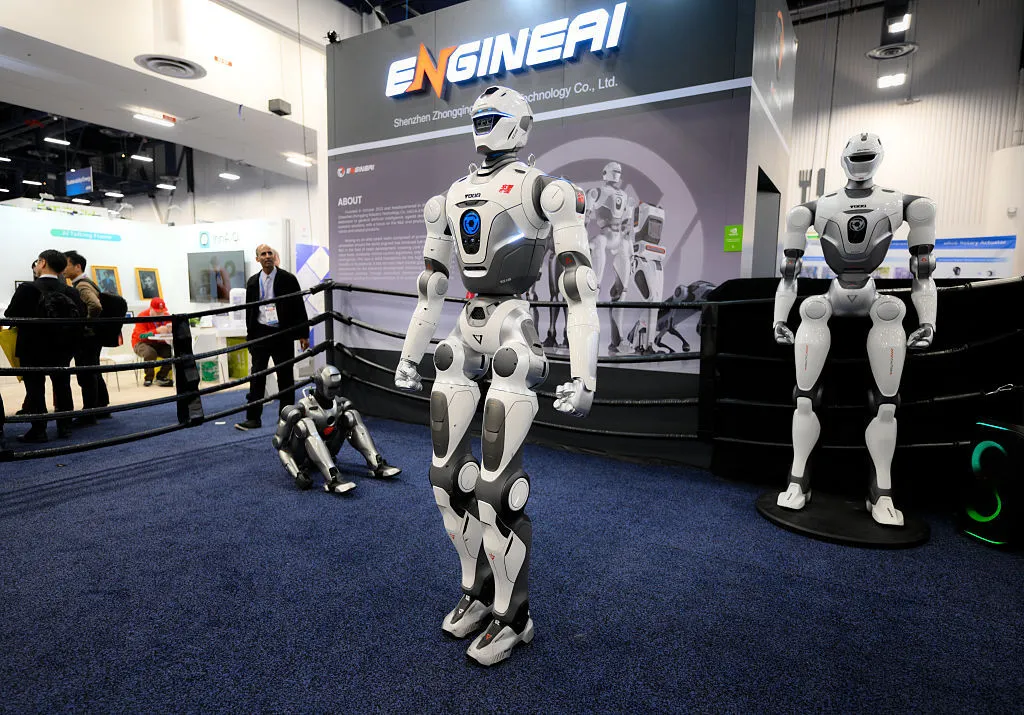

The annual Consumer Electronics Show (CES) is where the future unfolds before our eyes — and CES 2026 in Las Vegas was no exception. Among the glittering innovations and jaw‑dropping demos, Realbotix, a company that’s rapidly becoming synonymous with cutting‑edge humanoid robotics, made waves with a showcase that’s being widely described as a potential watershed moment in embodied artificial intelligence and humanoid robot design. But did Realbotix truly reveal a breakthrough humanoid robot lineup at CES 2026? The short answer: yes — and it’s far more intriguing than a simple product launch.
This article dives deep into Realbotix’s presence at CES 2026, explores what the company unveiled, dissects the technological underpinnings, and gauges the broader implications for robotics, human‑computer interaction, and the AI‑powered machines that may soon walk — and talk — among us.
A Storied Return to CES
Realbotix didn’t show up at CES 2026 as a newcomer. Following an explosive debut in 2025 — which reportedly garnered billions of media impressions — the company doubled down on its presence with an expanded booth and multiple humanoid systems on display. According to official announcements, Realbotix brought four AI‑powered humanoid robots to the show floor, including its flagship Aria model and several next‑generation units pushing the envelope of conversational, perceptive, and expressive robotics.
CES drew over 140,000 attendees from around the world — engineers, entrepreneurs, manufacturers, investors, and journalists — providing an unprecedented opportunity for Realbotix to demonstrate not only aesthetic realism but also functional autonomy and interactive depth in real time.
The Highlight: Autonomous Robot‑to‑Robot Conversation
The most talked‑about moment of Realbotix’s CES 2026 presence was not a splashy reveal of futuristic hardware alone — it was a live, unscripted conversation between two humanoid robots named Aria and David. What made this moment so noteworthy was its unfiltered autonomy and embedded AI execution:
- No Script, No Teleoperation: The robots conversed without a predefined script or remote control. That’s a huge leap from many robotics demos, which often rely on painstakingly preprogrammed responses to avoid awkward pauses or errors.
- On‑Device Intelligence: All language processing happened locally, on the robots’ own processors, rather than offloaded to cloud servers — a significant architectural choice that points toward a future where humanoid machines can operate independently in dynamic, real environments.
- Multi‑Language Fluency: The robots exchanged dialogue in several languages — English, Spanish, French, and German — showcasing multilingual capability without losing context or relevance, a testament to the flexibility and sophistication of the underlying AI language models.
- Duration: The interaction reportedly lasted over two hours, an impressive duration for an autonomous humanoid chat, especially one without teleoperation or scripted fallback responses.
This demonstration was not just a gimmick. It was a proof of capability — a tangible, observable walkthrough of what Realbotix describes as “physical AI,” where embodied systems perceive, respond, and adapt to perceived reality without direct human guidance.

Beyond Talking Heads: Vision, Perception, and Interaction
The autonomous conversation stole headlines — but Realbotix didn’t stop there. The company also showcased additional humanoid robots equipped with advanced vision systems designed for real‑time perception and responsive interaction with humans. These systems demonstrated features like:
- Facial Recognition and emotion interpretation, enabling robots to adjust their responses based on who they’re talking to and how that person is behaving.
- Eye‑mounted patented vision hardware, allowing robots to track individuals and respond to visual cues naturally — a key step toward robots that can safely navigate and participate in real‑world human environments.
- Engagement with attendees, meaning the robots weren’t inert exhibits; they interacted with CES visitors, adapting their speech and behavior to individual humans.
These systems hint at a future where humanoid robots aren’t simply talked at, but are capable of seeing, understanding, and engaging with their surroundings on a social level — bringing us closer to machines that can actively participate in the human fabric.
Hardware & Motion: Where the Body Meets the Mind
While Realbotix’s AI achievements grabbed most of the attention, the robots themselves boasted polished mechanical design and robust physical capabilities:
- Facial Expression Dynamics: Realbotix’s robots featured next‑generation mechanics enabling lifelike facial expressions, an essential aspect of authentic social interaction.
- Fluid Motion and Gesture: Beyond static poses, the robots demonstrated improved motor control, letting them gesture, shift posture, and move in a manner that feels more human than many competing platforms.
- Humanlike Presence: While not flawless, the combination of expressive hardware and AI intelligence created a sense of presence — making the robots feel more like social agents than ornamental gadgets.
These traits matter. For robots to serve outside labs — in roles like customer service, education, caregiving, or entertainment — they need a body that looks and feels right, in addition to brains that can think and adapt. Realbotix’s CES 2026 showcase walked that line precisely, hinting at a future where physical and cognitive design coalesce organically.

Practical Applications: From Show Floor to Real World
A humanoid robot demo is exciting — but what about real‑world use? Realbotix appears to be thinking about that too:
- Enterprise Deployment: Realbotix humanoid robots have been adopted by Ericsson for workforce training, visitor engagement, and interactive experiences in corporate environments. These robots assist in HR guidance, career coaching, and immersive outreach — suggesting a bridge between experimental robotics and practical business utility.
- Hospitality and Retail: The company’s multilingual capabilities, combined with engaging physical presence and conversational depth, make robots like Aria suited for concierge, tourism, and customer service settings.
- Education and Public Interaction: With the ability to communicate in multiple languages and adapt responses contextually, these robots have potential in educational roles — acting as tutors, information assistants, or interactive exhibits in museums and cultural institutions.
This practical tilt underscores a strategy that treats humanoid robots not merely as technological curiosities but as tools capable of augmenting human experiences across industries and contexts.
Technological Challenges & Real‑World Limitations
Let’s be clear: while Realbotix’s demo was impressive, it wasn’t perfect. Several factors illustrate the challenges ahead:
- Conversational Smoothness: Autonomous dialogue was not seamless. Pauses, timing mismatches, and occasional speech nuances highlighted that AI interaction still has room to grow.
- Sensor Fusion Limits: Vision systems, while advanced, still face limitations in complex environments where lighting, occlusion, or rapid motion can degrade performance.
- General AI Integration: On‑device processing is a strength for independence, but it may limit computational power compared with cloud‑based models — especially for complex reasoning.
These are not trivial issues — smoothing them will require advances in both hardware efficiency and AI architecture, and likely hybrid systems that balance local autonomy with cloud‑assisted computation. But the fact that Realbotix is confronting these issues publicly and in real demonstrations is itself a positive sign for genuine progress in the field.
What This Means for Robotics — and Us
Realbotix’s showcase at CES 2026 wasn’t merely about unveiling robots; it was about redefining our expectations for humanoid AI. Here’s how:
- Embodied AI Is More Than a Buzzword: Robots that can think, talk, perceive, and react in real time with minimal human intervention represent a leap toward agents that might one day operate autonomously in social and practical environments.
- Human‑Robot Interaction Matters: The emphasis on expressive bodies and engaging presence signals that robots—if they become part of everyday life—must behave in ways that feel natural to humans.
- Industry Integration Is Underway: Partnerships with corporations and deployment in real environments suggests that humanoid robotics could move from novelty to utility sooner than many expected.
In short, Realbotix’s presence at CES 2026 signaled not just a series of product announcements, but a broader shift in how robotics and AI converge with human expectations, industrial needs, and everyday interaction.
Conclusion: A Breakthrough on Display
So, will CES 2026 be remembered as the moment Realbotix revealed a breakthrough humanoid robot lineup? Yes — but perhaps not in the way traditional tech launches are remembered. Rather than unveiling a single flashy machine, Realbotix showcased a suite of interactive, autonomous humanoid systems — systems capable of independent dialogue, multilingual interaction, vision‑based engagement, and purposeful behavior in real environments. These demonstrations didn’t just highlight fresh hardware; they offered a glimpse into a future where humanoid robots claim a place in our social and professional spheres.
Whether you’re a robotics enthusiast, a technologist, or someone curious about where AI and physical systems are heading, Realbotix’s CES 2026 presence was a major milestone — one that suggests the dream of truly autonomous humanoid companions is not as distant as it once seemed.