









Introduction: the moment technology met tradition
What do you get when you mix ancient martial arts with cutting‑edge AI and mechanical engineering? In early 2025, a viral video featuring a Chinese humanoid robot performing precision kung‑fu‑style strikes, spins, and kicks took the global tech world by storm, signaling a new chapter in human–robot interaction and online spectacle.
Posted on official social media channels, the clip shows the Unitree G1 — a 1.27‑meter humanoid robot — executing fluid martial arts sequences not as a crude demonstration of strength but with surprising balance, rhythm and agility that echo the instincts of a trained fighter.
This phenomenon raises fascinating questions: Are these robots truly “kung fu performers”? What does this trend tell us about robotics, AI learning, cultural expression and the public’s imagination? In this deep dive, we’ll explore the technological foundations, social media dynamics, cultural implications, engineering breakthroughs, and future directions tied to this surreal blend of martial arts and robotics.
1. From early walk cycles to kung‑fu choreography: a brief evolution of humanoid robots
Humanoid robots have come a long way from simple, rigid, pre‑programmed walking machines. Early attempts from the late 20th century could barely stay upright; by contrast, modern systems open up possibilities once confined to science fiction.
In China, a combination of rapid industrial development, robust AI research and hardware innovation has catalyzed a new generation of robots capable of dynamic motion. Companies like Unitree have been at the forefront, leveraging algorithms that allow robots to imitate, adapt, and refine movement sequences — including martial arts‑like maneuvers.
Key enabling technologies include:
- Advanced motion control systems with many degrees of freedom, similar to human joints.
- Reinforcement learning and imitation learning that help robots adapt to complex movement patterns based on data. (In published academic work, this approach is being formalized under frameworks like “KungfuBot whole‑body control.”)
- Real‑time balance and sensor integration, allowing robots to adjust dynamically to shifting center of gravity.
These breakthroughs have turned robots into machines that can express movement sequences that look deliberate, intentional and — yes — martial. What used to require multiple engineers and safety rails now begins to emerge from software and hardware co‑design.
2. The viral factor: social media as the new stage for robots
Robotics has traditionally been confined to research labs, trade shows, and industrial floors. But in today’s visual culture, social media channels have become the principal stage for technological displays.
The Unitree G1 kung‑fu video wasn’t just another product demo — it was posted, captioned, and shared in ways optimized for public attention, with:

- Short, punchy clips engineered for attention retention.
- Visually compelling motion that looks distinct from mere robotics straight‑line walking or repetitive tasks.
- A blend of tradition and spectacle, tapping into deep cultural associations with kung fu.
In a way, these robots are performers, and social platforms are the concert halls where they compete for views, shares and comments. This isn’t accidental — many teams actively tailor robot behavior to be “Instagram‑able” or “TikTok‑ready,” knowing that public visibility can drive investment, branding, and recruitment interest.
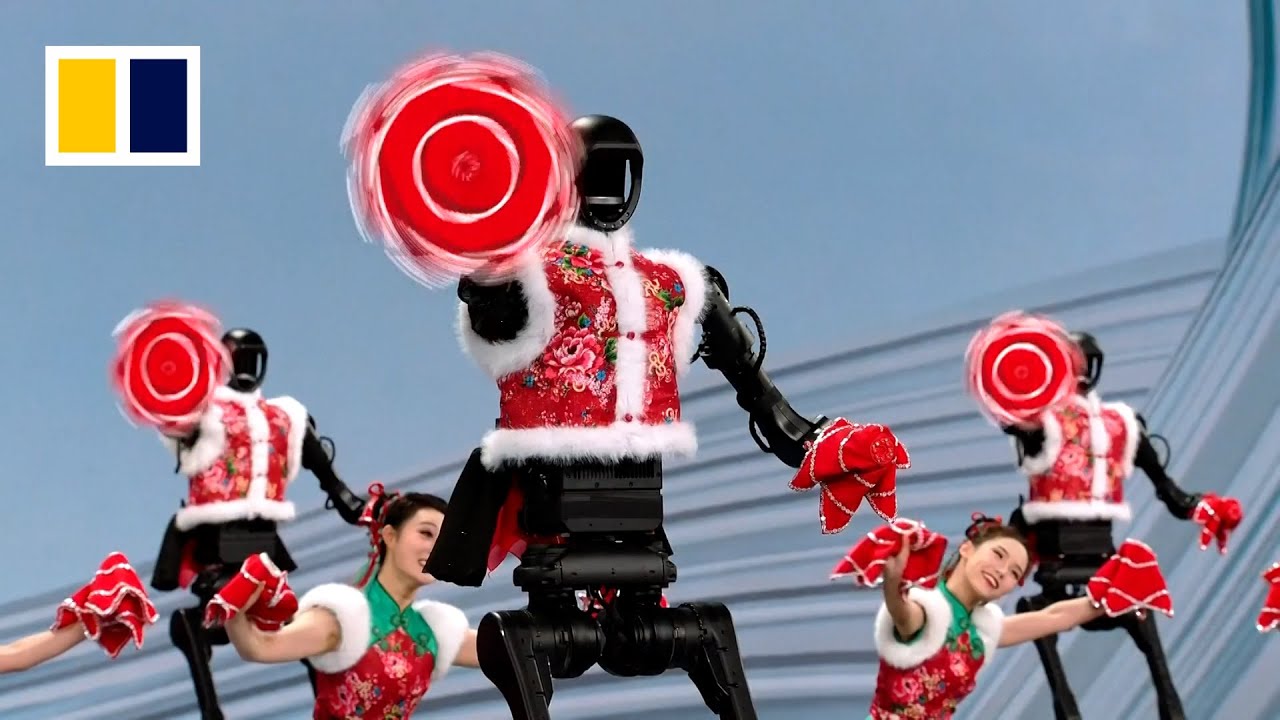
The trend isn’t limited to one video. Chinese robots have also been showcased performing synchronized choreography at national events such as the Spring Festival Gala, where multiple humanoids danced with human performers to massive viewership.
3. Inside the mechanics: what allows a robot to mimic kung‑fu moves?
To the casual observer, a punch or a spinning kick might look simple — but under the hood, it’s an intricate symphony of sensors, control systems, and motion planning.
Here’s a simplified breakdown of what such a robot does:
- Perceive its configuration: Using internal encoders and motion sensors, the robot continuously assesses its own posture and joint positions.
- Compute trajectories: Based on a learned or pre‑defined movement library, the robot plans a motion path that respects physical constraints and balance requirements.
- Execute with feedback: Advanced controllers constantly adjust torque, speed, and orientation to keep the robot stable — particularly during dynamic movements like kicks or spins.
The latest advancement from companies like Unitree is adaptive learning — where the robot doesn’t just follow a scripted path but learns variations and refines motion based on feedback. The result is smooth, human‑like dynamics that defy our expectations of rigid automation.
This is not mere choreography; it’s a demonstration of complex whole‑body control, and it points toward future applications where robots move with agility and precision, not only in entertainment but in practical tasks requiring finesse.
4. Culture meets engineering: why kung fu?
Kung fu isn’t just a martial art — it’s an iconic cultural form deeply associated with Chinese identity, philosophy and cinematic mythology. From Bruce Lee to Jet Li and countless classic films, martial arts are global symbols of discipline, grace, and power.
By having robots perform kung‑fu‑style moves, developers are tapping into a powerful narrative: that these machines can not only mimic human motion but can echo cultural forms that are timeless and recognizable.
It’s a strategy that resonates in ways that purely functional robots often don’t. A robot delivering packages or assembling parts is impressive to engineers — but a robot performing a 720‑degree spinning kick? That grabs attention and imagination worldwide.
This blend of technological prowess and cultural resonance is one reason social media traction has been so intense. The spectacle invites not just tech admiration but emotional engagement and commentary.
5. Reactions around the world: excitement, skepticism, and philosophical questions
The emergence of kung‑fu robots has triggered a wide range of public reactions:
✨ Awe and entertainment
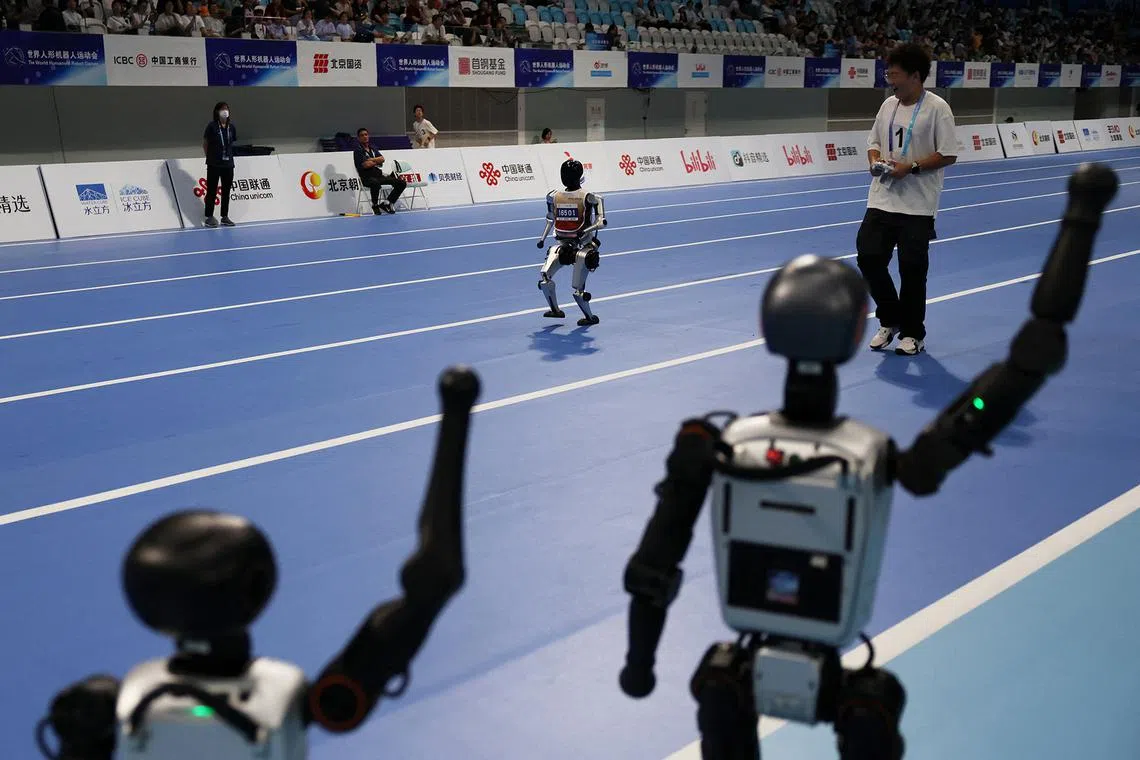
Many viewers are amazed at the grace and technical maturity displayed by humanoid robots — some even calling it “like a scene from a movie.” Enthusiasts on platforms worldwide celebrate the visuals and speculate about future entertainment uses.
🤖 Technological admiration
Engineers and robotics enthusiasts see these developments as significant progress in motion control, AI and physical robotics — a step toward robots that can perform sophisticated tasks in unpredictable environments.
🤨 Skepticism and critique
Not everyone is convinced. Some industry observers point out that these demonstrations are curated performances and caution that real‑world autonomy — especially in complex decision‑making — remains limited compared to what’s shown in carefully controlled clips. This echoes broader debates about perception vs. reality in AI and robotics.
🧠 Philosophical reflection
Beyond tech and entertainment, some observers ask deeper questions: What does it mean for machines to imitate human cultural expressions? Do robots doing kung fu diminish the art, or celebrate it? Are we seeing the dawn of culturally expressive robots rather than just functional machines?
These discussions are shaping how society understands and situates robots in human life — not just as tools but as cultural artifacts.
6. The practical frontier: beyond social media spectacle
While viral videos drive visibility, the underlying capabilities showcased by kung‑fu robots are meaningful for real applications:
- Physical rehabilitation and therapy assistance, where adaptive motion is crucial.
- Search and rescue missions, requiring dynamic balance and movement across rough terrain.
- Collaborative manufacturing, where robots handle nuanced tasks requiring fine motor control.
The key is dynamic adaptability — robots that can adjust to complex motion requirements rather than following rigid scripts. Kung‑fu‑style movement demonstrations are proof of concept that such adaptability is becoming achievable.
Researchers and engineers emphasize that these displays are not endpoints, but rather milestones on the path toward increasingly capable humanoid machines.
7. Future directions: where are we headed?
Looking ahead, the intersection of robotics, AI and cultural expression suggests several exciting directions:
🔹 Enhanced learning algorithms enabling robots to learn new skills from fewer examples.
🔹 Human‑robot interaction frameworks where robots can respond dynamically to human partners.
🔹 Creative and performance arts integration, with robots as collaborators in dance, theater, and live entertainment.
🔹 Ethical frameworks and standards — prompting thoughtful regulation and safety practices as robots move into public spaces.
🔹 Cross‑cultural robotic expression, where robots learn and perform diverse movement traditions beyond kung fu.
While kung‑fu‑style robots may seem whimsical to some, they are part of a serious arc of progress — one that blends engineering mastery, cultural narrative, and human curiosity.
Conclusion: social media’s kung‑fu robots are more than a trend
Yes — robots in China can now perform kung‑fu‑style moves that captivate audiences on social media, thanks to advancements in AI, motion control, and hardware design. These demonstrations are far from gimmicks; they showcase how far humanoid robotics has progressed in mimicking complex dynamic behavior and engaging public imagination.
Beyond spectacle, they raise questions about culture, technology, and what it means for machines to embody human tradition — not just function. Whether you see them as entertainment, engineering wonders, or symbolic harbingers of tomorrow’s robots, one thing is clear: we are no longer watching robots that merely walk — we’re watching robots that perform.