








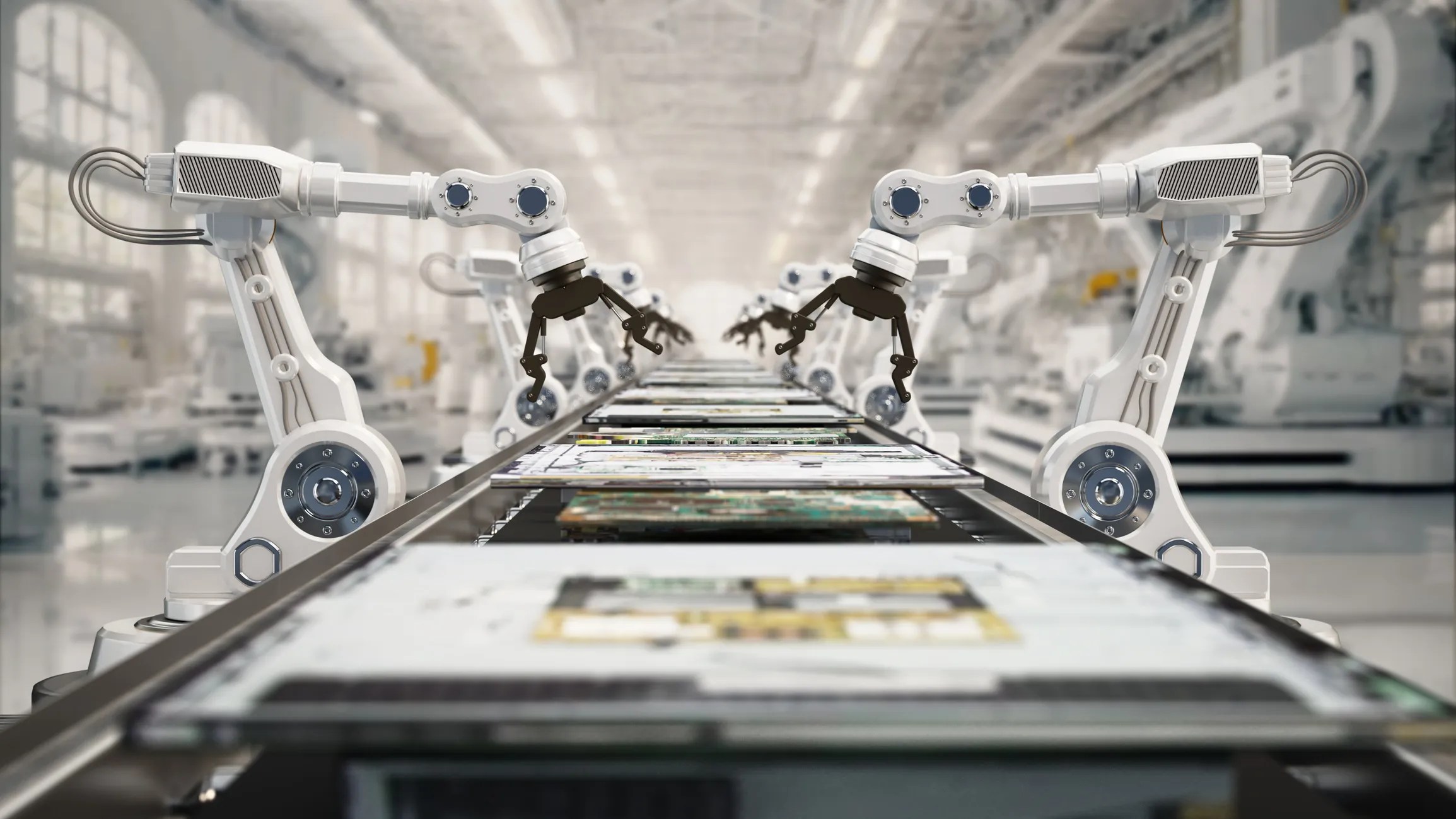

Introduction: Beyond Machines — A New Epoch
What if the next industrial revolution isn’t about steam engines or assembly lines, but living, learning machines? What if the next transformative technology isn’t just software in the cloud or robots in cages, but humanoid machines with artificial intelligence steering physical form?
We’ve crossed a pivotal threshold. Robots once confined to repetitive tasks are now beginning to resemble adaptive, intelligent agents — able to make decisions, interpret environments, and co‑exist with human workers in everyday spaces. Humanoid robots — machines shaped and programmed to resemble human anatomy and movement — are rapidly moving from science fiction toward industrial reality.
This article explores the rise of AI‑driven humanoids, why they matter, what problems they solve — and whether they’re really poised to redefine human civilization the way steam power, electricity, and mass automation once did.
1. What Are AI‑Driven Humanoids?
At a basic level, humanoid robots are machines designed to mimic human form and behavior — two legs, two arms, a torso, and often a “head.” Beyond shape, the latest generation incorporates advanced AI, enabling perception, motion planning, and dynamic interaction with complex environments.
Unlike traditional industrial arms — which perform fixed, repetitive motions behind safety cages — humanoids can:
- Navigate human‑centered spaces like stairs and corridors
- Manipulate tools, products, and materials with fine dexterity
- Translate visual and tactile input into real‑time adaptations
- Learn behaviors through imitation, trial‑and‑error, or simulation
This combination of embodied intelligence is what transforms them from programmable fixtures into responsive agents in the world.
Key Technologies Behind Them
AI‑driven humanoids rely on a suite of advanced technologies:
- Perception systems (vision, lidar, tactile sensors)
- Reinforcement learning and adaptive control
- Actuators and soft robotics for fluid motion
- Edge compute + cloud AI for decision processing
- Natural language interaction for seamless human collaboration
Together, these technologies enable robots not just to follow scripts, but to understand context and act with intent — a departure from classic automation.
2. Historical Context: Industrial Revolutions and Technological Shifts
To evaluate whether AI‑driven humanoids represent a new industrial revolution, we must revisit the past:
| Industrial Revolution | Defining Technology | Core Impact |
|---|---|---|
| 1st: Steam & Water | Steam engines | Mechanized production |
| 2nd: Electricity | Electricity grids | Mass production & assembly lines |
| 3rd: Digital | Computers, automation | Digitized control systems |
| 4th: Cyber‑Physical | IoT, advanced robotics | Intelligent automation |
| Proposed 5th/6th | AI‑Driven Agents | Cognitive, adaptive systems |
Scholars trace a pattern: every major industrial leap involved machines that augmented essential human abilities — first power, then precision, now intelligence. According to academic frameworks, machines with learning capacity — not just rigid automation — may signal a new industrial era often termed Industry 5.0 or 6.0.
Humanoid robots embody this shift: they combine physical agility with adaptive cognition, bridging the gap between digital intelligence and real‑world action.
3. Real‑World Deployment: From Labs to Production Lines
AI humanoids are no longer limited to laboratories. Numerous initiatives around the world signal early industrial integration:
Global Industry Trends
- China is heavily investing in humanoid robot development, aiming to transform traditional manufacturing and address demographic labor shortages.
- Hyundai has announced plans to mass‑produce 30,000 humanoid robots annually by 2028 for factory use — a bold step toward industrial scale deployment.
- Foxconn is integrating rooted AI humanoid systems into advanced manufacturing facilities in Texas, enhancing real‑time automation and data flow.
- The broader robotics market is projected to rise significantly, with both established manufacturers and startups expanding adaptive, mobile systems.
Even if true general‑purpose humanoids remain future ambitions, the trend toward automation that can autonomously adapt marks a deeper transformation beyond fixed assembly robots.
Complementing Traditional Automation
Humanoids often work alongside:
- Fixed industrial automation
- Collaborative robots (cobots)
- Drones and autonomous guided vehicles (AGVs)
This ecosystem enhances overall productivity, especially in environments that demand interaction with humans or unstructured variability.
4. Why Humanoids Could Be Revolutionary
There are several compelling reasons why AI‑driven humanoids may represent more than incremental automation.
4.1 Flexible Adaptability
Unlike traditional robots that require tailored environments, humanoids can operate in standard human workplaces — warehouses, factories, hospitals, care centers, and even homes — reducing the need for costly infrastructure changes.
4.2 Addressing Labor Gaps
Many economies face severe labor shortages — particularly for physically demanding or monotonous jobs. AI humanoids can complement human workforces, providing around‑the‑clock capability where human labor is scarce.
4.3 Safety and Risk Reduction
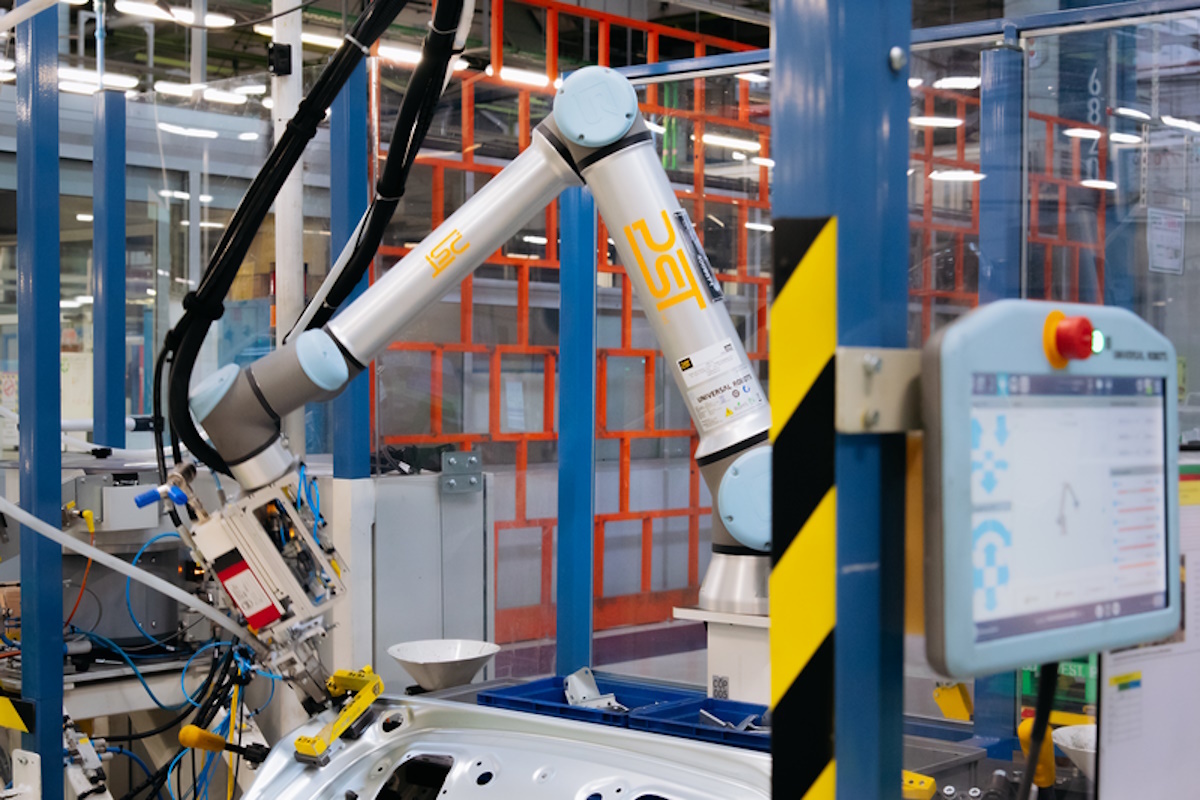
Humanoids can enter hazardous environments — from disaster zones to chemical facilities — performing dangerous tasks without risking human lives.
4.4 Continuous Learning and Scaling
Humanoid systems can update and improve via software — much like modern AI — making them evolutionary platforms rather than static appliances.
5. Challenges: Reality vs Expectation
The idea of a robot workforce isn’t free from limitations. Current deployments reveal notable obstacles:
5.1 Efficiency Gaps
Recent assessments show that advanced humanoid models still lag human workers in efficiency for many tasks — sometimes achieving only 30–50% of human performance in structured tests.
5.2 Cost and Infrastructure
Massive investments are required for both hardware and supporting AI systems.
5.3 Dexterity and Robustness
Sensitive manipulation, balance, and real‑world stability remain nontrivial engineering challenges.
5.4 Energy and Power Limits
Battery life and efficient actuation are still hurdles for truly autonomous humanoid operation.
5.5 Regulation and Safety
As humanoids enter public‑facing domains, policymakers are grappling with safety standards, liability, and ethical limits.
Despite these challenges, most experts agree that we’re witnessing progress, not retreat — and that diminishing costs and advancing AI will continue to expand their capabilities.
6. Economic and Social Implications
The rise of AI humanoids has deep ramifications for society:
Labor Market Shifts
Automation historically displaces routine tasks while creating new roles in design, supervision, and maintenance. This pattern is likely to continue, but humanoid robots could accelerate disruption due to their flexibility. Care needs to be taken to prepare workers with relevant skills.
Productivity and GDP Growth
Smarter humanoids could dramatically reduce downtime, improve output quality, and accelerate innovation, contributing to economic growth.
Ethics, Trust, and Human Roles
Humanoids raise questions about trust, agency, privacy, and human identity in the workplace. Balancing innovation with ethical safeguards will be essential.
Conclusion: Are AI‑Driven Humanoids the Next Industrial Revolution?
The evidence indicates that AI‑driven humanoids are not just another gadget — they’re part of a broader evolution toward automation that is adaptive, interactive, and contextually aware.
While full‑scale humanoid transformation may still be years away, the foundational elements — AI cognition, robotic mobility, and industry integration — are already reshaping how products are made, services are delivered, and work gets done. We may not call it the fifth industrial revolution yet, but we are unquestionably entering a new era where the boundary between human labor and machine agency becomes increasingly blurred.
If past revolutions taught us anything, it’s that disruptive technologies often arrive first as curiosity, then as necessity. Whether AI‑driven humanoids will redefine civilization in the coming decades remains to be seen, but their potential impact rivals any historic technological leap witnessed to date.