








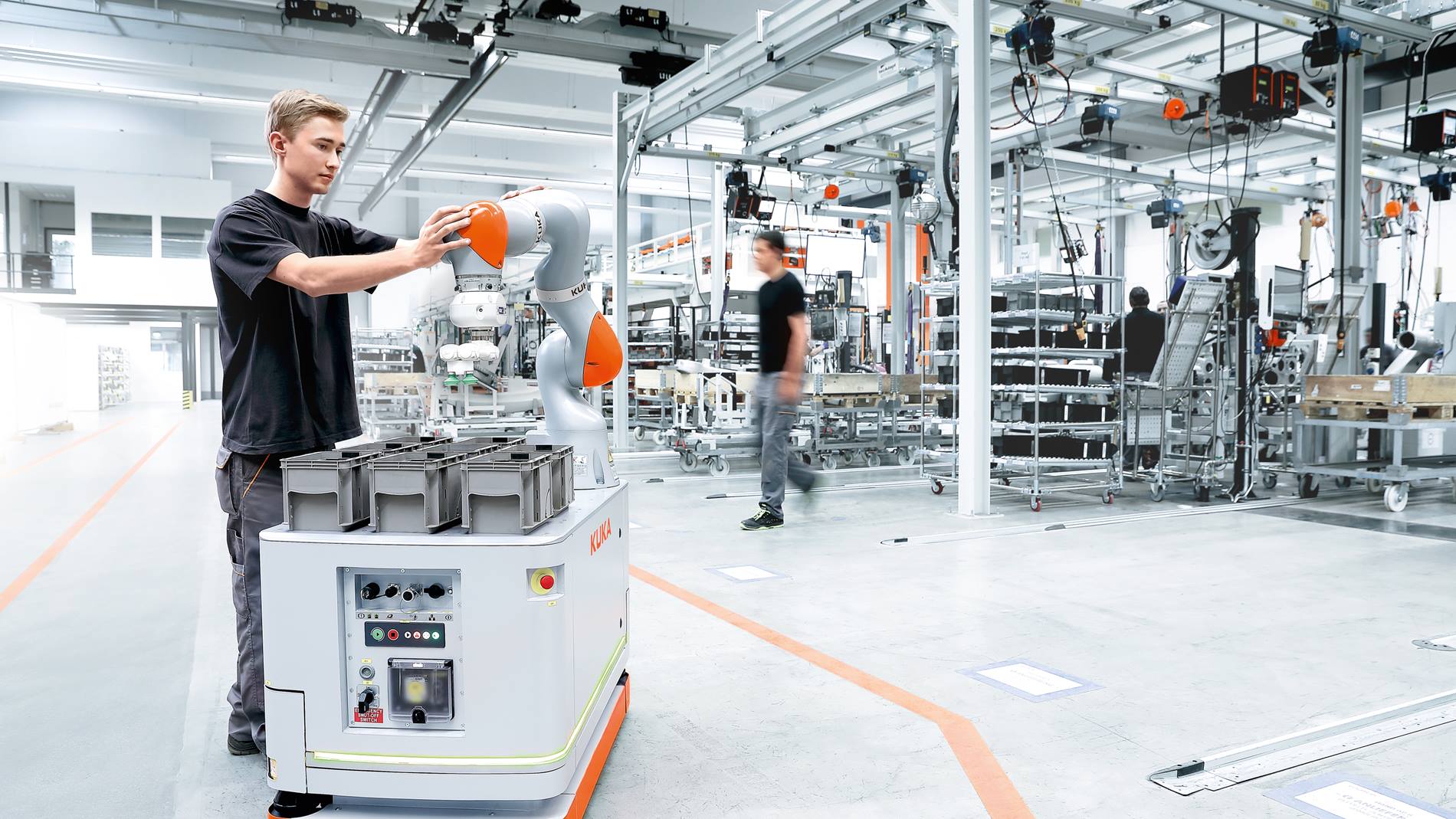

In a world where factories hum with precision and efficiency, the idea of introducing humanoid robots into existing manufacturing environments—without costly, disruptive layout changes—is provocative. As the pressure grows on manufacturers to boost throughput, maintain flexibility, and lower costs, one compelling question stands at the intersection of innovation and practicality: Can humanoids truly enhance manufacturing throughput without reengineering the factory floor?
This article explores that question in depth and at scale. Over the next several thousand words we’ll dive into the technological, economic, and human facets of humanoid robots in manufacturing. We’ll look at real-world trials, theoretical possibilities, limitations, economic tradeoffs, and what the future might hold. Along the way, we’ll keep the tone clear, engaging, and grounded in professional insight.
The Allure of Humanoid Robots
Imagine a robot with two legs, arms, and a torso—resembling a human at a glance—stepping onto a factory floor. It navigates aisles, picks up a part, bolts it down, checks quality, and moves on. Unlike traditional industrial robots—typically anchored, specialized, and often confined to cages—humanoid robots promise versatility and compatibility with environments designed for people.
That’s the central appeal: humanoids seem built to fit into existing spaces without requiring belts, cages, or gantries to be redesigned.
At first glance, this seems like the perfect solution to a perennial problem: how to turn existing facilities into flexible, high-throughput environments without shutting everything down to redesign the layout. After all, most facilities are structured around human reach zones, doorways sized for people, and workflows optimized for human workers. A machine that can occupy the same spaces and use the same tools seems like an easy retrofit.
But the devil is in the details.
What Makes Humanoids Different?
Form Factor and Mobility
Humanoids are modeled on the human body: two arms, two legs, and a torso with a head-like sensor pack. This anthropomorphic design allows for certain tasks—opening drawers, grabbing tools, walking through narrow corridors—that traditional wheeled robots struggle with. The anthropomorphic form aligns with human-centric factory designs.
However, that human-like shape also brings complexity. Maintaining balance on two legs is far more difficult than rolling on wheels or moving on fixed rails. Every step requires dynamic stabilization, real-time control, and active feedback loops—tasks that demand power and sophisticated algorithms.
While humanoids may eventually handle mobility elegantly, today’s robots expend significant energy just to stay upright. That limits operational hours and increases maintenance compared to simpler robotic forms such as wheeled autonomous mobile robots.
Sensor Suites and Perception
Humanoid robots typically come equipped with advanced perception systems: cameras, LiDAR, tactile sensors, and sometimes microphones. These allow robots to interpret their surroundings, recognize objects, and adjust on the fly. It’s this context-aware capability that makes humanoids attractive for diverse tasks.
Yet perception is not perfect. Lighting variations, cluttered workspaces, reflective surfaces, and sensor occlusions can all confuse even advanced systems. Unlike human workers who can often improvise solutions in ambiguous situations, robots may need consistent environmental inputs to perform reliably.
Thus, a manufacturing environment that supports effective perception often does need to be optimized—just not in ways obvious at first glance.
Throughput: What It Means and Why It Matters
In manufacturing, throughput refers to the rate at which a system produces finished products. Boosting throughput can involve speeding up individual tasks, reducing downtime, or improving sequencing and scheduling.
The challenge is whether humanoid robots—without layout changes—can meaningfully contribute to higher output. To answer this, we must break throughput down into components:
- Task execution time
- Task reliability (errors per cycle)
- Downtime due to failures
- Flexibility across work types
- Integration with other systems
Humanoid robots claim to address flexibility and integration. But what about the others?

Trials and Real-World Deployments
Several major manufacturers and research institutions are already testing humanoids on the shop floor.
Automotive Industry Pilots
Companies like Mercedes-Benz and others are experimenting with humanoid robots for component handling and quality checks in assembly lines. These robots are being taught tasks via teleoperation, where a human first performs the motion remotely, allowing the robot to learn and replicate the action.
Similarly, Hyundai Motor Group plans to bring humanoid robots into US manufacturing by 2028 to handle repetitive and high-risk tasks, aiming to reduce physical strain on human workers and maintain consistency across shifts.
These are significant developments, but they are still pilots rather than full-scale deployments. Robots are being introduced in static segments or specific tasks, not across entire production lines.
Emerging Production-Ready Systems
Boston Dynamics recently announced that its advanced humanoid robot “Atlas” will enter industrial use around 2028. With features such as self-battery replacement and tactile sensing, this robot shows promise for more demanding environments.
Yet while Atlas represents notable progress, its price point and readiness for continuous production work remain factors manufacturers must weigh.
The Big Question: Without Layout Changes?
Here we move to the core of the article.
Compatibility vs. Optimization
Humanoid robots are compatible with human-centric infrastructure. In a narrow sense, yes: a humanoid can navigate the same doorways, workstations, and corridors used by people.
But throughput depends on efficiency as much as physical compatibility. Existing layout designs assume human workers, not robots that need a different type of spatial and procedural logic. For example:
- Conveyor speeds and gate timings calibrated for humans may slow robots that can move faster.
- Workstations designed for ergonomic human reach may not optimize robot reach and joint comfort.
- Storage aisles sized for human passage may restrict robot movement or pose collision risks.
Thus, while humanoids might physically fit into an existing space, without optimizing that space for robot operation, throughput gains are modest.
Workflow Reconciliation
Humanoids excel where there is high variability and adaptability—situations where traditional automation is costly or infeasible. However, most high-throughput manufacturing processes are already automated, using specialized robots, CNC machines, and automated tooling.
In such environments, the introduction of humanoids without changing layouts means robots must operate within workflows optimized for non-robotic actors. This often translates into:
- Frequent robot repositioning
- Shared space conflicts
- Unpredictable cycle times
All of which can reduce throughput gains.
The Cost of “No Change”
If throughput improvements require rearranging tooling, adjusting conveyor routing, or reassigning workstations—but the project requirement forbids layout changes—the manufacturer must accept one of two realities:
- Throughput increases will be incremental and task-specific.
- Gains will instead come from other factors, such as longer operating hours, less downtime, or improved quality.
This leads to a key insight: humanoids can increase throughput, but rarely through purely spatial compatibility. Instead, throughput often improves through operational flexibility and reduction of bottlenecks.
Operational Dynamics: Beyond Shape and Sensors
Shift Coverage and Continuity
One area where humanoids shine is in round-the-clock operation. Unlike human workers who require breaks and shifts, robots can operate as long as power and maintenance allow. This means factories can keep running at peak pace, which in turn increases throughput.
However, this advantage is not unique to humanoids—many industrial robots already operate 24/7. Humanoids only match this parameter; they don’t necessarily exceed it.
Error Reduction and Consistency
Robots, in theory, perform tasks with high precision and repeatability. The absence of fatigue and emotional variability can improve overall quality and reduce rework. Fewer errors translate to less scrap and greater effective throughput.
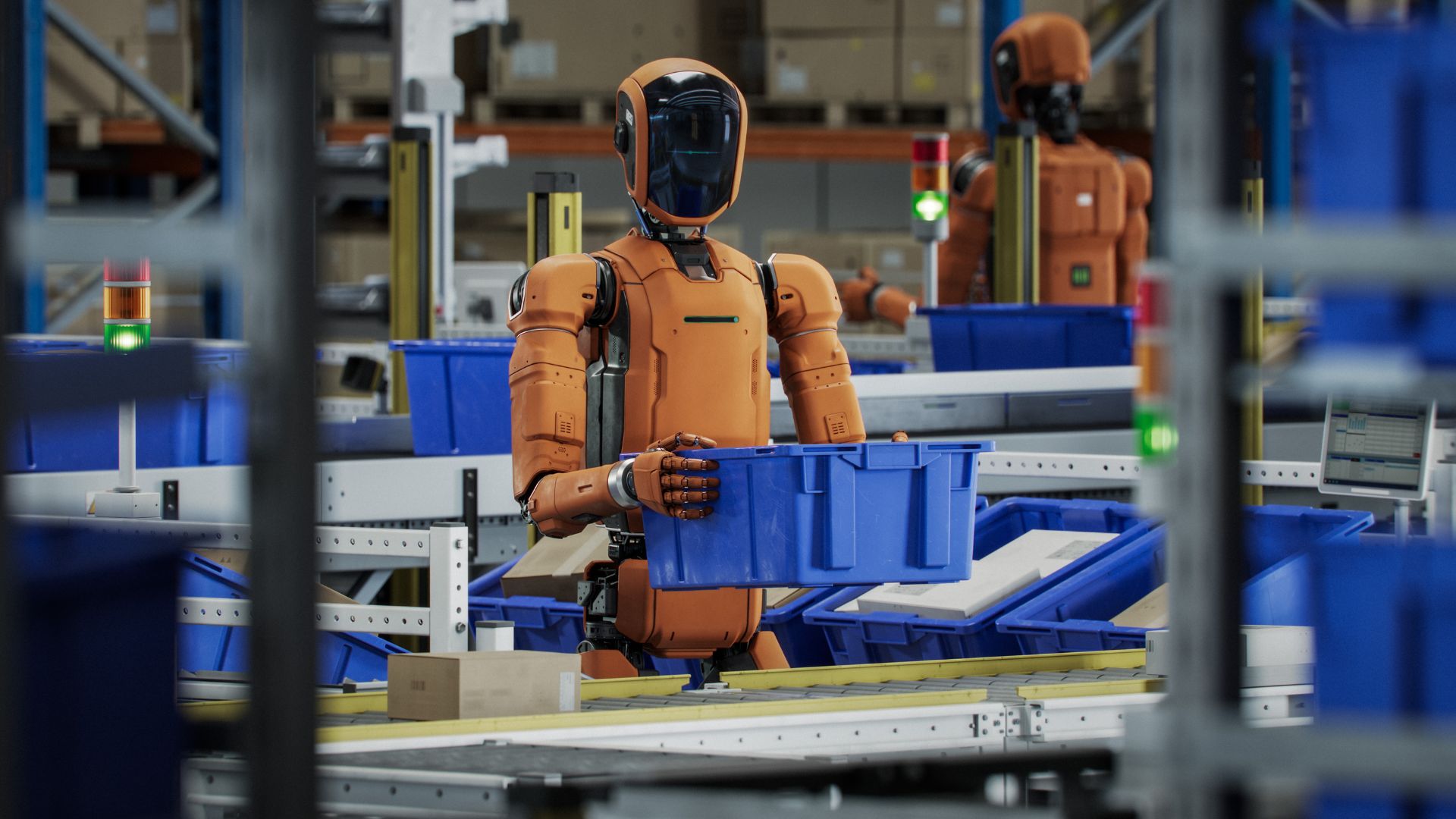
But humanoids are still catching up with task-specific automation in these realms. Their versatility often comes at the cost of specialization—precise, repetitive tasks are currently better handled by dedicated equipment or simpler robots.
Integration with Digital Systems
Humanoids are built to work with AI and real-time data. This allows for dynamic scheduling, contextual decision-making, and seamless communication with manufacturing execution systems (MES). Such integration can accelerate throughput, not by changing layouts, but by reducing delays and enabling smarter task allocation.
Yet effective integration often presumes some degree of environmental adaptability. That could mean better lighting, cleaner sensor lines-of-sight, or streamlined layouts—effects that count as subtle forms of layout optimization.
Economic Reality: Cost vs. Throughput Gains
Cost matters. Today’s humanoid robots are expensive compared to other forms of automation. Operating costs, while falling, are still higher per hour than many specialized machines.
The ROI Equation
To justify investment without layout changes, manufacturers must weigh:
- The upfront cost of humanoids
- Additional costs (training, maintenance, programming)
- Throughput improvements
- Quality and waste reductions
- Labor savings or shifts
In many cases, humanoids pay off when:
- Labor is scarce or costly
- Layout changes are prohibitively expensive
- Throughput gains come from reduced downtime and extended operation
If the only pathway to greater output is changing the layout—something the question forbids—then traditional automation often yields a better return on investment.
The Hybrid Reality: Humans + Robots
Instead of viewing humanoids as replacements, a more nuanced picture emerges: coexistence and collaboration.
Human-robot collaboration (HRC) allows humans to focus on complex, creative, or irregular tasks while robots take over repeatable and physically demanding work. In such setups, humanoids can complement existing work patterns without structural overhauls.
Studies show that collaborative robotics often improves throughput by reducing human workload and errors in joint tasks. While these studies are focused on cobots rather than full humanoids, the principle holds: collaboration enhances output.
Challenges Beyond the Factory Floor
Introducing humanoids without changing layouts might seem appealing, but manufacturing ecosystems encompass more than physical floors:
Worker Acceptance
Human workers must trust and understand robots. Fear of displacement, safety concerns, or ergonomic mismatches can dampen throughput gains if humans resist collaboration.
Safety and Regulation
Humanoids operating in environments designed for humans must adhere to stringent safety standards. Unexpected collisions or control errors could lead to shutdowns, hurting throughput.
Ethical and Social Dynamics
Deployment of humanoids raises ethical questions about labor, workplace roles, and societal impact. These concerns don’t directly affect layout—but they affect deployment timelines, often slowing adoption.
The Future Outlook
Will humanoid robots one day increase manufacturing throughput without layout changes?
Yes—and no.
In certain niches, particularly in facilities already structured around humans, humanoids may plug in with minimal disruption and provide throughput gains through flexible task execution and extended operation. In less flexible manufacturing contexts, throughput improvements without physical layout adaptation will be harder to realize.
The real future is not humanoids vs. layouts, but dynamic, adaptable systems that blend humanoids, cobots, digital twins, AI planning, and human skill.
The next decade will likely see:
- Cheaper, more robust humanoid units
- Better perception and decision-making
- Smarter integration with factory digital systems
- Hybrid human–robot task allocation
- Evolution of spaces designed for both humans and robots
These developments will reduce the gap between physical compatibility and throughput optimization.
Conclusion: A Balanced View
Humanoid robots hold remarkable promise for the future of manufacturing. Their ability to operate in human-centric environments suggests they might be used without structural changes to a factory layout. But when it comes to boosting throughput, the reality is nuanced.
Physical compatibility alone is not enough. Throughput gains hinge on task execution, error handling, collaborative workflows, system integration, and economic viability.
Thus, humanoids can increase throughput—but not simply by plugging into existing layouts. Instead, throughput improvements will come from smarter operational adaptation, enhanced collaboration, and systemic change that respects both human and machine strengths.
Manufacturers willing to think beyond the surface of layout and toward the deeper logic of workflow, flexibility, and hybrid teams will be the ones who unlock real gains.