








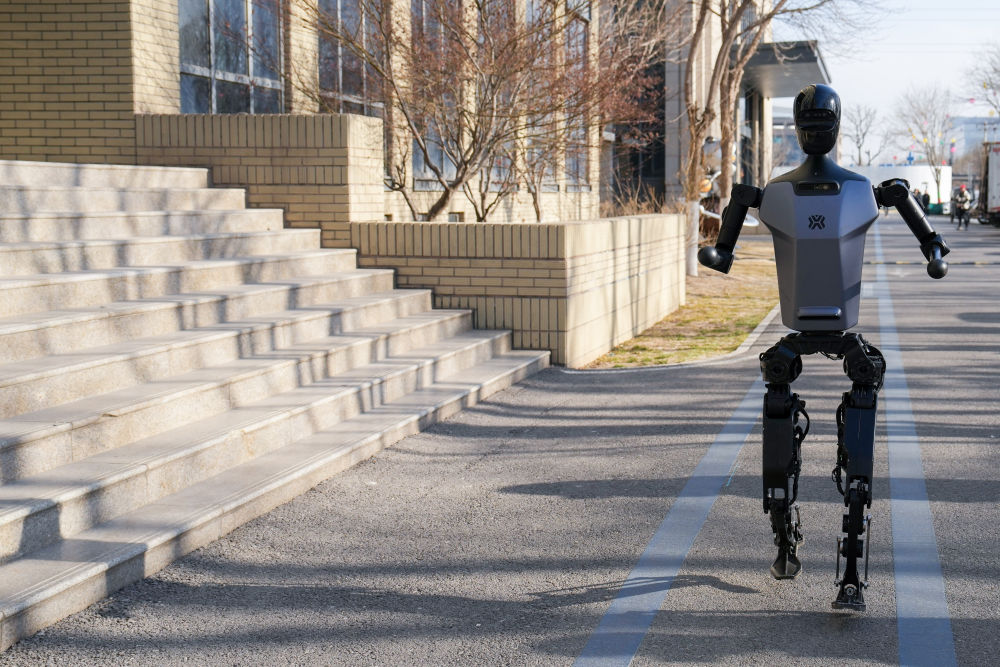

Introduction: The Age of Adaptable Machines
Imagine walking into a factory, warehouse, or even your home, and instead of seeing humans performing repetitive or dangerous tasks, you see humanoid robots moving fluidly — learning, adapting, and seamlessly shifting between tasks without human reprogramming or intervention. This isn’t tomorrow’s sci‑fi trope. It’s rapidly becoming today’s reality as breakthroughs in AI, machine learning, sensors, and robotics converge to push the frontier of autonomous adaptability.
Humanoid robots were once limited to static scripts and predefined motions: walk from point A to point B, pick this object up, stand still, repeat. But that era is fading. The new era is workflow adaptability — where robots perceive changes in their environment and tasks, adjust their internal models, and recalibrate their behavior dynamically. This leap mirrors how humans adapt to new jobs: through learning, sensing, fallibility, and iterative refinement.
This article explores the technical innovations, scientific foundations, practical applications, and deep challenges in making humanoid robots genuinely adaptive. Along the way, we’ll untangle complex concepts with elegant clarity and pose the big question: Can humanoid robots truly adapt autonomously to new workflows?
Part I – The Science of Autonomous Adaptation
What Does “Autonomous Adaptation” Really Mean?
Autonomous adaptation in robots refers to the ability to sense changes — in the environment, task parameters, or goals — and adjust internal behavior models without explicit human intervention. Traditionally, robots relied on human‑engineered controllers and rigid instructions. Today’s adaptive systems take cues from human neural cognition:
- Perception: Sensing the world using cameras, force sensors, LiDAR, microphones, and tactile skins.
- Representation: Internally modeling the environment and robot body using neural networks or probabilistic maps.
- Policy Updating: Adjusting behavior strategies on the fly through reinforcement learning, self‑supervised learning, or meta‑learning.
This approach gets robots closer to lifelong learning, where they don’t just execute — they evolve their competence.
Learning Architectures That Enable Adaptation
State‑of‑the‑art approaches to robotic adaptability combine several learning paradigms:
1. Reinforcement Learning (RL)
RL allows robots to learn through trial and error, guided by reward signals. In humanoids, RL helps refine locomotion, balance, and task execution in varied terrains and situations. Methods such as self‑supervised motion adaptation aim to bridge the gap between human motion data and robot motion execution, delivering more graceful and adaptable behaviors.
2. Meta‑Learning
Rather than learning one task at a time, meta‑learning (learning to learn) equips robots with the ability to quickly acquire new skills from minimal experience. While still at the research stage, this concept promises robots that can adapt fast — much as humans quickly learn new workflows by watching and practicing.
3. Self‑Modeling & Self‑Simulation
A recent breakthrough in robotics research enables robots to build internal models of their own bodies by observing themselves. Columbia University researchers demonstrated that robots can learn their morphology and adapt motion plans autonomously, even compensating for physical damage without human input.
4. Cognitive Architectures
On the cognitive side, architectures that let robots reason across scenarios promise cross‑task transfer. For example, robots with multisensory architectures now attempt multi‑scenario reasoning, which loosely resembles human cognitive faculties for planning, adapting, and contextual reasoning.
Together, these techniques aim to give robots three indispensable capabilities:
- Perceive and model the world robustly across modalities
- Decide intelligently under uncertainty
- Generalize learned skills to new tasks and environments
Part II – From Labs to Real Workflows: Practical Examples
Industrial and Logistics Automation
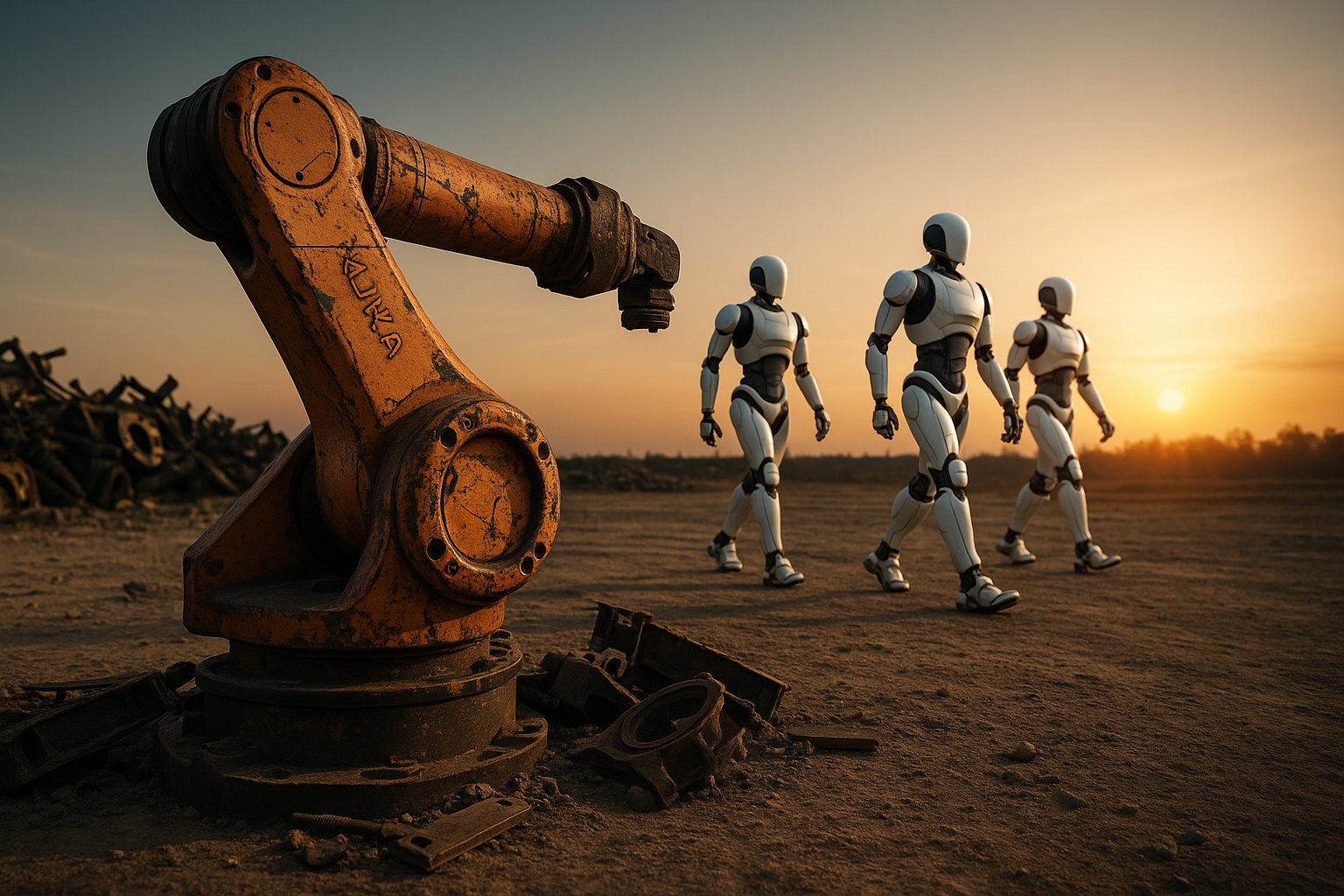
Manufacturing automation has always been one of robotics’ strongest use cases. Traditional industrial robots (like robotic arms on assembly lines) excel at repetition and precision but lack flexibility and adaptability. The next wave — AI‑driven humanoid robots — aims to fill this gap.
A recent industrial report highlights how humanoid and mobile robots are redefining adaptive, flexible manufacturing: instead of isolated repetitive tasks, robots collaborate, perceive context, and adjust actions on the fly. This convergence of AI, digital twins, and advanced sensors is reshaping sectors from automotive to aerospace.
In practice, an adaptable humanoid could start by unloading parts from a bin, then dynamically adjust how it picks irregular shapes, and finally assist an assembly station — all without stopping for reprogramming.
Autonomous Household Robots
Household robots traditionally remain novelty gadgets or limited function helpers. But at CES 2026, SwitchBot introduced the Onero H1, a humanoid‑style assistant capable of tasks such as filling a coffee maker, cooking breakfast, or folding laundry — learning and adapting across different homes and routines.
While real‑world performance is still under evaluation, this prototype indicates momentum toward robots that can handle messy, unpredictable domestic settings — a milestone in autonomous adaptation.
Continuous Operation and Self‑Maintenance
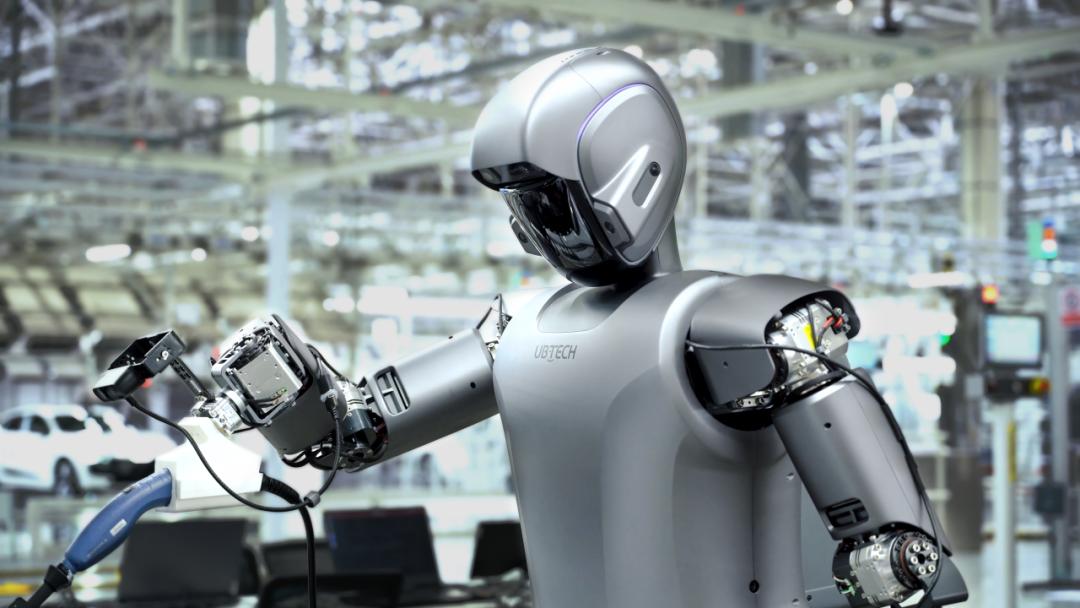
A dramatic example of autonomy comes from China’s Walker S2 humanoid robot, engineered to operate 24/7 and autonomously change its battery using a specialized charging station — without human assistance.
This robot’s ability to self‑service marks a significant step not just in task adaptability but in operational autonomy — crucial for robots functioning in remote or hazardous environments.
Industrial Multi‑Scenario Task Execution
In China’s World Artificial Intelligence Conference, an industrial humanoid system demonstrated multi‑ontology, multi‑scenario, multi‑task autonomous collaborative operation, showing the first real‑world integration of complex workflow adaptability across diverse production tasks.
This breakthrough highlights how robots are graduating from scripted jobs to intelligent collaboration — adjusting workflows, sequencing diverse tasks, and communicating with other agents in dynamic systems.
Part III – Technical Hurdles and Research Frontiers
Despite exciting advances, making humanoid robots genuinely adaptive still faces deep challenges:
1. Real‑World Complexity and Uncertainty
Real environments are messy. Lighting changes, objects occlude one another, humans interfere, surfaces vary — and robots still must make sense of this chaos.
The perceptual systems must be robust. Computer vision, tactile sensors, and force feedback must work in concert — and be resilient when a single sensor fails or misreads the environment.
2. Transfer From Simulation to Reality
Many learning approaches rely on simulation because real‑world training is slow, risky, and expensive. But simulated environments often fail to capture real physics, noise, and unpredictability.
Bridging this sim‑to‑real gap remains an active area of research, with advances in domain randomization, digital twin models, and real‑world feedback loops.
3. Safety and Reliability
Adaptive robots are not just more autonomous — they must be safe. When a robot decides how to pick up a heavy object without instructions, how does it ensure it won’t drop it on a human’s foot?
Control strategies must blend adaptability with strict safety constraints. This is distinct from traditional automation — safety is not an add‑on but central to adaptive control architecture.
4. Energy and Physical Limitations
Humanoid bodies are inherently less efficient than wheeled or specialized robots. Balancing two legs, managing actuators, and powering high‑end processors remain bottlenecks.
Breakthroughs in actuators, batteries, and efficient AI inference are essential to push humanoids into broad practical adoption.
Part IV – Ethics, Society, and Trust
As humanoid robots become capable of adapting to new workflows autonomously, society must grapple with profound questions:
Jobs and Labor Market Impacts
Humanoid robots promise to transform industries where manual labor, dangerous tasks, or precision repetitive work dominates. This may generate growth and efficiency but can also disrupt labor markets, displacing workers or demanding new skill sets and retraining.
Balancing economic efficiency with social impact will require thoughtful policy, education systems, and safety nets.
Human‑Robot Collaboration
Autonomous humanoids will often work alongside humans. That invites questions of trust, shared responsibility, and decision authority. If a robot decides how to complete a task — without human input — who is responsible if something goes wrong?
Designs must emphasize transparency, human oversight, and clear boundaries for autonomy.
Ethics and Autonomy
There is a psychological element, too: As robots appear to learn, adapt, and react — sometimes unpredictably — humans may project agency onto them. Designers must avoid unintended ethical dilemmas where users treat robots as social beings instead of tools governed by ethical constraints.
Regulation and Standards
Regulators must catch up with rapidly evolving technology. Safety standards, certification protocols, and workflow‑specific compliance frameworks will shape how adaptable robots can be deployed in workplaces, homes, and public spaces.
Part V – Beyond Workflows: The Future of Adaptive Humanoids
So where might this go next?
Lifelong Learning Robots
True adaptation means continual learning — where robots refine their models over months and years, not just as one‑off tasks but as long‑term partners.
Collaborative Multi‑Robot Systems
Instead of one robot working alone, fleets of adaptive humanoids could jointly negotiate tasks, redistribute workloads, and even learn from each other’s experiences.
Embodied Cognition and Human‑Like Intelligence
Emerging research focuses on embodied cognition, where physical experience shapes intelligence — much as in humans. This could yield robots that not only adapt but anticipate — predicting workflow changes before they happen.
Robots in Unstructured Environments
From disaster zones to deep sea exploration, adaptive humanoids could fill roles too dangerous or inaccessible for humans.
The road ahead is long, but the progress so far suggests a future where machines not only execute but understand workflows, adapt, and innovate in cooperation with humans.